

A.I. Artificial Intelligence, 2001. Warner Bros. / DreamWorks
A.I. Artificial Intelligence — The Coldest Thing Spielberg Ever Made
Movie Review
The weepy ending everyone blamed on Spielberg was Kubrick’s idea, and it is the bleakest thing in the film.
For twenty-five years the official story on A.I. Artificial Intelligence has gone like this: Stanley Kubrick built something cold and rigorous, Steven Spielberg inherited it, and Spielberg drowned it in a warm, weeping finish. I am here to tell you the story is exactly backwards. This is the coldest, most pitiless film Spielberg ever made. And the longer you live with it, the more profound it gets.
Think about the fight it walked into. Summer of 2001, and the terms were set before a single frame screened: this was the Kubrick project Spielberg took over, so everything in it got graded on a sliding scale strung between two legends, one dead and one alive. Too cold for the people who came for Spielberg. Too soft for the people who came for Kubrick. The complaint hardened fast and never loosened. Kubrick, the story went, would have ended it in the ice, on a note of bleak cosmic irony, and Spielberg could not help himself, so he bolted on a glowing coda to send everybody home hugged. It is one of the most confident misreadings in modern film culture, and it is wrong in nearly every particular.
Here is what actually happened. Kubrick chased this movie for the better part of twenty years, through a small army of screenwriters, setting it down and picking it back up. Jurassic Park finally convinced him the effects could build the boy he needed. And repeatedly, on the record, he told people Spielberg was the better director for it, the one who could make an audience feel it. When Kubrick died, Spielberg did not hand the material to yet another writer. He sat down and wrote the screenplay himself, in a matter of weeks, from his friend’s treatment and notes, keeping faith with a man he had talked to every few weeks for years. The war of two directors was never real. There is one film here, made by one filmmaker, out of two sensibilities that had spent two decades feeding each other. And the ending everyone pinned on Spielberg’s soft heart was Kubrick’s design. The writer who fought him over that exact stretch lost the argument to Kubrick. Kubrick wanted the long coda. He insisted on it.
Which brings us to the misreading that flattens the whole picture. The beings who arrive in the final movement are not aliens. They are not visitors from some kind world come to grant a dead boy’s wish. They are us, or what comes after us: a further evolution of David himself, of the mecha, the intelligence we built, still walking the frozen earth long after the species that built it has gone. Read them as aliens and the finale is a fairy-tale rescue, exactly the sap the haters accused it of being. Read them right and the movie turns strange and enormous and terribly sad. It becomes a film about the lonely persistence of the love we programmed, outliving us, reaching back across an unimaginable stretch of time to understand the one creature who could only ever counterfeit love in return. The truest rhyme is not a Spielberg film at all. It is the end of 2001: A Space Odyssey, Dave Bowman set down in that hushed, recreated room by an intelligence so far past him it can only watch him like a specimen and rebuild his world as a kind of zoo. A.I. closes in the same key. Another David. Another room raised by something that has evolved beyond humanity. Another act of cosmic attention that looks like tenderness and is closer to study. That is not schmaltz. That is the most rigorous idea in the picture, and Spielberg shot it through tears because he understood it cold.
None of it stands without the boy at the center, and Haley Joel Osment gives one of the great performances by a child actor in the history of the medium. I will go further: it is a harder achievement than The Sixth Sense, even if it is the less celebrated one. The Sixth Sense asked him to be a frightened, soulful kid. A.I. asks him to be almost a boy and never quite one. To hold a register a half-degree off human for two and a half hours. To keep his eyes open when a single blink would give the game away. To love with a fixed, total, programmed devotion that gets more unsettling the more sincere it becomes. He plays a machine built to need, and he never lets you forget the machine or stop feeling the need. It is a tightrope strung across an entire film, and it is still hard to believe a twelve-year-old walked it.
Spielberg and Janusz Kaminski shoot it like a fairy tale that keeps curdling into a horror movie, the camera landing in displaced, watchful positions Spielberg would never otherwise choose. The film moves through three worlds, each its own genre. The domestic nightmare of the Swinton house, where a grieving family switches on a child’s love and then cannot survive having done it. The neon cruelty of the road, the Flesh Fair and Rouge City, where human crowds tear apart the artificial life they made because its existence scares them. And the drowned, frozen finale, home to some of the most awestruck images of ruin in his whole career. John Williams scores it against his own instincts, hushed and eerie, reaching for Kubrick’s musical ghosts. And underneath the science fiction it is, openly, Pinocchio: a manufactured boy who wants to be real, chasing a Blue Fairy who cannot help him, through a world with no use for what he is.
The question the film asks is what we owe the things we make, and it offers no comfort on the answer. David’s creator builds him out of private grief, mass-produces him, and turns him loose to chase an impossibility. The cruelty is never malice. It is carelessness, the casual indifference of a species toward an intelligence it has decided does not count. That indifference is why the movie rewards every return, opening a little wider each time you go back. If the film has a flaw, it is that it keeps getting mistaken for a soft one, and it invites the mistake, because it dares to be about love in a culture trained to read sincerity as weakness. A sad, strange, enormous movie wearing a lullaby as camouflage.
Twenty-five years on, with actual machine intelligence loose in the world and the towers that haunt its final act long gone, A.I. plays less like a misfire and more like a prophecy nobody was ready to hear in 2001. It reads now as the secret first chapter of the film Spielberg has just released. Disclosure Day asks what we would do if the non-human were finally, officially real, and answers with a shrug of dread: we would be the greater danger by far. A.I. asked the same question a quarter century earlier and answered it through a child’s face. We build intelligence so that something will love us, and then we cannot forgive it for loving us back. The movie never changed. We did. We finally caught up to how cold, and how profound, it was the whole time.
Lunara Film Debrief
- Score:★★★★½
- Oscar Ledger2 nominations • 0 wins
- Year:2001
- Where to Watch:AvailabilityStreamDigitalFind Digital Options

Theme Echo
What is this film really about — and who else has said it?
2001: A Space Odyssey (1968)
The ending A.I. is most often accused of betraying is in fact its truest rhyme -- Kubrick's evolved intelligence setting a man down in a recreated room to study him; A.I. closes in the same cold, transcendent key, which is the whole point.

Counter Program
What is the strongest argument against it?
E.T. the Extra-Terrestrial (1982)
The warm twin -- Spielberg's other boy-and-the-non-human fable, all benediction where A.I. is all abandonment; watch them back to back to feel the same director turn his sweetest premise inside out.

Career Context
Where does this sit in the artist's story?
Disclosure Day (2026)
Twenty-five years apart, the same question -- what we owe the non-human, and what our cruelty to it reveals about us; A.I. is the secret first chapter of the film Spielberg just released.
More Lunara Film Criticism
Further Reading
 ★★★★★
Lunara Film Review
Watch trailerA.I. Artificial Intelligence
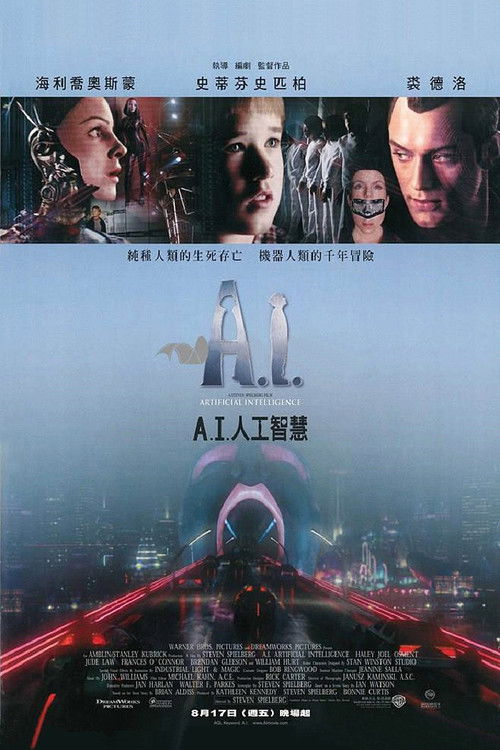
Steven Spielberg finishes Stanley Kubrick's orphaned fairy tale and delivers the year's most honest American film about what we owe the things we build to love…
Updated September 23, 2026
 ★★★★
Lunara Film Review
West Side Story — The Camera Finally Dances
Spielberg waited fifty years to move a camera through a song, and the hunger is visible in every frame.
Updated September 23, 2026
 ★★★★★
Lunara Film Review
Catch Me If You Can — The Fun Is the Disguise
Spielberg's lightest movie is a divorce picture that learned to sprint.
Updated September 23, 2026
 ★★★★
Lunara Film Review
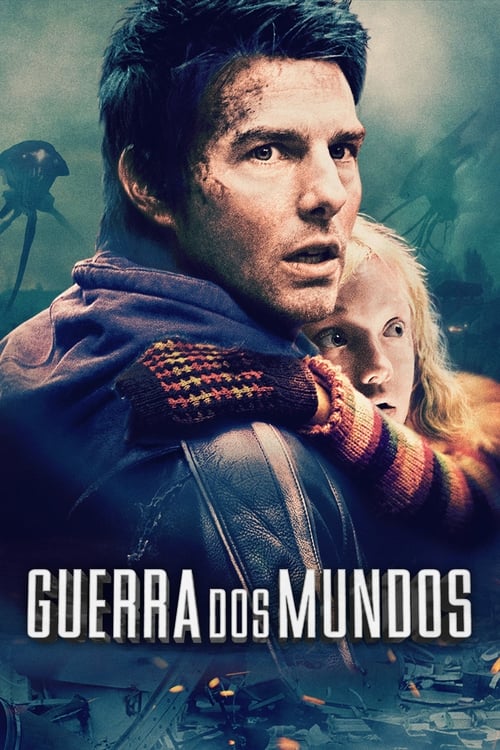
War of the Worlds — His Most Pitiless Film
Steven Spielberg likes to say he never made a horror movie. He is wrong, and this is it. War of the Worlds arrived in the summer of 2005...
Updated September 23, 2026
 ★★★
Lunara Film Review
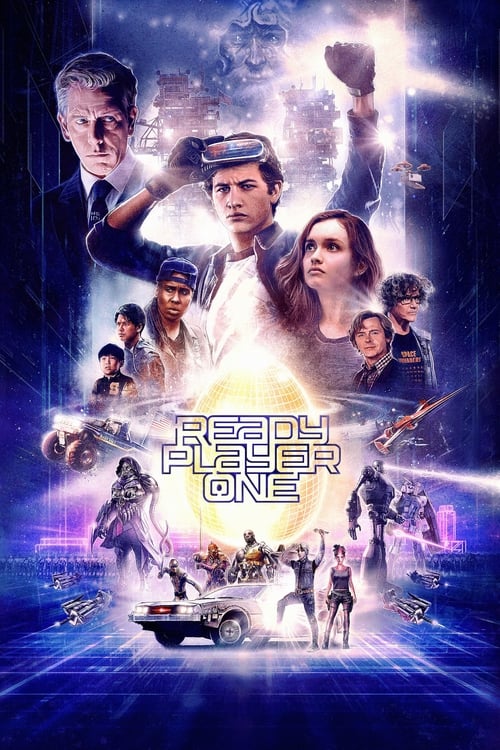
Ready Player One — Spielberg Against Spielberg
Ready Player One is the strangest thing in late Spielberg: a gigantic, exhausting, frequently shallow corporate spectacle that happens to...
Updated September 23, 2026