
Lunara Review
The Worst Person in the World — The Luxury of Not Deciding
Joachim Trier freezes all of Oslo so one woman can run through it, and then makes her pay for the privilege.

Joachim Trier freezes all of Oslo so one woman can run through it, and then makes her pay for the privilege.
The scene everyone remembers is the one where time agrees to look the other way. Julie flips a light switch in the apartment she shares with Aksel, and Oslo stops: pedestrians frozen mid-stride, coffee halted in its pour, a whole city put on hold so that one woman can run, at golden hour, across town to the man she is not supposed to want, kiss him in daylight that belongs to no calendar, and run home before the world resumes. Kasper Tuxen shoots the run as pure exhilaration, and Joachim Trier means every joule of it; the film never mocks Julie’s joy. But the sequence has a second face it shows only later. Everyone else in the frame is standing still because, in Julie’s cosmology, other people are always standing still; their time does not run while she decides. The Worst Person in the World is a romantic comedy assembled around that flattering, poisonous fantasy, twelve chapters, a prologue and an epilogue, and it spends its full length totaling, gently and then not gently, what the fantasy costs everyone who loves a person who is still deciding.
Renate Reinsve won Cannes for this and it is easy to see what the jury saw, because the film does not work without her. Julie burns through medicine, then psychology, then photography in the brisk comic prologue, each pivot narrated with the confidence of a woman mistaking restlessness for growth, and Reinsve plays every stage without irony, which is the performance’s genius: Julie is not a satire of a generation, she is a specific intelligent woman who experiences her own life as a draft she is always about to revise. Reinsve gives her a face that means everything it expresses while it expresses it, love, boredom, panic, resolve, and lets you watch each conviction expire in real time. The famous line of the title is Julie’s own verdict on herself, spoken half as confession and half as shield, and the film’s compassion is that it never fully endorses or dismisses it.
The ballast is Anders Danielsen Lie’s Aksel, the older comic-book artist whose certainty about his own life, work, love, wanting children, is the first thing that attracts Julie and the first thing she cannot survive. Trier’s structure is deceptively cruel here: the chapters give Julie the film’s motion, but they give Aksel its gravity, and when illness arrives in the final movement, Lie delivers the monologue the whole movie has been saving. Dying, he inventories what he loved: record shops, the physical culture of objects, the world that existed as things you could hold and pass to someone, and grieves that it all became gestures on a screen. It is the best scene of its year, a man mourning not his life but the texture of it, and it converts the film retroactively. Julie’s freedom to endlessly choose is revealed as a solvent, dissolving precisely the accumulations, years, rooms, shared objects, that Aksel is dying grateful for. The film does not say she was wrong to leave. It says the meter was running, which is worse.
The honest limit is structural: the triangle is missing a side. Herbert Nordrum’s Eivind, the barista Julie freezes the city for, is written as a deliberate blank, kind, easy, ambitionless, and the design is legible, he is not a rival life, he is the absence of a decision, but chapters that rest on him sag where the Aksel chapters grip, and the film’s middle stretch, including an essayistic detour or two, coasts on charm while it waits for gravity to return. A movie this precise about time spends a little too much of ours proving Eivind is not worth Julie’s.
The epilogue lands the account with terrible quietness. Julie, alone, working as a set photographer, shoots an actress performing a scene, then watches through the window as the actress, wrapped, greets a partner and child and drives away into the life Julie photographed her pretending to have. Julie turns back to her screens and edits, alone in the flat, unforgiving light of a profession finally chosen, and Trier holds there: no punishment, no redemption, a woman at the far end of her decade of options, in the one frame of the film that no longer has anywhere else it is about to go. Some viewers read peace; the film permits it. What it insists on is only this: that indecision is itself a decision, made daily, compounding, and that the freedom to become anyone is paid for in the currency of everyone you almost were. The title was never quite ironic and never quite true. She is not the worst person in the world. She is the person the world stopped waiting for, which the film argues, with more love than judgment, is the ordinary tragedy of being thirty.
LUNARA DEBRIEF
- Score: 4.5 / 5
- Year: 2021
- Where to Watch: Streaming (Hulu) | Criterion Collection disc
- Theme Echo: Frances Ha (2012) tt2347569. The American cousin: another gifted woman treating adulthood as a rehearsal, another city indulging her. Baumbach plays the drift for buoyancy where Trier prices it, and watching them together shows the decade of difference between twenty-seven and thirty.
- Counter-Program: Marriage Story (2019) tt7653254. The life Julie kept declining, seen from inside its collapse. Baumbach’s couple built everything she feared building and lost it anyway, which either vindicates her hesitation or proves the film’s point that there was never a safe option, only chosen and unchosen costs.
- Career Context: Oslo, August 31st (2011) tt1736633. Trier and Anders Danielsen Lie’s earlier walk through the same city, one day in the life of a man who feels his options have expired. The two films are companion clocks: one character with too many futures, one with none, both timed to the exact sound of Oslo not waiting.
LUNARA DEBRIEF
- Score:★★★★½
- Oscar Ledger2 nominations • 0 wins
- Year:2021
- Where to Watch:StreamingHuluAvailabilityCriterion Collection disc
Pair It With
Three films in conversation with this one.

Theme Echo
Frances Ha (2012)
The American cousin: another gifted woman treating adulthood as a rehearsal, another city indulging her. Baumbach plays the drift for buoyancy where Trier prices it, and watching them together shows the decade of difference between twenty-seven and thirty.

Counter-Program
Marriage Story (2019)
The life Julie kept declining, seen from inside its collapse. Baumbach's couple built everything she feared building and lost it anyway, which either vindicates her hesitation or proves the film's point that there was never a safe option, only chosen and unchosen costs.
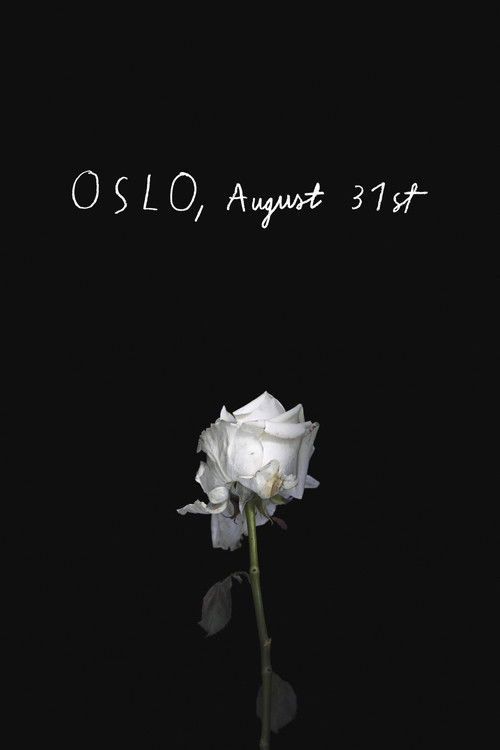
Career Context
Oslo, August 31st (2011)
Trier and Anders Danielsen Lie's earlier walk through the same city, one day in the life of a man who feels his options have expired. The two films are companion clocks: one character with too many futures, one with none, both timed to the exact sound of Oslo not waiting.
Further Reading
More Lunara Criticism
 ★★★★
★★★★
Lunara Review
Sentimental Value — The Cannibal in the Confession Booth
The people who love you most know exactly where you are undefended, and they aim there without even noticing. The central claim of...
Updated July 25, 2026
 ★★★★
★★★★
Lunara Review
West Side Story — The Camera Finally Dances
Spielberg waited fifty years to move a camera through a song, and the hunger is visible in every frame.
Updated July 25, 2026
 ★★★★★
★★★★★
Lunara Review
Titane — Family Is a Choice Made in the Dark
Julia Ducournau's Palme d'Or winner is sold as the car movie; it is actually the decade's strangest film about adoption.
Updated July 25, 2026
 ★★★★★
★★★★★
Lunara Review
The Power of the Dog — The Quietest Person in the Room
A Western where nobody draws a gun, and the deadliest act in it looks exactly like kindness.
Updated July 25, 2026
 ★★★★★
★★★★★
Lunara Review
The Green Knight — Honor Is What You Do With No One Watching
David Lowery films the old poem as an ordeal: a man rides for a year toward an axe he agreed to.
Updated July 25, 2026