
Lunara Review
Marriage Story — The System That Bills by the Wound
Two people agree to divorce gently, and Noah Baumbach films what the law does with that agreement.

Two people agree to divorce gently, and Noah Baumbach films what the law does with that agreement.
The film opens with a trick so generous it hurts twice. Over tender montage, Charlie lists everything he loves about Nicole, she really listens, she cuts everyone’s hair, she opens presents wrong; then Nicole lists everything she loves about Charlie, he cries at movies, he never looks embarrassing, he is a father who actually plays. Two of the warmest monologues in recent American film, and then the frame widens: these are letters a mediator asked them to write, and Nicole will not read hers aloud. The marriage is already over. Everything we just fell for is inventory, and Marriage Story spends the next two hours watching a legal system conduct exactly that conversion, item by item: every intimacy catalogued in the opening becomes, in some deposition or courtroom, an exhibit. He knows her family that well? Enmeshment. She managed the household? No career of her own to protect. The film’s subject is not the end of love. It is the industrial process that takes love’s leftovers and renders them into evidence.
Baumbach builds it as a war both combatants keep trying to opt out of. Charlie and Nicole agree, explicitly, twice, to do this without lawyers, and the film is rigorous about how structural the breaking of that promise is: Nicole, moving to Los Angeles for a pilot and rediscovering the self her marriage absorbed, hires Laura Dern’s Nora because a friend insists; Charlie, served across the country, discovers that unrepresented means undefended. Dern is magnificent as a predator whose weapon is validation, feeding Nicole’s real grievances back to her sharpened into strategy, and her late aria about the culture’s double standard for mothers, we accept flawed fathers because God is an absent father, is the film’s thesis about the industry spoken by its best operator. Alan Alda and Ray Liotta split Charlie’s options into the industry’s two honest faces: the decent tired counsel who tells him, in the film’s most quotable diagnosis, that criminal lawyers see bad people at their best and divorce lawyers see good people at their worst, and the three-hundred-fifty-an-hour shark you hire when decency starts losing. Scarlett Johansson gives Nicole’s awakening real, specific dignity, her single-take kitchen monologue to Nora is the best sustained acting of her career, and Adam Driver plays Charlie’s obliviousness without alibi: a man who never noticed the marriage was headquartered in his own ambitions until the invoice arrived. Robbie Ryan shoots them in close, flat domestic light, always slightly too near, in apartments the lawyers have taught us to see as custody arguments with furniture.
The centerpiece earns its legend. Alone in Charlie’s bare Los Angeles rental, negotiating without handlers for once, the two attempt civility and slide, in one continuous escalation, into the fight the whole legal apparatus has been conducting on their behalf: every private vulnerability weaponized, every generosity reclassified, until Charlie punches the wall and wishes her dead and then collapses, sobbing, into the arms of the woman he just cursed, and she holds him, because holding him is twelve years of habit and no court order has jurisdiction over habit. Baumbach shoots it in unbroken proximity, no score, no relief, and the scene’s real horror is its familiarity: these are the lawyers’ arguments in the couple’s own mouths. The system did not invent their grievances. It taught them the phrasing.
The honest limit has a name, and the film half-knows it: the deck leans toward Charlie. Nicole’s case is stated, brilliantly, once, in the kitchen; Charlie’s case is dramatized, continuously, in humiliations, the knife gag for the court evaluator, the trick-or-treating alone, the MacArthur grant bleeding into legal fees. Her win is filmed as his loss because the camera lives in his boxes and hallways, and a film this precise about how systems tilt narratives ends up quietly tilting its own. It is the one place Baumbach’s self-awareness blinks.
What survives, deliberately, is the coda. A year on, Nicole’s mother’s Halloween party, and Charlie finds their son half-asleep over a piece of paper, reading aloud, haltingly, the letter Nicole never read: the inventory of love from the film’s first minutes, returned by a child who does not know what he is holding. Charlie reads the ending, he’s a father who plays, through tears while Nicole watches from the doorway and lets him have it. Then she kneels in the driveway and ties Charlie’s shoe while their son’s laughter carries, an act with no legal category at all, and the film closes on its actual finding: the system converted everything it touched, but a residue survives conversion, unbillable, unenforceable, and permanent. Marriage Story is the best American film about divorce since the one it will forever be compared to, and its advance on that ancestor is exactly this residue, the acknowledgment that some contracts, dissolved, keep executing anyway, in shoelaces and letters and songs sung badly at parties, forever.
LUNARA DEBRIEF
- Score: 5 / 5
- Year: 2019
- Where to Watch: Streaming (Netflix) | Criterion Collection disc
- Theme Echo: Kramer vs. Kramer (1979) tt0079417. Forty years apart, the same discovery: the legal system exists to convert what is left of love into evidence. Benton’s couple swallow what Baumbach’s couple scream, and each film makes the other’s decade legible.
- Counter-Program: When Harry Met Sally… (1989) tt0098635. The romantic comedy’s whole promise, the right banter finds the right person and the credits protect them, played at full sincerity. Marriage Story is what the genre’s contract looks like in probate; watching both is like reading a lease before and after the fire.
- Career Context: The Squid and the Whale (2005) tt0367089. Baumbach’s first divorce film, told from the shrapnel’s point of view, the kids, with the parents as monsters of self-absorption. Fourteen years later he retells it from inside the monsters, and the two films together form one of American cinema’s most complete accounts of a family ending.
LUNARA DEBRIEF
- Score:★★★★★
- Oscar Ledger6 nominations • 1 wins
- Year:2019
- Where to Watch:StreamingNetflixAvailabilityCriterion Collection disc
Pair It With
Three films in conversation with this one.
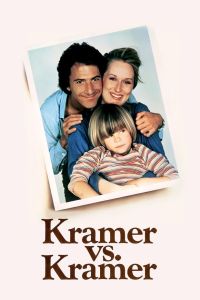
Theme Echo
Kramer vs. Kramer (1979)
Forty years apart, the same discovery: the legal system exists to convert what is left of love into evidence. Benton's couple swallow what Baumbach's couple scream, and each film makes the other's decade legible.
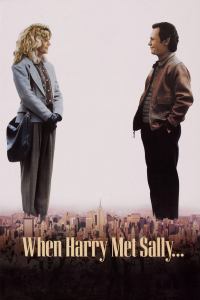
Counter-Program
When Harry Met Sally... (1989)
The romantic comedy's whole promise, the right banter finds the right person and the credits protect them, played at full sincerity. Marriage Story is what the genre's contract looks like in probate; watching both is like reading a lease before and after the fire.

Career Context
The Squid and the Whale (2005)
Baumbach's first divorce film, told from the shrapnel's point of view, the kids, with the parents as monsters of self-absorption. Fourteen years later he retells it from inside the monsters, and the two films together form one of American cinema's most complete accounts of a family ending.
Further Reading
More Lunara Criticism
 ★★★★½
★★★★½
Lunara Review
Us — The Violence of Forgetting
The home invasion is a repossession; the family in the driveway has come to collect.
Updated July 25, 2026
 ★★★★★
★★★★★
Lunara Review
Uncut Gems — The Win That Was Always the Bullet
Adam Sandler plays a man allergic to his own good luck, and the movie gives you his pulse instead of a plot.
Updated July 25, 2026
 ★★★½
★★★½
Lunara Review
Spider-Man: Far From Home — The Villain Is a Workflow
Marvel finally built a villain out of its own job description, then beat him with the product.
Updated July 25, 2026
 ★★★★★
★★★★★
Lunara Review
Parasite — The Smell Money Cannot Wash
The rich are not villains here; they are noses.
Updated July 25, 2026
 ★★★★★
★★★★★
Lunara Review
Midsommar — Grief in Broad Daylight
The scariest thing in the brightest horror film of its decade is a boyfriend saying "that sucks."
Updated July 25, 2026