

Sentimental Value, 2025. Neon
Sentimental Value — The Cannibal in the Confession Booth
Movie Review
Joachim Trier films the crime and signs the confession, and the confession does not absolve him.
Backstage, minutes before curtain, a stage actress asks her co-star and lover to slap her across the face. Not a stage slap. A real one, hard enough to sting, because she cannot feel real enough to walk out under the lights without it. The theater laughs, and then the laugh curdles in the throat, because the joke has a second half: this woman needs pain to confirm she exists, and the person who taught her that is her father. That is the opening move of Sentimental Value, and it tells you everything about the film Joachim Trier and co-writer Eskil Vogt have built. It is a comedy that hurts. It is a drama that keeps making you laugh at the exact moments you least want to.
Here is the claim the film is actually making, and it is not a claim about art. It is a claim about families. The people who love you most are the people who know precisely where you are undefended, and they aim there without malice, without intention, sometimes without even noticing they have fired. The damage is no less exact for being accidental. Trier hangs that truth on the figure of the artist-cannibal, the filmmaker who strip-mines his family’s grief for a feature, but the vehicle is not the point. The point is older and less literary. It belongs to anyone who has sat across a dinner table from someone who loves them and felt the specific chill of being known in the wrong direction.
Gustav Borg, played by Stellan Skarsgard, is a legend the way only fading European auteurs get to be: revered in Paris, ignored at home, intolerable at dinner. When his ex-wife dies, he comes back to the ancestral Oslo house, and he does not come back to grieve. He comes back to scout locations. He has written a script about his own mother’s suicide, which happened in that very house, and he wants to shoot it in the rooms where it happened. He wants his estranged daughter Nora to play the lead. The request is so monstrous it loops all the way around to something almost innocent. Gustav genuinely cannot imagine a pain that should not be lit, blocked, and captured on 35mm. Fifty years of confusing exploitation with love have left him sincere, and the sincerity is the horror.
Trier and Vogt shoot the whole thing as a haunting. The house is not a location. It is the lead. The film opens on a childhood essay of Nora’s, read in voiceover, wondering whether the house has feelings, whether footsteps tickle it, whether silence makes it sad. Kasper Tuxen’s camera drifts through empty rooms with a ghost’s patience, dust hanging in the light like the dead never fully left. And watch what the framing does with people. Gustav lands in the center of every widescreen composition he enters, the visual privilege of a man who assumes each room was designed around him. Nora gets the edges: doorways, corners, thresholds, the leftover space of rooms that legally belong to her family and functionally belong to her father’s imagination. He does not move through the house. He claims it. The whole moral case is right there in the blocking.
Renate Reinsve is devastating as Nora. She plays her as a woman whose skin is on backwards, every surface exposed, every draft felt instantly, nothing between the nervous system and the weather. Her resentment of Gustav is not petulance. It is survival math. She has understood, with a clarity her father will never reach, that to Gustav she is not a daughter. She is intellectual property. The performance peaks in a scene with almost nothing in it: Nora reading the script Gustav wrote about their grandmother’s death. Reinsve does not act the impact. Her body takes it first, a slight forward hinge of the shoulders, the hands going still, and only then does her face catch up. What arrives is not grief and not rage but something worse. Recognition. She is holding proof that she was right about him all along, and being right does not help. Being right never helps.
When Nora turns the role down, Gustav pivots without missing a beat and casts Rachel Kemp, a bright Hollywood starlet played by Elle Fanning, who arrives in Oslo looking like a spaceship parked in a graveyard. Fanning is doing something sly here. Rachel is no fool and no victim. She is a blank so receptive, so eager to absorb whatever Gustav projects, that she becomes the perfect instrument for his worst impulse. The scene where he drills her on a Norwegian accent, feeding her “three glasses of juice” over and over while the absurdity climbs, is honestly funny for about thirty seconds. Then the floor drops. What is actually happening is that Gustav is molding Rachel into a better, more compliant daughter, replacing the real Nora with a fictional one who takes direction. Fanning plays the compliance as strategy, the clear-eyed calculation of a young actress who has identified the price of the role and decided to pay it. The film does not condemn her for it. It puts her ledger in the same frame as Gustav’s and lets you measure the distance between them, which is smaller than either would like.
The film’s quiet counterweight is Agnes, the other daughter, played by Inga Ibsdotter Lilleaas. Agnes is the historian, the one who remembers the truth without needing to sell tickets to it. She is composed not because she feels less but because she decided, somewhere along the line, not to let Gustav’s mythology colonize her interior. She is the keeper of sentimental value in the literal sense: things that matter for what they meant, not for what a script can make them mean. Her reckoning with Gustav comes after he gifts her young son DVDs of Irreversible and The Piano Teacher, a gag calibrated to a cringeworthy perfection, and the reckoning cuts deepest because it is not a confrontation at all. Lilleaas plays a woman who stopped expecting her father to understand himself years ago and settled for naming him instead, flatly, the way a historian records fact. Not a monster. Not a genius. A pathetic old man who mistakes provocation for connection. It lands because it is accurate, and accuracy is the one weapon Gustav cannot survive.
The third act detonates on a question Trier and Vogt leave standing on purpose: who owns a memory? Does the artist who can articulate the wound have more right to it than the person who simply lived it? Gustav believes art redeems suffering, makes it permanent and shareable and larger than one wound. Nora believes art extracts suffering from its owner and sells it to an audience that gets the pain at a discount. The film’s real nerve is that Trier picks neither side. Both positions get their full weight, and neither character is protected from the implications of holding one. Hania Rani’s score, wistful and spare, keeps arriving at exactly the moments when the two arguments are least resolvable, underscoring the tragedy of a father who can only say I love you if he writes it into a script first.
What stays with you afterward is not catharsis. It is complicity. You watched it. You are going to recommend it. The film about the ethics of turning family suffering into art is itself art made from precisely that material, and Trier knows it. He is the cannibal in the confession booth, and the confession does not absolve him, and his knowing that is the most honest thing in the picture. Where it falters is that it occasionally takes Gustav’s mythology at his own valuation, lending his grandiosity a cinematic grandeur that verges on the very self-worship it is holding up to the light. But the honesty about the man in the mirror is more rigorous than the moments when the mirror flatters, and honesty wins on points. Skarsgard and Reinsve are titans at war. The result is a bloodletting the audience never consented to and cannot walk back, and it is worth every drop.
Lunara Film Debrief
- Score:★★★★
- Oscar Ledger9 nominations • 1 wins
- Year:2025
- Where to Watch:

Theme Echo
What is this film really about — and who else has said it?
Autumn Sonata (1978)
The definitive text on the parent-artist who devours their children for fuel, and the spiritual ancestor of Gustav Borg's monstrous request. Watch it and you see exactly which tradition Trier knows he is working inside.

Counter Program
What is the strongest argument against it?
Paddington 2 (2017)
A film about the intrinsic, non-monetizable value of simply being kind to people, for the night you need to wash Gustav Borg out of your soul before sleep.

Career Context
Where does this sit in the artist's story?
The Worst Person in the World (2021)
Trier and Reinsve's first collaboration built the restless self-narration this film weaponizes. Nora is Julie a decade on, with the father the earlier film kept offscreen finally standing in the room.
More Lunara Film Criticism
Further Reading
 ★★★★½
Lunara Film Review
The Worst Person in the World — The Luxury of Not Deciding
Joachim Trier freezes all of Oslo so one woman can run through it, and then makes her pay for the privilege.
Updated September 23, 2026
 ★★★½
Lunara Film Review
Den of Thieves 2: Pantera — Burn the Blueprints
The first one wanted to be Heat; this one would rather be drunk, and it turns out drunk is the more honest condition.
Updated September 23, 2026
 ★★½
Lunara Film Review
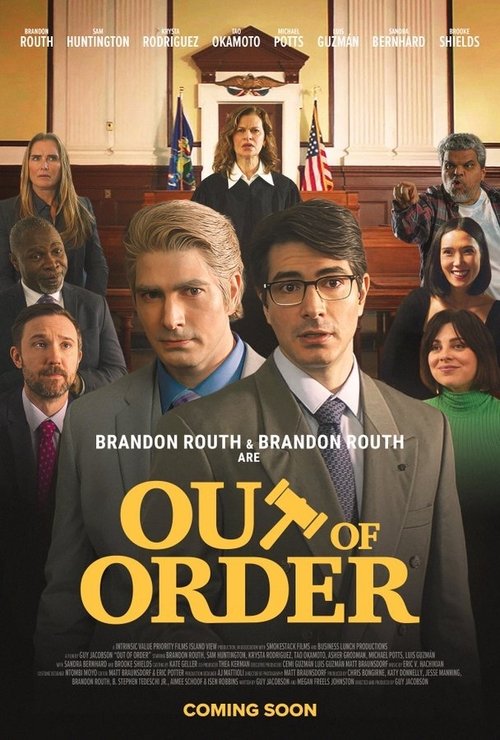
Out of Order! — The Reunion the Movie Doesn’t Know It Has
Superman and Jimmy Olsen share frames again after nineteen years, a Broadway scene-stealer plays the farce all by herself, and the screenplay never shows up to...
Updated September 23, 2026
 ★★½
Lunara Film Review
The Gorge — The Distance Was the Movie
Scott Derrickson's two-hander has one of the best premises of the year and the saddest relationship to it -- a film that treats the very...
Updated September 23, 2026
 ★★★
Lunara Film Review
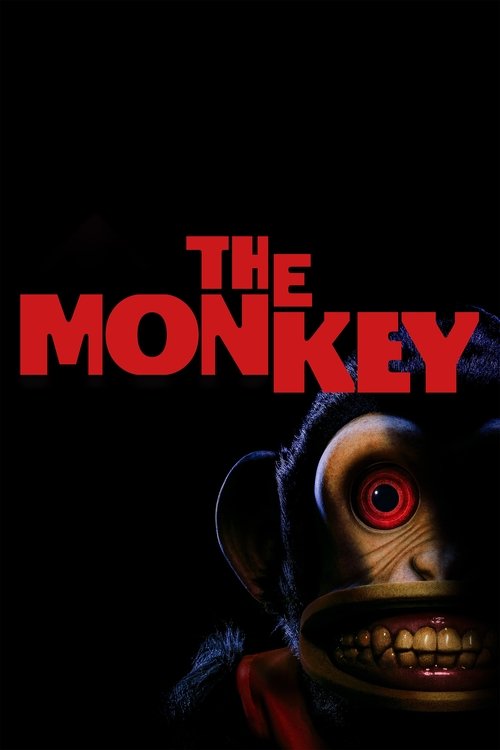
The Monkey — Laughing at the Funeral
Osgood Perkins follows the dread of Longlegs with something that looks like its opposite -- a gleeful splatter comedy about a cursed toy...
Updated September 23, 2026