
Lunara Review
Hamnet — What the Greatest Play Cost
Hamlet exists. Hamnet is forgotten. The film insists these are the same fact.

Hamlet exists. Hamnet is forgotten. The film insists these are the same fact.
Hamnet is the film that asks what you have always declined to consider about the greatest play ever written: who paid for it. Chloe Zhao’s adaptation of Maggie O’Farrell’s novel follows Agnes Shakespeare, the woman history reduced to a footnote and O’Farrell restored to the center, as she raises three children in Stratford while her husband builds a career in London, and then watches one of those children die and her husband transform that death into Hamlet. The film is about Shakespeare the way grief is about the person who caused it: present everywhere, structurally unavoidable, and ultimately beside the point. The point is Agnes. The point is what the genius extracted from her and called art.
This is the argument that biographical cinema almost never makes: not that the great man was flawed, or that his relationships were complicated, or that genius exacts a cost. Those are safe formulations that protect the genius’s legacy while gesturing at the women around him. Zhao makes a more uncomfortable claim. The greatest play in the English language is, at some irreducible level, a transaction between private grief and public immortality that Agnes Shakespeare did not agree to, could not consent to, and received nothing from. Hamlet exists. Hamnet is forgotten. These are not separate facts. They are the same fact.
Jessie Buckley gives a performance so complete it redefines the film around it. Her Agnes is not a supporting player in Shakespeare’s biography; she is the reason the biography matters, and Buckley performs her with a physical intelligence that makes every other character, including Shakespeare himself, orbit her at a respectful distance. The performance begins in the register of domestic authority: Agnes as herbalist, as mother, as the person who holds the household together while her husband chases ambitions in London. Buckley plays this phase with a groundedness built from constant motion, her hands always tending, always producing, always working, establishing a woman whose identity is constructed through labor and care rather than the self-narration her husband will make his career performing.
When Hamnet dies, Buckley does something extraordinary. She does not collapse. She becomes more present: more physically precise, more terrifyingly attentive to the material world. Her Agnes in the aftermath notices everything, the texture of fabric, the temperature of water, the exact position of objects in rooms her son will never enter again. Buckley communicates this hyper-awareness as a form of rage wearing the costume of attention. Grief, in her hands, looks like a new and hostile form of lucidity. It is not performed. It is inhabited, and the inhabitation is so complete that the audience experiences it not as dramatic spectacle but as physiological event, something happening in the room rather than on the screen.
The title is Hamnet, but Buckley is Hamlet: the character who carries the weight of death, who interrogates the machinery of a world that continues operating after the thing that organized it has been removed, who rages against the indifference of time and the specific inadequacy of language to contain loss. Her confrontation with Shakespeare after she discovers what he has done with their son’s death, transformed it, fictionalized it, made it immortal while making the actual boy disappear behind a Danish prince, is the most emotionally devastating scene in any film this year. Buckley plays it not as accusation but as recognition: Agnes seeing, with perfect clarity, that her husband has found a way to convert grief into art, and that this conversion, however brilliant, is a form of theft from the dead.
Paul Mescal plays Shakespeare with a charisma that is deliberately destabilizing. He is attentive, genuinely talented, and fundamentally selfish in the specific way that artists who prioritize their work over their families are selfish: not through cruelty but through a constitutional inability to be fully present in a room when a better sentence is forming in his head. Mescal’s restraint is the performance’s great achievement. He plays neither villain nor hero, insisting instead on the more unsettling middle ground of a man whose gift and whose limitation are the same thing. Together, he and Buckley make genius feel like a form of marital violence, and they build the marriage so tactile, so alive in its private rhythms, that the film’s eventual argument lands not as abstract provocation but as betrayal.
There is a scene where Shakespeare reads a passage of the play in progress to Agnes. He is proud. He believes he is offering her something. He does not understand, and Mescal captures this without condemning it, that what he is offering her is a version of her son’s death that he has already claimed as his own property, edited for theatrical effect, given a different name and a Danish setting and a revenge plot that has nothing to do with the eleven-year-old boy who died of plague in Stratford. His expression during the reading is the expression of a man waiting to be thanked. Mescal makes sure we understand that this is not cruelty. It is something harder to resolve than cruelty. It is the complete absence of the kind of attention that might have noticed the difference between grief and material.
Zhao directs Hamnet with a restraint that feels hard-won after the maximalist misstep of Eternals. She returns here to the intimate, naturalistic register that made Nomadland resonate, long takes, natural light, compositions that privilege the human face over the period landscape, and the return feels not like retreat but homecoming. Her camera stays close to Buckley’s face for extended stretches, trusting the performance to carry what a lesser director would convey through score or editorial emphasis. The trust is rewarded with a visual intimacy that makes the period setting feel not like costume drama but like documentary. She will not let the past become tasteful. She will not let grief become ornamental.
Her staging of the moment when Agnes first fully understands what her husband has done, not the confrontation scene, but the quieter scene before it, where she sits alone with the playscript, reading the dead boy’s name repurposed as a title, is the film’s forensic center. Zhao holds the shot on Buckley’s face as she reads. Nothing changes in Buckley’s expression. Everything changes in her body: the shoulders lower by a fraction, the hands go still, the posture shifts from the constant motion of Agnes’s daily life into something stopped. Buckley communicates in that stillness the specific, irrevocable quality of a loss that has just become permanent. Not Hamnet’s death, which she already knew, but the understanding that the death has now been assigned to someone else. Zhao keeps the camera exactly where it is, cutting toward neither the page nor the reaction shots that would manage the audience’s response. She lets it happen.
What Hamnet achieves is the rarest thing in biographical cinema: it makes the audience feel the cost of the art they have spent their lives revering. Every person who has read Hamlet has encountered a work of genius. Zhao’s film insists that behind that genius is a dead boy, a grieving mother, and a transaction between private pain and public immortality that no amount of literary appreciation can resolve. The film does not condemn Shakespeare for writing Hamlet. It does not forgive him either. It simply shows what the writing cost the people who lived inside the grief he turned into poetry, and it trusts the audience to sit with the discomfort of knowing that the masterpiece was made from something that belonged to someone else.
The film ends with the stage performance of Hamlet itself. Zhao takes you inside the Globe, inside the play, and lets Shakespeare’s language land the way it was written to land: in the bodies of the people watching, who now know what it cost. For anyone who has spent a lifetime loving Hamlet, the sequence is almost unbearable. The work is right there, brilliant and permanent and fully itself, and the film has just spent two hours showing you the private transaction that produced it. For anyone who has never understood why people devote their lives to Shakespeare, the sequence is the film’s most generous gift. You do not need to be a Shakespeare person to feel it. You need only to have watched Agnes watch it: the woman who paid for the play, watching the play, from the cheap seats, not yet knowing whether what she is witnessing is desecration or transfiguration. Zhao holds on her face during the performance. The answer, when it comes, is both, simultaneously, and irresolvably.
The limit: Zhao’s formal restraint occasionally produces passages that feel withholding rather than patient, moments where the film trusts silence beyond what the scene’s dramatic stakes can support. But the achievement outweighs the cost. Buckley’s performance is the argument, and the argument is airtight: the women history forgot were not footnotes. They were the authors of the emotional reality that male genius later claimed as its own.
LUNARA DEBRIEF
- Score: 4.5 / 5
- Year: 2025
- Where to Watch: Theatrical (Focus Features) | Streaming TBD
- Theme Echo: Phantom Thread (2017) tt5776858. PTA’s study of a male artist sustained by the women he simultaneously depends on and diminishes; the same dynamic Hamnet examines through a sixteenth-century lens, with the crucial difference that Zhao will not aestheticize the damage.
- Counter-Program: Shakespeare in Love (1998) tt0138097. The romantic, celebratory version of the Shakespeare picture, where genius is charming and the women are muses rather than casualties; everything Hamnet dismantles and declines to reassemble.
- Career Context: Nomadland (2020) tt9770150. The register Zhao returns to here, faces over landscape, patience as a form of respect, and the proof that her restraint is conviction rather than retreat. Hamnet is Nomadland’s attention turned four hundred years backward onto a woman the record erased.
LUNARA DEBRIEF
- Score:★★★★½
- Oscar Ledger8 nominations • 1 wins
- Year:2025
- Where to Watch:TheatricalFind ShowtimesAvailabilityStreaming TBD
Pair It With
Three films in conversation with this one.


Further Reading
More Lunara Criticism
 ★★
★★
Lunara Review
Eternals — The Most Expensive Contemplative Failure
The most beautiful film Marvel ever released, and the stillest; every few minutes it stops to watch the sun go down.
Updated July 25, 2026
 ★★★½
★★★½
Lunara Review
Den of Thieves 2: Pantera — Burn the Blueprints
The first one wanted to be Heat; this one would rather be drunk, and it turns out drunk is the more honest condition.
Updated July 25, 2026
 ★★½
★★½
Lunara Review
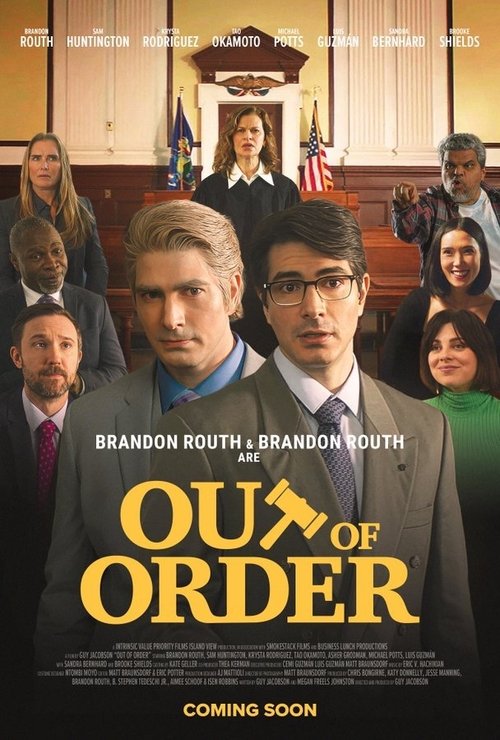
Out of Order! — The Reunion the Movie Doesn’t Know It Has
Superman and Jimmy Olsen share frames again after nineteen years, a Broadway scene-stealer plays the farce all by herself, and the screenplay never shows up to...
Updated July 25, 2026
 ★★½
★★½
Lunara Review
The Gorge — The Distance Was the Movie
Scott Derrickson's two-hander has one of the best premises of the year and the saddest relationship to it -- a film that treats the very...
Updated July 14, 2026
 ★★★
★★★
Lunara Review
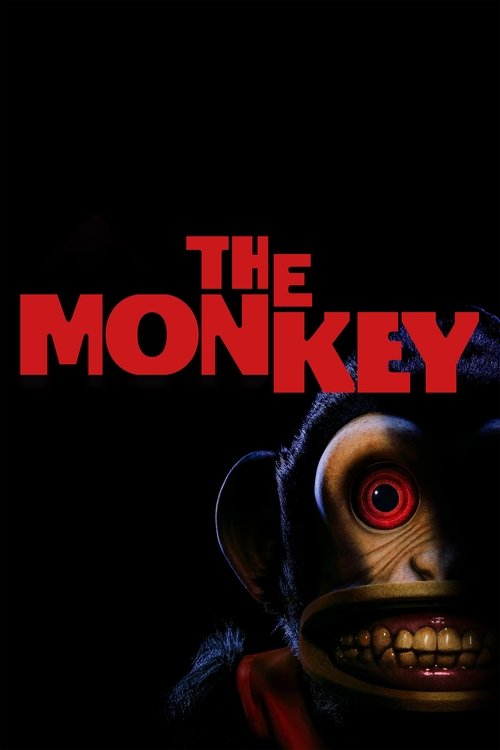
The Monkey — Laughing at the Funeral
Osgood Perkins follows the dread of Longlegs with something that looks like its opposite -- a gleeful splatter comedy about a cursed toy...
Updated August 12, 2026