
Lunara Review
F1 — The Last Argument for Leaving Your House
The story is the excuse; the sensation is the point, and the sensation does not survive your living room.
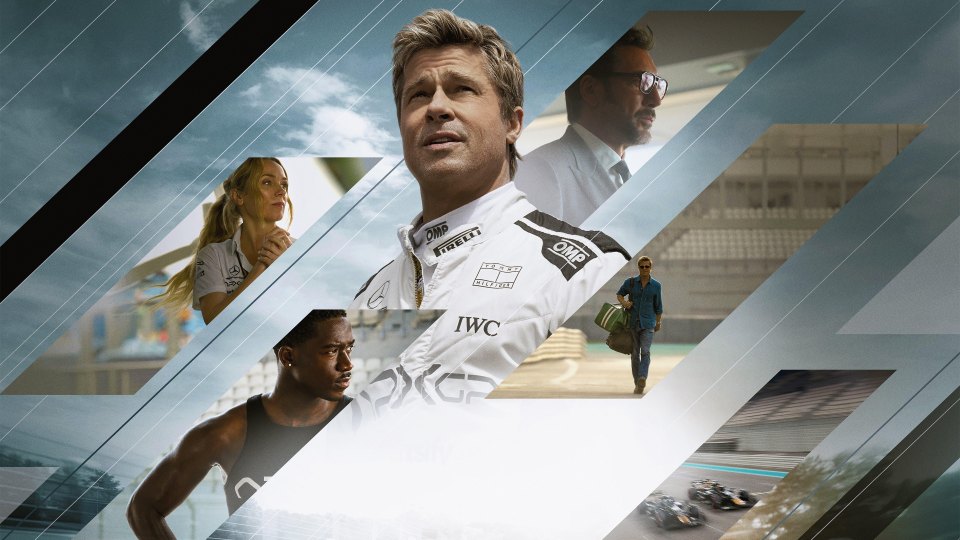
The story is the excuse; the sensation is the point, and the sensation does not survive your living room.
F1 is not a film about racing. It is the experience of racing delivered to the body through the IMAX frame, and the distinction between watching a simulation and occupying a cockpit is the entire case Joseph Kosinski is making with every camera he bolted to an actual Formula One car traveling at speeds that transform peripheral vision into abstraction. The story is the excuse. The sensation is the point. Kosinski has now made the case twice, first with Top Gun: Maverick, now with F1, that theatrical cinema’s survival depends not on competing with streaming’s convenience but on offering something streaming cannot structurally replicate. The nervous system cannot tell the difference between this footage and proximity to death at two hundred miles an hour. That is not marketing. That is a formal position.
The film follows Sonny Hayes (Brad Pitt), a retired driver returning after a thirty-year absence to salvage a struggling team. The narrative is as predictable as that description suggests, and the predictability does not damage the film; it is the container the experience requires. Kosinski’s bet is that if the bodily sensation is real enough, the conventional scaffold holding it up becomes invisible. The bet pays out. Kosinski makes movies for people who still want to feel the machine, and F1 is the purest version of that idea he has managed yet.
His cameras are mounted on actual Formula One cars during real Grand Prix weekends, and the difference between this and the CGI-augmented simulation of most racing films is immediately, physiologically apparent. The vibration of the chassis translates through the sound design into the theater floor. The compression of space at two hundred miles per hour, the way the track narrows, the way peripheral vision collapses, the way a concrete barrier approaches with the speed of a closing fist, is captured with a fidelity that makes the IMAX format feel not like a premium upgrade but like a structural necessity. You cannot watch these sequences on a television without losing the thing they are.
There is a moment early in the racing when Sonny, in his first qualifying session back, takes a corner at a speed the car is not rated for. Kosinski shoots this from a camera mounted at cockpit level, and what the frame shows is not the race in the conventional cinematic sense, not the wide shot that gives you the geography, the crowd, the stakes. What it shows is the specific visual experience of a person inside a machine operating at the edge of its physics: the track coming at you faster than thought, the hands making micro-adjustments that register as pure reflex, the concrete wall on the right not as scenery but as a fact. The scene has no dramatic dialogue. It has no score announcing its significance. What it has is the real thing, photographed without mediation, and the real thing is enough.
This is Kosinski’s formal conviction in its most distilled form: what the camera photographs must have actually happened. He does not manufacture velocity. He captures it. The distinction sounds technical. It is philosophical. Every racing film in recent memory has shown you a driver at speed and asked you to believe it. Kosinski’s camera is inside the car, and belief stops being relevant.
Across three films now, Tron: Legacy showing the instinct, Oblivion sharpening it, Maverick announcing it, Kosinski has done something almost no director in contemporary Hollywood has managed: he has taken the position of technical specialist and elevated it into artistic identity. The craftsman who insists on the reality of the image, who will not manufacture what he can capture, who makes the distinction between photographed velocity and simulated velocity the organizing principle of his filmmaking, is not a director defined by technical skill. That is a director with a philosophy, legible and consistent across everything he makes. There is now a Kosinski film in the same way there is a Fincher film: not because the subject matter is consistent but because the formal conviction is. He is not a great director in the European art-film sense. He is a great filmmaker, which is a different thing and, in the context of the studio system, rarer.
Brad Pitt brings to Sonny Hayes the same laidback magnetism he has deployed across thirty years of stardom, the easy grin, the physical grace, the ability to communicate competence through posture alone, and the performance works precisely because it does not attempt to be anything more than the film requires. This is not the feral ambition of Fight Club Pitt or the demolished interiority of Babel Pitt. This is Pitt operating as a movie star in a film that structurally requires one: a human anchor whose presence and legibility can hold the screen between the sequences where the camera is doing the work no actor can. The restraint is the intelligence. What the anchor needs to provide is instant readability, confidence, damage, charm, the specific quality of a man who is very good at the thing he came back to do, and Pitt provides it without waste. He understands that in this film, the best performance is the one that gets out of the way of the camera when the camera has something real to show.
Javier Bardem provides the film’s emotional warmth as the team owner whose faith in Sonny functions as the narrative’s primary investment. Damson Idris brings competitive intensity to the young driver whose rivalry with Sonny generates the film’s dramatic friction; he gives the rivalry just enough edge that the film feels like it has blood in it instead of merely fuel. The ensemble operates within the conventions of the sports comeback narrative without apology, and the lack of apology is itself a kind of confidence: Ehren Kruger’s screenplay knows exactly what it is and does not spend energy pretending to be more complex.
The sound design is the film’s second thesis. The scream of the engines at full throttle, mixed to fill the theater from floor to ceiling, produces a physical response no home system can replicate, not because the speakers are bigger but because the sound occupies the same space as your body. You are inside the noise. This is not an audio achievement. It is an experiential claim: cinema as an event that happens to your body rather than in front of your eyes. Kosinski stages the racing with the same spatial clarity he brought to the canyon run in Maverick: the geography always legible, the stakes always spatial, the editing in service of physics rather than replacing them. In a landscape where most action filmmaking has devolved into coverage assembled in post, this insistence on photographing real speed with real cameras at real locations is a genuine artistic position. It is also increasingly rare. The cost, in logistics, in access, in the operational complexity of bolting cameras to Formula One cars during actual championship weekends, is enormous, and this film’s success is the only reason the next director who wants to try it will get the budget.
F1 will not surprise anyone with its narrative choices or complicate anyone’s assumptions about what a sports film can do with character or theme. Kosinski is not interested in those questions here. He is interested in one question, whether the actual experience of this thing can be captured and transmitted to a body sitting in a dark room, and he answers it definitively. The limit is exact: the human drama, while competently executed, exists entirely in service of the sensory experience rather than in dialogue with it. There is no scene where the racing and the emotional content produce something neither could produce alone. The film is great at the thing it is trying to be, and the thing it is trying to be is all it is.
That is enough. In a year of films straining toward profundity, there is genuine value in one that knows exactly what it is and executes it without apology, at volume, at scale, at the limit of what the body can process in a theater seat. The feeling it leaves is specific: the ghost of g-force, the body still pressed back in a seat long after the lights come up, the sense that something moved past you at a speed that left no time to be afraid. Leave your house.
LUNARA DEBRIEF
- Score: 3.5 / 5
- Year: 2025
- Where to Watch: Theatrical (IMAX strongly recommended) | Streaming (Apple TV+)
- Theme Echo: Rush (2013) tt1979320. Ron Howard’s Formula One drama finds the emotional complexity and rival interiority that F1 trades for sensory immersion; the two films together map the full spectrum of what the sport can be asked to carry.
- Counter-Program: Ford v Ferrari (2019) tt1950186. Mangold balances spectacle with genuine character depth in a way Kosinski does not attempt; the contrast reveals what F1 gains and surrenders by committing entirely to the body over the mind.
- Career Context: Top Gun: Maverick (2022) tt1745960. The first full statement of the capture-not-manufacture creed, argued from inside a legacy franchise. F1 is the same case made without the nostalgia to lean on, which makes it the purer test of whether the philosophy alone can carry a picture.
LUNARA DEBRIEF
- Score:★★★½
- Oscar Ledger4 nominations • 1 wins
- Year:2025
- Where to Watch:
Pair It With
Three films in conversation with this one.


Further Reading
More Lunara Criticism
 ★★★½
★★★½
Lunara Review
Den of Thieves 2: Pantera — Burn the Blueprints
The first one wanted to be Heat; this one would rather be drunk, and it turns out drunk is the more honest condition.
Updated July 25, 2026
 ★★½
★★½
Lunara Review
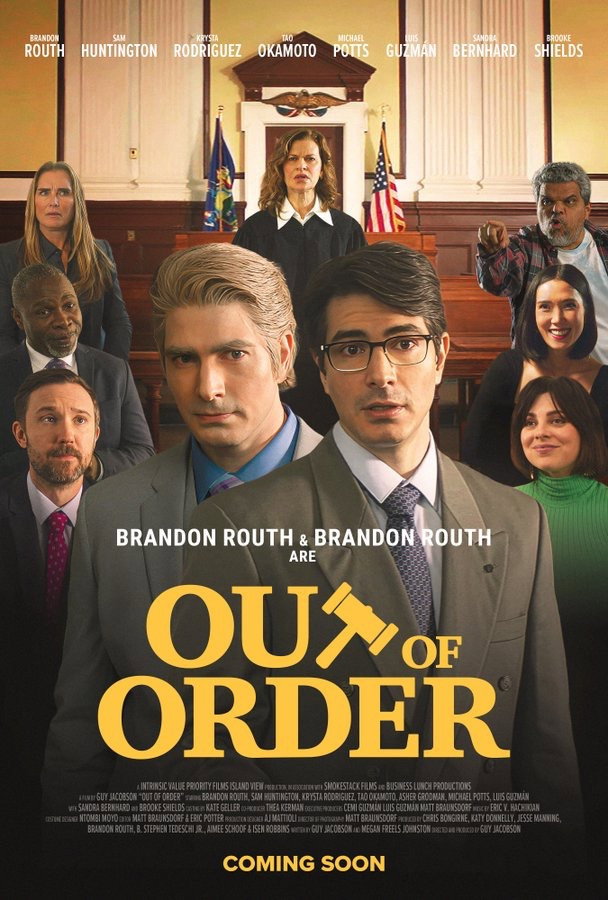
Out of Order! — The Reunion the Movie Doesn’t Know It Has
Superman and Jimmy Olsen share frames again after nineteen years, a Broadway scene-stealer plays the farce all by herself, and the screenplay never shows up to...
Updated July 25, 2026
 ★★½
★★½
Lunara Review
The Gorge — The Distance Was the Movie
Scott Derrickson's two-hander has one of the best premises of the year and the saddest relationship to it -- a film that treats the very...
Updated July 14, 2026
 ★★★
★★★
Lunara Review
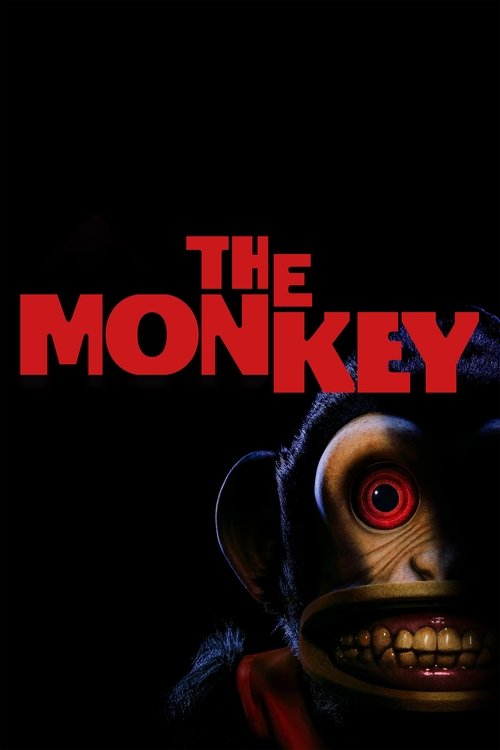
The Monkey — Laughing at the Funeral
Osgood Perkins follows the dread of Longlegs with something that looks like its opposite -- a gleeful splatter comedy about a cursed toy...
Updated August 12, 2026
 ★★★★
★★★★
Lunara Review
Eephus — The Pitch Is the Form
Carson Lund's debut spends one long afternoon watching a meaningless recreational baseball game on a field that is about to be demolished...
Updated July 14, 2026