
Lunara Review
If I Had Legs I’d Kick You — The Hole in the Ceiling
A mother's love, filmed the way it is actually performed: as labor, at 3 a.m., with no relief shift coming.

A mother’s love, filmed the way it is actually performed: as labor, at 3 a.m., with no relief shift coming.
The ceiling opens first. A pipe bursts in a Long Island apartment and leaves a gaping, dripping, faintly organic hole above the bed, and Mary Bronstein films it the way other horror directors film a portal: dark, wet, breathing, impossible to stop looking at. Linda, the woman who lives under it, is a therapist whose daughter is a medical crisis in motion, a child with a feeding tube, a gastrointestinal illness, and a voice that cuts through drywall. The hole exiles mother and daughter to a motel that functions as purgatory with a vending machine. And for the next two hours the film keeps three wounds in strict visual rhyme: the hole in the ceiling, the port in the child’s stomach, and the widening void where Linda’s own self used to be. It is not subtle. Exhaustion is not subtle. That is the point being made, and Bronstein, directing her first feature in seventeen years, makes it with a confidence that borders on aggression.
The formal gamble that defines the movie is that the daughter has almost no face. We get dangling legs, a stomach with its plastic port, the back of a head, a voice, always the voice, but the film keeps her features out of frame with near-total discipline. On paper it sounds like a stunt. On screen it is the truest thing in the picture, because it films the child not as a person, the film knows she is a person, but as what she is to a caregiver at the far end of depletion: a force. A collection of demands, alarms, and symptoms that structures every hour and offers no reward of connection, because connection requires a self to connect from and Linda’s is being erased. The choice converts domestic drama into psychological horror without a single genre prop. The monster is need itself, and it is offscreen, and it is winning.
Rose Byrne absorbs all of it, and her performance, which took the top acting prize at Berlin, is the film. Bronstein and cinematographer Christopher Messina shoot her in invasive close-up for enormous stretches, sometimes letting the entire off-camera world exist only as sound while the frame holds her face, and Byrne lets you watch a woman lose her original shape in real time. Her daughter calls her stretchable as an insult. Byrne wears it as a diagnosis: a person who absorbs the parking attendants, the doctors, the dripping water, the husband, Christian Slater as a disembodied phone voice of unhelpful authority, and every fresh demand, because she has forgotten that absorbing is not the same as coping. The comic precision that made Byrne a great farceur is all still there, repurposed; she gets laughs in this movie, real ones, and every laugh has a wire in it.
The supporting cast is a gallery of judges and one juror. Conan O’Brien, cast fascinatingly against every instinct he has ever displayed, plays Linda’s own therapist with a stoic, almost cruel detachment, the man whose job is empathy performing it as policy, and his scenes sting precisely because the fit is so wrong-footed: even here, in the room built for it, she cannot be heard. A$AP Rocky, as the motel’s night-shift fixer James, gives the film its one channel of warmth, a weary, grounded charisma whose pity keeps curdling into something more combative and more alive; his nocturnes with Byrne are the only friction in the movie that generates heat instead of abrasion. And then there is the hamster, a sequence of swift, grotesque consequence that tests exactly how much reality the audience will hold, and confirms the film’s coldest thesis: in a world with no safeguards, fragility is not a condition. It is a sentence.
The honest limit is the design itself. This is a film that plays one note fortissimo for two hours, and its embargo on modulation, no flashback of better days, no third-act grace, no relief shift, means the second hour sometimes restates proofs the first hour already closed. The assault is the meaning, and the meaning holds, but a viewer can be right about the film and still feel the repetition as cost rather than crescendo. Bronstein would likely answer that Linda does not get modulation either. Fair. The ledger stays open.
What the film leaves behind is physical, the way true exhaustion is physical: heavy limbs, light sensitivity, the vampire hours of caregiving when the whole world sleeps and you are alone with the machines that keep your child alive. If I Had Legs I’d Kick You is an anti-melodrama that trades tears for bile and sentiment for accuracy, and its accuracy is a form of respect. It looks at the labor of love, the actual labor, hourly, unpaid, unseen, and calls it what it is. Byrne is career-redefining. Bronstein is uncompromising. The hole in the ceiling never does get fixed, and if you have lived any version of this life, you already knew it wouldn’t.
LUNARA DEBRIEF
- Score: 4 / 5
- Year: 2025
- Where to Watch: Theatrical [A24]
- Theme Echo: The Lost Daughter (2021) tt9100054. The same forbidden admission, that maternal love and maternal erasure can share a body, told in retrospect where Bronstein tells it in the present tense. Gyllenhaal’s film remembers the wound; this one is still bleeding.
- Counter-Program: Tully (2018) tt2452386. Maternal exhaustion given a fantastical pressure valve and a warm landing. It is the version of this story built to console, and its comforts measure exactly what Bronstein declines to offer.
- Career Context: Yeast (2008) TT-TBD. Bronstein’s micro-budget debut, seventeen years earlier, already about a woman whose relationships function as slow abrasion. The gap between the two films is the career; the continuity of nerve is the signature.
LUNARA DEBRIEF
- Score:★★★★
- Oscar Ledger1 nominations • 0 wins
- Year:2025
- Where to Watch:
Pair It With
Three films in conversation with this one.

Theme Echo
The Lost Daughter (2021)
The same forbidden admission, that maternal love and maternal erasure can share a body, told in retrospect where Bronstein tells it in the present tense. Gyllenhaal's film remembers the wound; this one is still bleeding.

Counter-Program
Tully (2018)
Maternal exhaustion given a fantastical pressure valve and a warm landing. It is the version of this story built to console, and its comforts measure exactly what Bronstein declines to offer.
Further Reading
More Lunara Criticism
 ★★★½
★★★½
Lunara Review
Den of Thieves 2: Pantera — Burn the Blueprints
The first one wanted to be Heat; this one would rather be drunk, and it turns out drunk is the more honest condition.
Updated July 25, 2026
 ★★½
★★½
Lunara Review
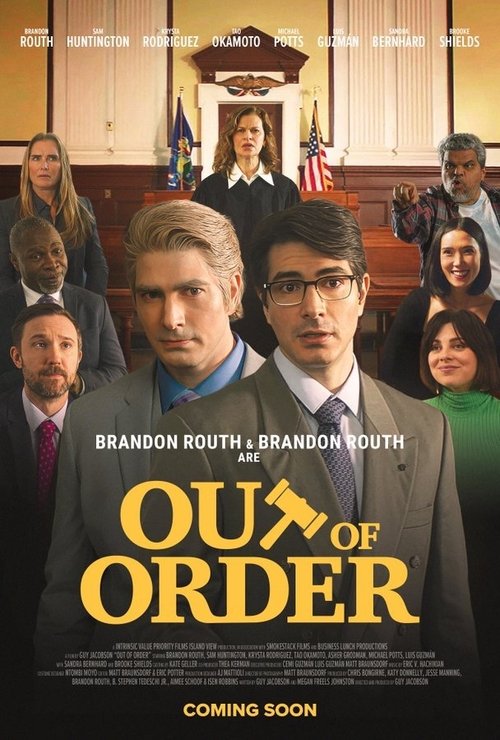
Out of Order! — The Reunion the Movie Doesn’t Know It Has
Superman and Jimmy Olsen share frames again after nineteen years, a Broadway scene-stealer plays the farce all by herself, and the screenplay never shows up to...
Updated July 25, 2026
 ★★½
★★½
Lunara Review
The Gorge — The Distance Was the Movie
Scott Derrickson's two-hander has one of the best premises of the year and the saddest relationship to it -- a film that treats the very...
Updated July 14, 2026
 ★★★
★★★
Lunara Review
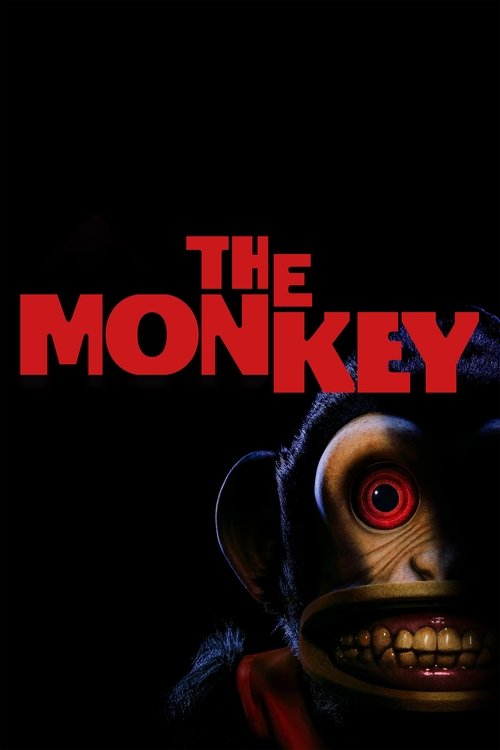
The Monkey — Laughing at the Funeral
Osgood Perkins follows the dread of Longlegs with something that looks like its opposite -- a gleeful splatter comedy about a cursed toy...
Updated August 12, 2026
 ★★★★
★★★★
Lunara Review
Eephus — The Pitch Is the Form
Carson Lund's debut spends one long afternoon watching a meaningless recreational baseball game on a field that is about to be demolished...
Updated July 14, 2026