
Lunara Review
Iron Man 2 — The Sequel That Became a Commercial
For four minutes in Monaco it is a real movie; the rest is a trailer for films that do not exist yet.

For four minutes in Monaco it is a real movie; the rest is a trailer for films that do not exist yet.
For about four minutes in Monaco, Iron Man 2 is dangerous. Ivan Vanko walks out onto a Grand Prix track in an orange jumpsuit, no armor, no entrance music, plants his feet, and cuts race cars in half with two whips of white current. Mickey Rourke plays the moment with slack, unhurried menace, a man who has waited decades for this and can therefore wait another few seconds while the traffic arrives. He is not performing villainy. He is finishing a thought that started in a Russian prison. The scene has real danger in it, the kind the first Iron Man ran on, and the film spends its remaining two hours making sure nothing like it happens again.
This is the first Marvel film that exists primarily to advertise other Marvel films, and the evidence is right there in how it was made. The release date was on the calendar before a word of dialogue existed. There was no locked script, only a to-do list wearing a story’s clothes: continue Tony Stark, introduce Black Widow, expand S.H.I.E.L.D., set up The Avengers, and sell the audience on a cinematic universe that did not yet exist. That the picture functions at all is a minor logistical achievement. That it functions as a film, a self-contained story with its own stakes, is the claim it cannot support.
The central tragedy here is not the palladium poisoning or the dead father or the Senate hearing. It is Rourke. He arrived fresh off the career resurrection of The Wrestler carrying three months of accent work, a backstory he researched by visiting Russian prisons, and exactly the kind of combustible commitment that made the first film electric. He built Vanko from the body outward: the slumped shoulders of institutional damage, the deliberate hands of a man who has assembled things in confined spaces for most of his life. The performance, in the scenes that survive, radiates a weary menace that belongs to a better movie. The film repays all that labor by parking him behind a laptop for an hour and then reducing him, for the climax, to a man in a bigger suit. The first film made that mistake with Jeff Bridges and got away with it on charm. Doing it twice is not a mistake. It is a policy.
Downey stays magnetic, because Downey is constitutionally incapable of being boring, but the voltage is lower and you can hear why. The quips land, the restlessness is intact, and the psychological arc underneath has been hollowed out to make room for franchise plumbing. The starkest casualty is the drinking. The Demon in a Bottle material, drawn from one of the most celebrated runs in the character’s comics history, arrives on screen as a single party scene: Stark gets drunk in the armor, behaves recklessly, and is subdued by War Machine before the consequences can compound. The film gestures at self-destruction without committing to it, and what results is a version of addiction with no weight, no cost, and no resemblance to the actual disease. It is darkness as set dressing, and the movie changes the subject the moment the party ends.
Scarlett Johansson enters the franchise in a role engineered to be looked at before it is listened to. The camera introduces Natasha Romanoff in a boxing ring while Favreau’s own character narrates her attractiveness, and the film never recovers from its own framing. Johansson does what she can inside the constraint, building a vocabulary of controlled stillness that hints at a character the screenplay has no interest in meeting, but the introduction sets the template for how this franchise would handle its women for years: competent, present, and fundamentally in service of the men whose stories they orbit.
The one consistent pleasure is Sam Rockwell, and his Justin Hammer works as a review of the film he is standing in. Hammer is a second-tier industrialist performing competence, every gesture borrowed from somebody more powerful, the dance, the tan, the pitch that oversells because the product cannot. Rockwell understands something the movie does not, which is that imitation is its own kind of tragedy, and he plays the knockoff with the manic precision of a man who knows he is one. A sequel performing the confidence of its predecessor without the substance underneath: Rockwell is not in this film so much as he is about it.
To be fair to the thing, its opening stretch earns its keep. The Senate hearing is the strongest sustained passage, staging Stark’s refusal to hand over the Iron Man technology as an actual debate about privatized military power, and it anticipates the tech-billionaire sovereignty arguments that arrived in the real world a decade later. Garry Shandling plays Senator Stern with the oily persistence of institutional authority confronting private exceptionalism, and the scene works precisely because the tension is allowed to stand without being settled by violence. It is a restraint the rest of the picture abandons completely, and it is the last time the film trusts an idea to carry a scene.
Iron Man 2 matters as evidence more than entertainment. It is the first film where the franchise’s true priorities become legible: continuity over coherence, setup over story, expansion over intention. Favreau, who two years earlier fought a studio for his lead actor and protected the improvisation that made the first film breathe, here functions as a contractor executing specifications, and the distance between the two jobs is the distance between building something and assembling something. The sequel earns its reputation as the franchise’s first real misfire not because it is incompetent. It is competent everywhere. That is the problem. Competence deployed in service of a mandate produces a specific kind of emptiness that no budget can fill, and this is the movie where the franchise learned to live with the emptiness as long as the next installment got sold. In Monaco, for four minutes, you can still see what got traded away.
LUNARA DEBRIEF
- Score: 2.5 / 5
- Year: 2010
- Where to Watch: Streaming (Disney+) | VOD (major platforms)
- Theme Echo: The Godfather Part III (1990) tt0099674. Two sequels inheriting impossible expectations and visibly at war with their own mandates, each one proof that institutional pressure leaves fingerprints on the film itself. The difference is that Coppola’s compromises came from desperation and Marvel’s came from a schedule.
- Counter-Program: The Wrestler (2008) tt1125849. The film that made Rourke’s casting feel like an event, and ninety minutes of exactly the patient, body-first character work Iron Man 2 hired him for and then cut. Watch it to measure what got left on the table.
- Career Context: Chef (2014) tt2883512. Favreau’s next personal picture, and the least disguised allegory in modern Hollywood: a talented cook walks out of a restaurant that only wants him to make the same crowd-pleasing menu, buys a truck, and starts over. He made it immediately after this. Draw your own conclusions.
LUNARA DEBRIEF
- Score:★★½
- Oscar Ledger1 nominations • 0 wins
- Year:2010
- Where to Watch:
Pair It With
Three films in conversation with this one.

Theme Echo
The Godfather Part III (1990)
Two sequels inheriting impossible expectations and visibly at war with their own mandates, each one proof that institutional pressure leaves fingerprints on the film itself. The difference is that Coppola's compromises came from desperation and Marvel's came from a schedule.

Counter-Program
The Wrestler (2008)
The film that made Rourke's casting feel like an event, and ninety minutes of exactly the patient, body-first character work Iron Man 2 hired him for and then cut. Watch it to measure what got left on the table.

Career Context
Chef (2014)
Favreau's next personal picture, and the least disguised allegory in modern Hollywood: a talented cook walks out of a restaurant that only wants him to make the same crowd-pleasing menu, buys a truck, and starts over. He made it immediately after this. Draw your own conclusions.
Further Reading
More Lunara Criticism
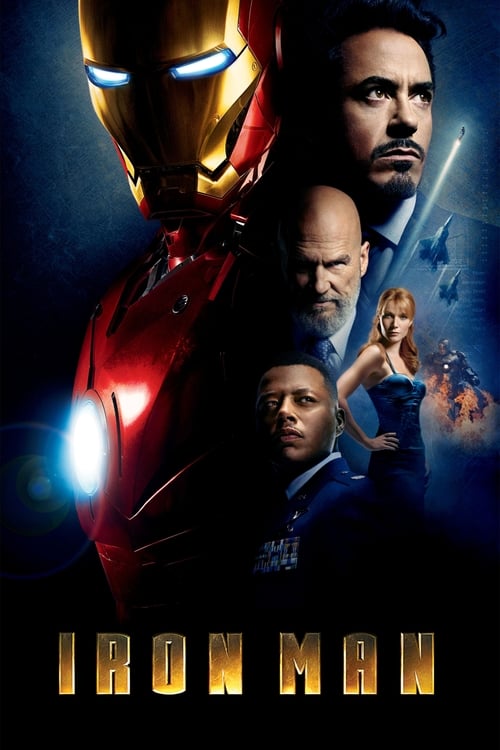 ★★★★
★★★★
Lunara Review
Iron Man — The One That Was Actually Dangerous
The most consequential line in the franchise was made up on the spot, and that is the whole movie in miniature.
Updated July 25, 2026
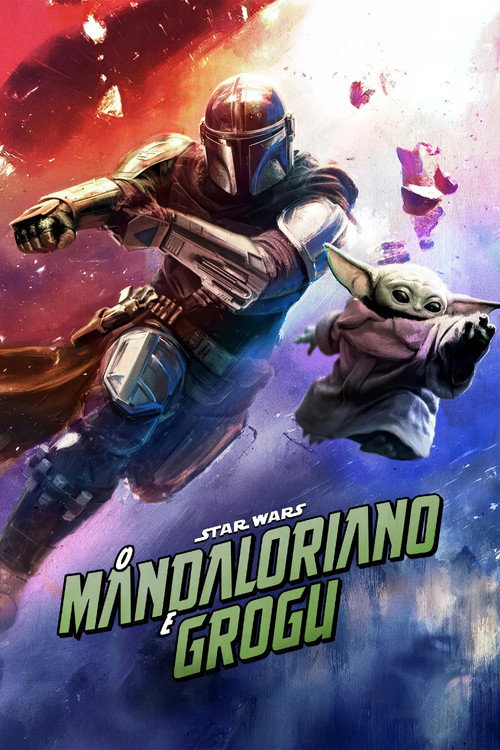 ★★
★★
Lunara Review
Star Wars: The Mandalorian and Grogu — The Craft Is the Alibi
The Disney+ hit makes its theatrical jump this week, and the move from small screen to IMAX doesn't enlarge the show so much as expose it...
Updated July 25, 2026
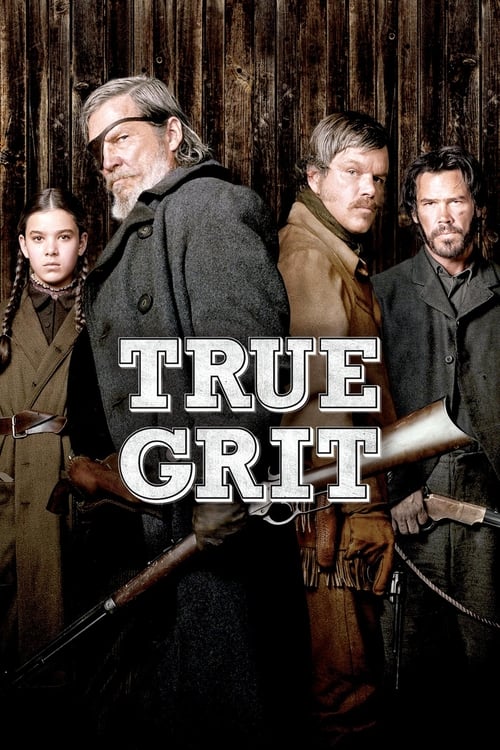 ★★★★★
★★★★★
Lunara Review
True Grit — Retribution, Itemized
The Coens' warmest picture is a collection job: a fourteen-year-old converts her grief into invoices, and the last one comes due on her own body.
Updated July 25, 2026
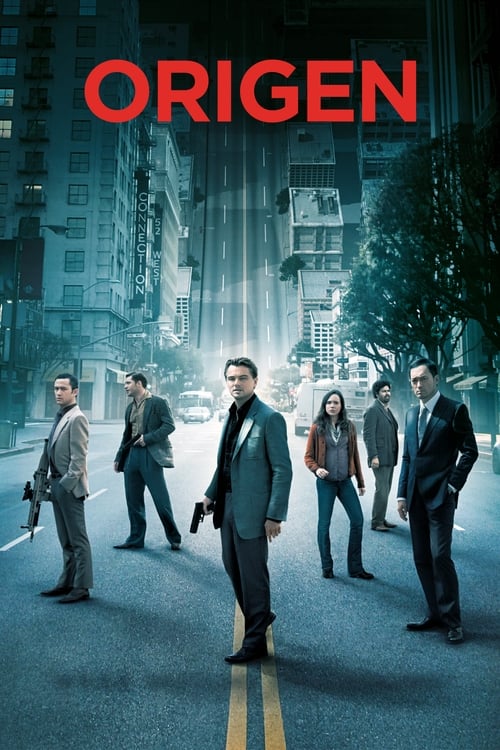 ★★★★★
★★★★★
Lunara Review
Inception — The Review Already Exists
The definitive review of this film was written in the summer of 2010 by the critic I love most in this business, and anything I add to its...
Updated July 20, 2026
 ★★
★★
Lunara Review
The Dog Stars — Going Nowhere Beautifully
Ridley Scott makes the end of the world look expensive and feel like nothing at all, and outsources the only honest emotion to a very good...
Updated September 10, 2026