
Lunara Review
True Grit — Retribution, Itemized
The Coens' warmest picture is a collection job: a fourteen-year-old converts her grief into invoices, and the last one comes due on her own body.

The Coens’ warmest picture is a collection job: a fourteen-year-old converts her grief into invoices, and the last one comes due on her own body.
The best gunfight in True Grit happens across a desk. Mattie Ross, fourteen years old, her father lying at the undertaker’s because Tom Chaney shot him over two gold pieces, walks into Colonel Stonehill’s stock barn in Fort Smith and informs the biggest horse trader in the territory that he owes her money. He does not. She proves it anyway. Over two sittings she sells him back four ponies he has no use for, bills him for a horse stolen out of his own stable, and invokes a lawyer named J. Noble Daggett the way other people invoke Scripture, until a man twice her size and four times her age is paying out on a claim he started the morning laughing at. Stonehill begins the negotiation amused and ends it medicated, waving her off like a bee. The scene is pure pleasure, and it is the whole picture in miniature: a child the adult world will not let hold anything but paper, discovering that paper, held correctly, is a weapon.
The Coens shot Charles Portis’s novel straight, three years after their bleakest western, and the surprise of the film is how little irony they brought to it. They kept the book’s churchy, contraction-free diction, kept its fourteen-year-old Presbyterian avenger, and built their most openly emotional picture out of the least sentimental materials on the shelf. The key is handed over in the first minute of narration, when Mattie lays out the house rules: you must pay for everything in this world, one way and another, and nothing is free except the grace of God. Every scene that follows is a transaction under that rule. Rooster Cogburn costs a hundred dollars. Safe passage into the Choctaw Nation costs corn dodgers, tobacco, and the pride of two grown men. Chaney has a price on him from three directions at once, none of them sentimental. The film is not about revenge, which is a passion. It is about collection, which is a discipline, and the live question it carries for two hours is what the collecting will cost the collector.
The film sorts its men by how they answer her. Rooster is heard before he is seen, hollering from inside an outhouse that the jakes is occupied, and Jeff Bridges keeps him near that level of dignity for most of the picture: a fat one-eyed marshal who narrates his own legend from the bottom of a whiskey jug, and whose testimony under cross-examination is a comic ruin, a career of shootings with no receipts kept. He is Mattie’s opposite instrument, force without accounting, and the film’s comedy is the sound of her precision knocking against his rot. Matt Damon plays LaBoeuf, the Texas Ranger, as vanity in fringe: a man who jingles when he walks, recites his own resume at the campfire, and needs the child to be wrong about something, anything, because she has been right at his expense since Fort Smith. Josh Brolin plays Chaney, when he finally surfaces, as a whimpering inventory of grievances, a killer genuinely convinced that everything is against him. None of this is aura. It is behavior, itemized, and the behavior is the moral information.
The craft holds the same line the diction does. Carter Burwell builds the score almost entirely from nineteenth-century hymns, Leaning on the Everlasting Arms above all, played as parlor piano and permitted to swell only when the film has earned the swell, so the whole soundtrack sounds the way Mattie thinks: borrowed rectitude, faith kept like a ledger. Roger Deakins lights Fort Smith in daguerreotype browns and lamp glow and stages a public hanging as civic entertainment, families picnicking under the scaffold, which tells you what a life trades for in this economy before anyone saddles a horse. The dialogue, notarized and contraction-free, turns every campfire exchange into sworn testimony; people in this picture do not chat, they depose. Even the violence keeps the ledger’s tempo, sudden and short and paid in full, and the one purely mythic image, Rooster taking the reins in his teeth to charge four riders across open grass, is itself a payment: a fat drunk making good, at last, on his own advertising.
The trail is where the picture pays its own toll. In the middle stretch LaBoeuf quits the party and rejoins it twice, and the second loop plays as what it is, a screenplay walking in circles so the three-way partnership can dissolve and re-form on schedule; the corn-dodger shooting contest is charm idling in place. And Chaney is a built-in anticlimax. The film spends ninety minutes pricing this man, and the design wants his smallness to be the point, evil as a disappointment rather than a majesty, which is honest and right and still costs the confrontation a size. When Mattie finally stands across the creek from her father’s killer, the scene plays smaller than the grief that financed it. The film knows this, I think, which is why it does not linger. It gets her to the snake pit.
What happens after the rifle’s recoil drops her backward is the meaning of the movie arriving at a gallop. Mattie in the pit among rattlers and bones, Rooster hauling her out on a cut rope, the bitten hand slit and drawn, and then the night ride: Little Blackie, the pony she bought out of her Stonehill winnings, run to death under the two of them across flats that Deakins abstracts into a black field of stars, until the horse gives out and the fat man shoots it and carries the child in his arms, walking. It is the one service in the film performed without an invoice. She engaged him for a hundred dollars; nobody prices this. Grace, the single free item in Mattie’s cosmology, arrives on foot, drunk, breathing hard. Then the coda does what almost no adventure picture has the nerve to do: it shows the bill collected. Twenty-five years on, Mattie is a one-armed spinster in black, sharp as wire, standing over Rooster’s relocated grave after missing the living man by three days. Time just gets away from us, she says, flat as a closing entry. The frame holds her small against the winter ridge, pinned sleeve visible, and you understand she would sign for all of it again. That is what the Coens found in this material: not a girl’s adventure but a settling of accounts in which the collector paid the most and never once called it a loss.
LUNARA DEBRIEF
- Score: 5 / 5
- Year: 2010
- Where to Watch: Streaming [Paramount+] | VOD [all major platforms]
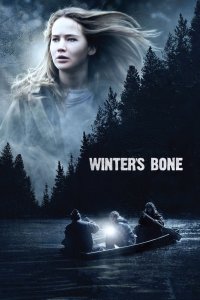
- Theme Echo: Winter’s Bone (2010) tt1399683. The same year produced two teenage girls marching into armed male country to settle a father’s account. Ree Dolly pays in beatings, Mattie in limb and years, and each film makes the other’s arithmetic visible: kin-debt is the oldest economy in America, and daughters are its collection agents.
- Counter-Program: Unforgiven (1992) tt0105695. The western that says the books never balance: deserve has nothing to do with it, and every collected debt corrupts the collector. Mattie’s ledger theology against Munny’s bankruptcy of the soul; each film thinks the other is naive, and the disagreement is the whole genre’s argument with itself.
- Career Context: No Country for Old Men (2007) tt0477347. The same border country three years earlier with the providence removed: chance as god instead of debt as god. Grit re-runs the chase with a moral order installed and a child holding the accounts, and the two films together are the Coens’ full statement on whether the universe keeps books.
LUNARA DEBRIEF
- Score:★★★★★
- Oscar Ledger10 nominations • 0 wins
- Year:2010
- Where to Watch:
Pair It With
Three films in conversation with this one.
Theme Echo
Winter's Bone (2010)
The same year produced two teenage girls marching into armed male country to settle a father's account. Ree Dolly pays in beatings, Mattie in limb and years, and each film makes the other's arithmetic visible: kin-debt is the oldest economy in America, and daughters are its collection agents.

Counter-Program
Unforgiven (1992)
The western that says the books never balance: deserve has nothing to do with it, and every collected debt corrupts the collector. Mattie's ledger theology against Munny's bankruptcy of the soul; each film thinks the other is naive, and the disagreement is the whole genre's argument with itself.
Career Context
No Country for Old Men (2007)
The same border country three years earlier with the providence removed: chance as god instead of debt as god. Grit re-runs the chase with a moral order installed and a child holding the accounts, and the two films together are the Coens' full statement on whether the universe keeps books.
Further Reading
More Lunara Criticism
 ★★★★★
★★★★★
Lunara Review
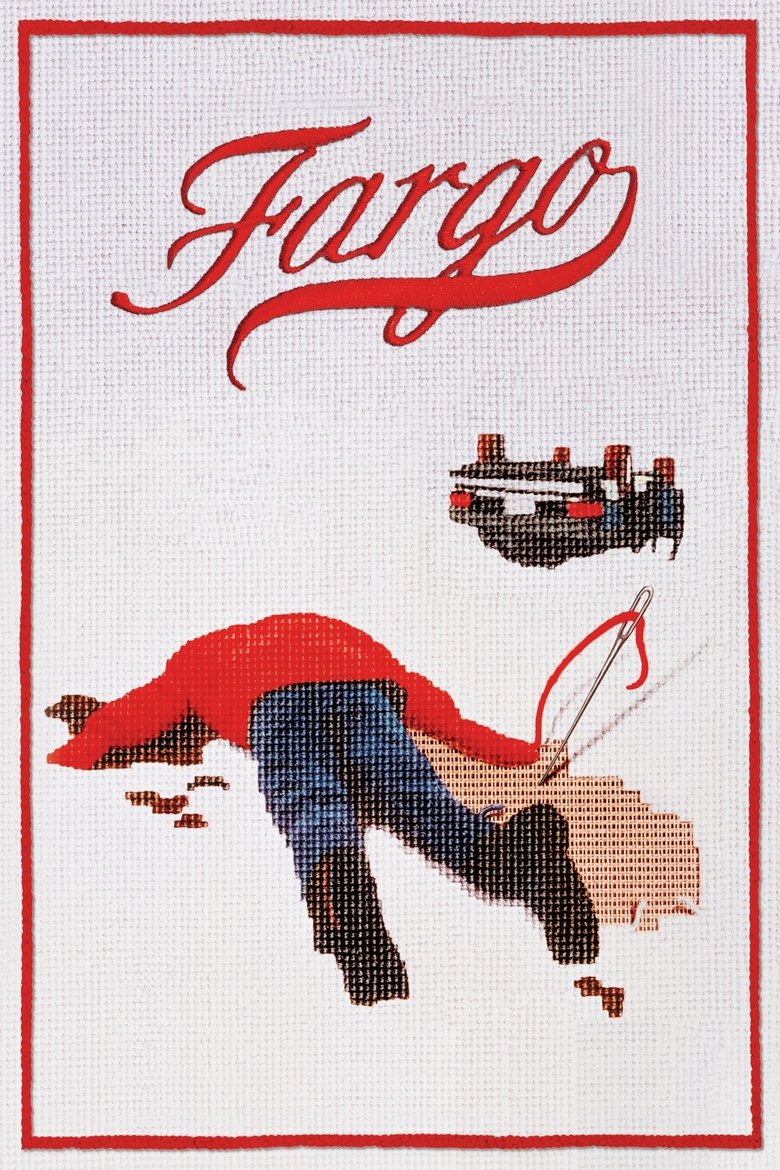
Fargo — Two Uses for Nice
The accent everybody imitates is doing two different jobs: for Jerry it is camouflage, for Marge it is a method.
Updated July 25, 2026
 ★★★★★
★★★★★
Lunara Review
Burn After Reading — Nobody Learns Anything
The Coens' spy comedy has no spy and no secret; eighteen years on, that is the scariest thing in it.
Updated July 25, 2026
 ★★★
★★★
Lunara Review
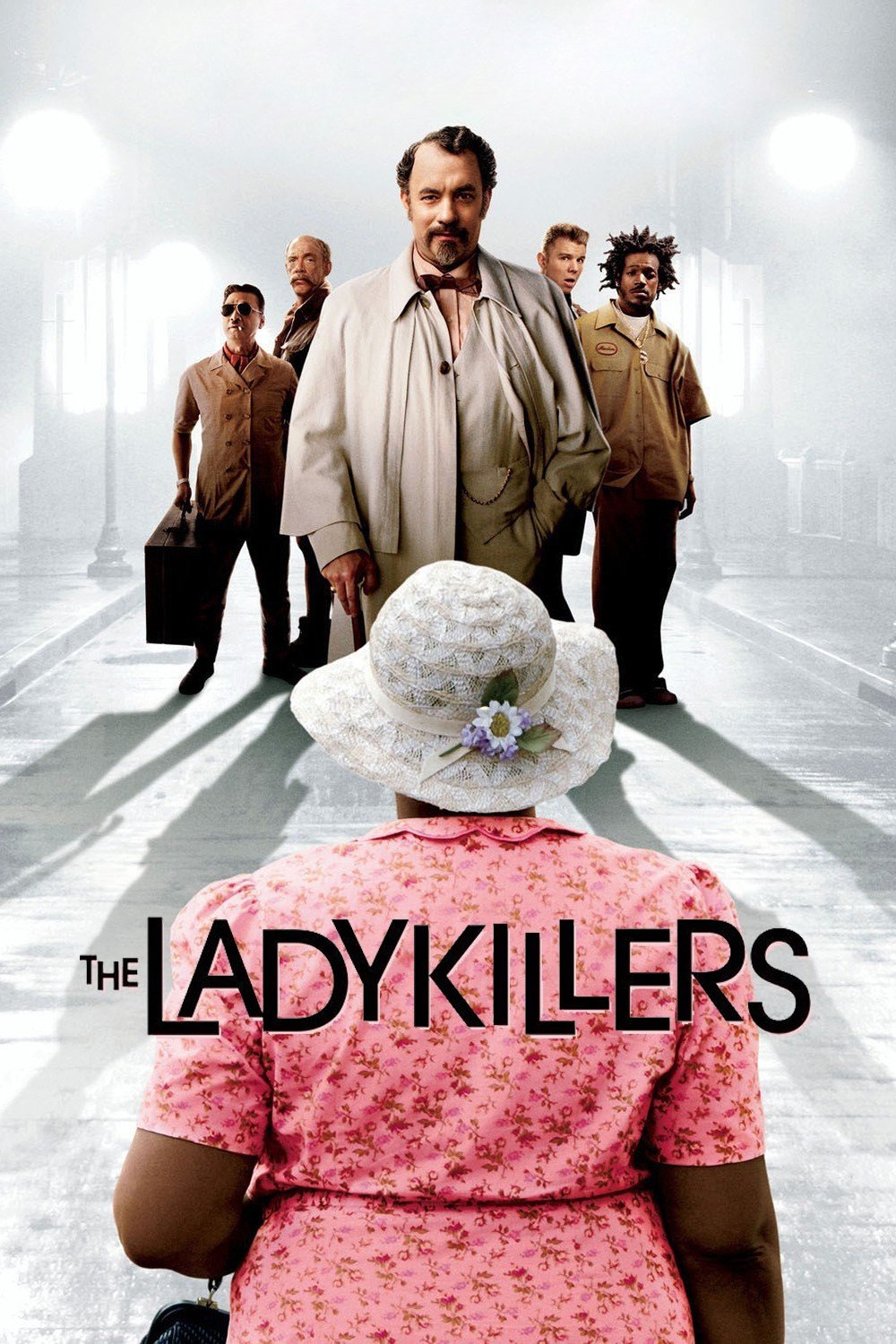
The Ladykillers — The Soundtrack Believes, the Movie Grins
The Coens' Southern remake has a churchful of soul on the soundtrack and a cartoon where its menace should be.
Updated July 25, 2026
 ★★★★★
★★★★★
Lunara Review
Barton Fink — The Common Man Knocks
The Coens' Hollywood nightmare is not about writer's block; it is about a writer who never once listens.
Updated July 25, 2026
 ★★★★★
★★★★★
Lunara Review
No Country for Old Men — The Thriller That Stops Answering
The Coens' McCarthy adaptation keeps subtracting everything a chase picture owes you, and every subtraction is the meaning.
Updated July 25, 2026