
Lunara Review
Barton Fink — The Common Man Knocks
The Coens' Hollywood nightmare is not about writer's block; it is about a writer who never once listens.

The Coens’ Hollywood nightmare is not about writer’s block; it is about a writer who never once listens.
The first night Barton Fink spends in the Hotel Earle, a noise comes through the wall. A man’s voice, crying or laughing, impossible to tell which. Barton does what Barton does: he picks up the phone and files a complaint. A minute later there is a knock, and the noise is standing in his doorway in an undershirt, huge and sweating and apologetic, introducing himself as Charlie Meadows, insurance man, and offering the single most generous sentence anyone says in this movie: I could tell you stories. Barton, a New York playwright who has just signed with a Hollywood studio on the strength of a Broadway hit about the dignity of the common man, spends the rest of the film not asking to hear one. That is the whole horror in miniature. The common man Barton lectures banquet rooms about lives one wall away, keeps offering, keeps grinning, keeps saying he could tell him stories, and the poet of the working stiff never asks a single question. Everything that burns later is invoiced to that.
The setup is Hollywood legend by way of purgatory. It is 1941, and Capitol Pictures has bought itself a genius. Studio boss Jack Lipnick, played by Michael Lerner at the volume of a parade, kisses Barton’s feet in one meeting and assigns him a Wallace Beery wrestling picture in the next, worshipping the writer while demanding formula slop, and the joke is that both halves are sincere. Barton checks into the Earle, a hotel the movie treats as a sentence rather than a setting: green corridors that recede past reason, wallpaper sliding off the walls in the heat, paste oozing like something underneath is sweating too. Roger Deakins shoots those hallways as a labyrinth with no minotaur in sight, wide and long and humming, and Carter Burwell’s score runs underneath like unease with a melody. A mosquito, in a city that swears it has none, keeps landing on Barton anyway. The blank page in his typewriter stays blank so long it starts to feel like a verdict.
The Coens wrote this film in three weeks while stuck on the script for Miller’s Crossing, which means the cure they found for their own block was a movie about a blocked writer being punished for his soul. They have claimed it means nothing; the picture itself testifies otherwise. Barton’s block is not a shortage of ideas. It is a moral failure wearing a professional costume. He cannot write the common man because he has never met one on purpose. Watch him at the USO dance, shoving a serviceman aside and announcing that his head is his uniform. Watch him with the great Southern novelist W.P. Mayhew, a Faulkner-shaped ruin drinking himself out of sentences, whose books, it turns out, were partly written by Audrey, the secretary-mistress Barton romanticizes and then reaches for. Authorship in this movie is theft, ventriloquism, or paralysis. Nobody at Capitol Pictures writes anything, and the one man full of stories cannot get a writer to listen to a single one.
Then the film springs its trap. Barton wakes next to Audrey after their one night, slaps a mosquito on her back, and the movie tips from studio satire into damnation. A headless body, a bathroom sink the camera dives into as if meaning lived down the drain, a paper-wrapped box that may or may not hold what a box that size holds. And Charlie, revealed. John Goodman plays the turn as the same warm grin under new light: the affable neighbor whose oozing ear was rot announcing itself all along, the insurance man whose policy covers the whole condition of being ignored. When he charges down the burning hallway with a shotgun, roaring that he will show Barton the life of the mind, the film hands its title card to its monster. Barton talked about the life of the mind for two hours. Charlie shows him one: a corridor on fire, doors blowing off, every room a story nobody asked about, going up.
Turturro does something braver than playing a genius; he plays a fraud who does not know it, all flinches and glasses and rehearsed humility, a man who checks every mirror for the common touch. It won him the acting prize at Cannes, where the film took the Palme d’Or and the directing prize too, a sweep so lopsided the festival rewrote its rules to keep any film from doing it again. Fair enough. Few movies have ever been this complete: comedy of the Lipnick meetings, dread of the Earle, and a design where every element, heat, paste, mosquito, ear, is the same rot at different scales.
Be fair about where it loses people, because it does. The last movement will not explain itself. The film never says what Charlie is, never opens the box, trades its sharpest register, the industry comedy, for dream logic exactly when a first viewing wants answers, and a viewer can feel the picture close its door and turn the lock. I think the lockout is the sentence being served: Barton is a man who declined every offered story, so the film declines to hand him, or us, the one that would make it all cohere. But the cost is real. The Lipnick material is so alive that its long absence in the final stretch leaves a draft, and enigma held this tightly can read as a house rule rather than a revelation. It is a puzzle box that never opens. You are allowed to shake it and frown.
Then look at the last shot and see how much the film tells you anyway. Barton sits on a beach with the box he promised not to open, and a woman in a bathing suit settles into the sand ahead of him, shading her eyes against the sun, striking exactly the pose of the picture that hung over his typewriter at the Earle, the one image he stared at for the whole movie instead of talking to the man next door. A pelican drops into the sea. Barton has finally arrived inside the picture he preferred to people, and it is lovely, and it is empty, and it is his. The kid from New York wanted to create a theater of the common man. He ends as a tourist in a postcard, holding a box full of everything he never asked about. That is the scariest thing the Coens had said about art up to 1991, and thirty-five years of writers squinting at blank pages have not blinked it away.
LUNARA DEBRIEF
- Score: 5 / 5
- Year: 1991
- Where to Watch: Streaming [Max] | VOD [all major platforms]
- Theme Echo: Sunset Boulevard (1950) tt0043014. Hollywood as the place that eats writers, told from inside the meal. Wilder’s Joe Gillis narrates his own drowning; Barton never achieves that much self-knowledge. Both films know the town’s cruelest trick is flattery.
- Counter-Program: Singin’ in the Rain (1952) tt0045152. The same industry, remembered as heaven. The studio that crushes Barton is the one that produces Don Lockwood’s joy, and holding the two films side by side shows how much of the dream factory’s glow depends on who is telling.
- Career Context: Miller’s Crossing (1990) tt0100150. The film the Coens were stuck on when this one poured out in three weeks. Watch it first and Barton Fink becomes legible as a confession: what the block felt like, dressed as a hotel, with the ethics of storytelling put on trial.
LUNARA DEBRIEF
- Score:★★★★★
- Oscar Ledger3 nominations • 0 wins
- Year:1991
- Where to Watch:
Pair It With
Three films in conversation with this one.

Theme Echo
Sunset Boulevard (1950)
Hollywood as the place that eats writers, told from inside the meal. Wilder's Joe Gillis narrates his own drowning; Barton never achieves that much self-knowledge. Both films know the town's cruelest trick is flattery.
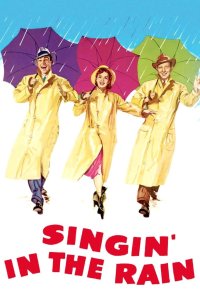
Counter-Program
Singin' in the Rain (1952)
The same industry, remembered as heaven. The studio that crushes Barton is the one that produces Don Lockwood's joy, and holding the two films side by side shows how much of the dream factory's glow depends on who is telling.
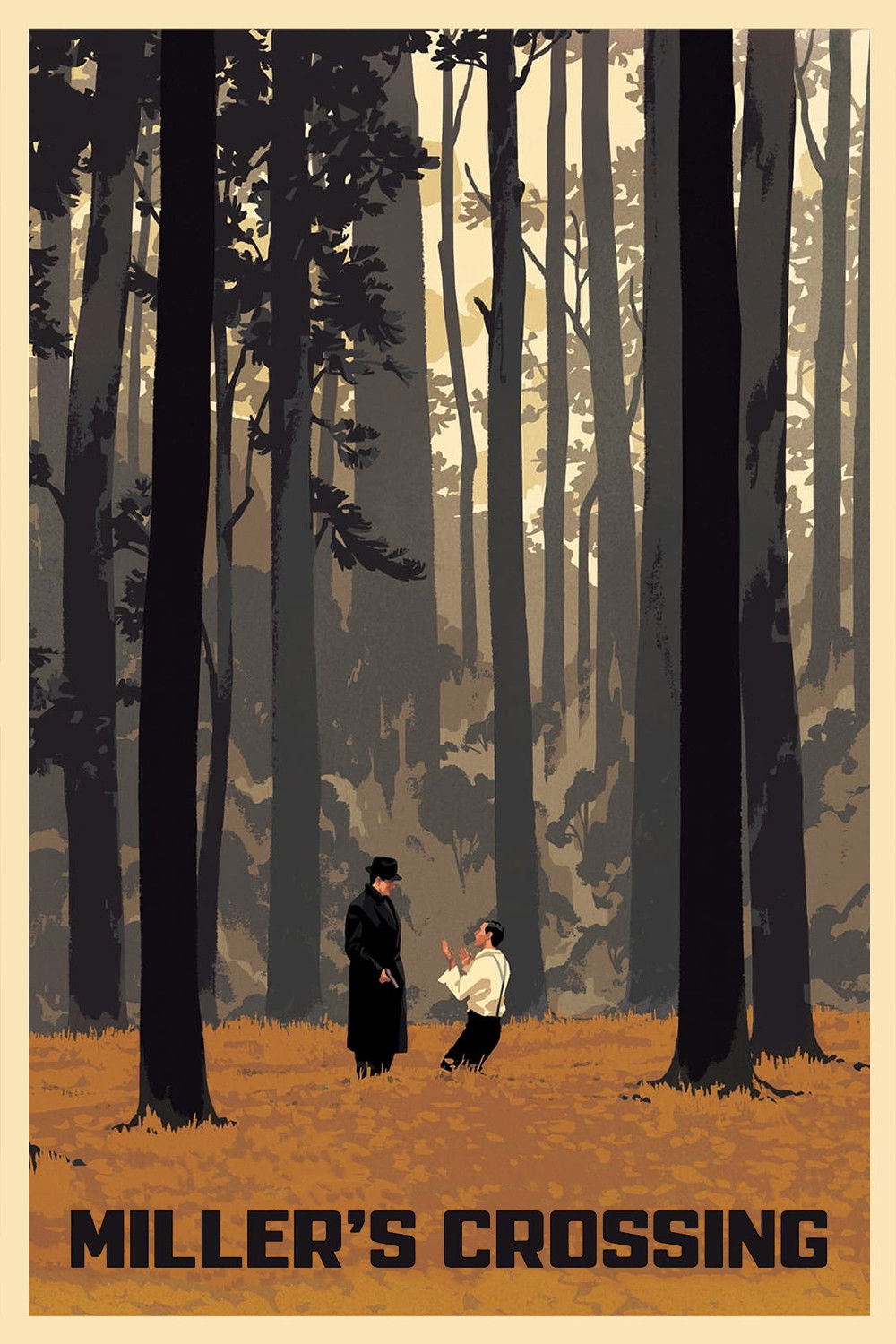
Career Context
Miller's Crossing (1990)
The film the Coens were stuck on when this one poured out in three weeks. Watch it first and Barton Fink becomes legible as a confession: what the block felt like, dressed as a hotel, with the ethics of storytelling put on trial.
Further Reading
More Lunara Criticism
 ★★★★★
★★★★★
Lunara Review
Fargo — Two Uses for Nice
The accent everybody imitates is doing two different jobs: for Jerry it is camouflage, for Marge it is a method.
Updated July 25, 2026
 ★★★★★
★★★★★
Lunara Review
Burn After Reading — Nobody Learns Anything
The Coens' spy comedy has no spy and no secret; eighteen years on, that is the scariest thing in it.
Updated July 25, 2026
 ★★★
★★★
Lunara Review
The Ladykillers — The Soundtrack Believes, the Movie Grins
The Coens' Southern remake has a churchful of soul on the soundtrack and a cartoon where its menace should be.
Updated July 25, 2026
 ★★★★★
★★★★★
Lunara Review
No Country for Old Men — The Thriller That Stops Answering
The Coens' McCarthy adaptation keeps subtracting everything a chase picture owes you, and every subtraction is the meaning.
Updated July 25, 2026
★★★★★
Lunara Review
Miller’s Crossing — Love, Disguised as Treachery
The Coens' gangster picture is about a man who can only protect what he loves by betraying it, and a hat he will not chase.
Updated July 25, 2026