
Lunara Review
The Ladykillers — The Soundtrack Believes, the Movie Grins
The Coens' Southern remake has a churchful of soul on the soundtrack and a cartoon where its menace should be.
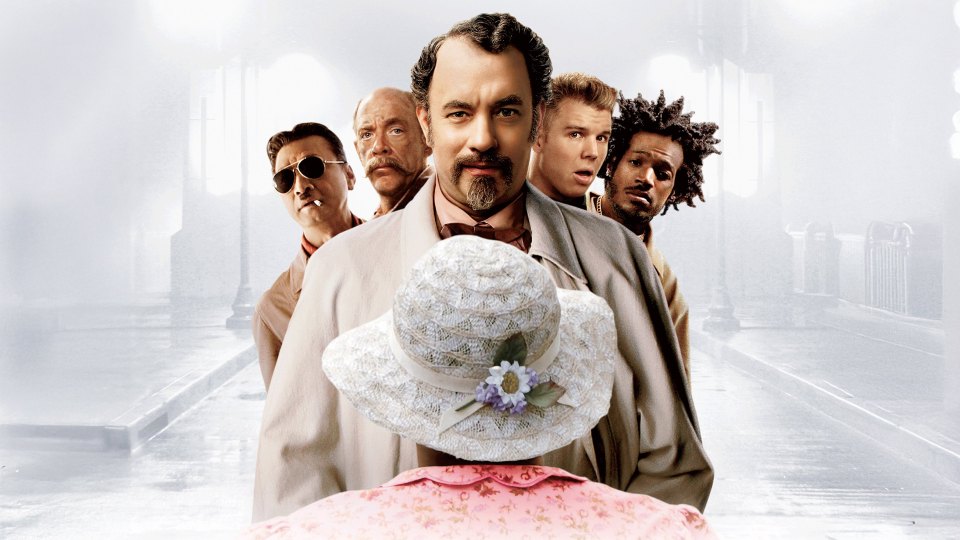
The Coens’ Southern remake has a churchful of soul on the soundtrack and a cartoon where its menace should be.
Twice a day, a garbage barge slides under the highway bridge outside Saucier, Mississippi, hauling the county’s refuse to an island downstream. The Coens photograph it from above, through mist, with a raven perched on a concrete gargoyle in the foreground, and the image is so good, so patiently loaded, that the film spends its whole running time paying it off: one by one, the bodies of five incompetent thieves will drop from that bridge onto that barge, each delivery witnessed by that bird. It is the best joke in The Ladykillers and the most serious thing in it, a hell ferry running on a municipal schedule. The movie around it is a lot noisier and a lot less sure of itself, and the distance between the barge and the bedlam is pretty much the whole review.
The bones are from the 1955 Ealing comedy, transplanted from gray London to hill-country Mississippi. Professor Goldthwaite Higginson Dorr, doctor of classics and connoisseur of Edgar Allan Poe, rents a room from the widow Marva Munson, a churchgoing landlady of granite convictions, so that his crew can tunnel from her root cellar into the counting room of a riverboat casino. Cover story: they are a period-instrument ensemble that needs a place to rehearse. The premise’s genius survives the move intact, because it is one of the great premises in comedy: hardened criminals discover that the one force their planning cannot survive is an old woman’s goodness. What does not survive the move is the temperature. The original ran on menace politely contained, five genuinely dangerous men forced to balance teacups on their knees, every laugh a leak from a pressure vessel. The remake runs on cartoon voltage, and a cartoon cannot leak.
Tom Hanks understood the assignment better than the film did. His Dorr is a full commitment to a single comic idea, courtliness as camouflage: the wheezing giggle through clenched teeth, the antebellum sentence structure that keeps arriving at words like forthwith, the Poe recitations delivered to a roomful of felons as if to a symposium. Hanks finds the character’s motor and never once winks past him, and when Dorr recites To Helen to the night sky in the final minutes, the performance briefly gives the movie the gravity it has been declining all along. Irma P. Hall matches him from the other side of the doctrine. Her Marva is not a dear old lady; she is a moral force with a slapping hand, and the film’s single best running gag hangs on her wall, where the portrait of her dead husband Othar changes expression scene to scene, scowling at the nonsense conducted under his roof. Dorr versus Marva, courtliness versus conviction, is a real Coen movie. It gets maybe thirty minutes of screen time.
The other hour belongs to the crew, and this is where the picture leaks from the wrong places. Marlon Wayans plays the casino inside man at the top of his voice, a register the Coens have never directed well; J.K. Simmons plays a demolitions man with irritable bowel syndrome, which is one joke told eight times; the General’s swallowed-cigarette trick is lovely once and a tic by the third repetition. The flat gags are not flat because they are broad. They are flat because they mistake volume for escalation, and because the five killers, unlike Ealing’s five, are dangerous to no one, so nothing is being suppressed and nothing can boil over. When the crew starts dying, accidentally, ridiculously, there is no stored dread to convert into laughter, and the deaths play as errands. Marva’s triumph, the whole point of the fable, weighs exactly what the men opposing her weigh. Not much.
And yet the movie keeps cutting away to its own conscience. The gospel on the soundtrack is wall-to-wall and dead sincere, a real choir in a real church shaking the rafters with Let the Light from the Lighthouse Shine on Me, and every time the film returns there it accidentally reminds you what commitment sounds like. The music does the believing the script only mimes. Marva sits in that congregation; the crew only tunnels under it. Add the barge, add the raven, add the final grace note in which the loot ends up donated, in full, to Bob Jones University because Marva cannot think of anywhere needier, and you can see the sober, wicked, genuinely Southern moral comedy this team had in them. The film in between is a diversion wearing that movie’s clothes, and the unevenness is not a mystery of tone but a decision dodged: nobody chose which comedy this was, the chamber piece Hanks came dressed for or the demolition derby everyone else was cast in.
So it lands where I have always had it: a fun evening, a lesser Coen, a remake that proves the original’s lethal charm was a matter of restraint rather than material. Watch it for Hanks working alone at a higher difficulty, for Irma P. Hall’s right hand, for a soundtrack that deserves its own congregation, and for a garbage barge that understands the movie better than the movie does. The light from the lighthouse gets shone. The film mostly squints at it.
LUNARA DEBRIEF
- Score: 3 / 5
- Year: 2004
- Where to Watch: Streaming [Max] | VOD [all major platforms]
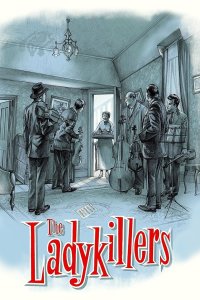
- Theme Echo: The Ladykillers (1955) tt0048281. The same skeleton run on opposite comic physics: menace suppressed against menace inflated. Alec Guinness’s teeth do more damage than this film’s dynamite, and watching the two versions back to back is a complete education in where comedy stores its power.
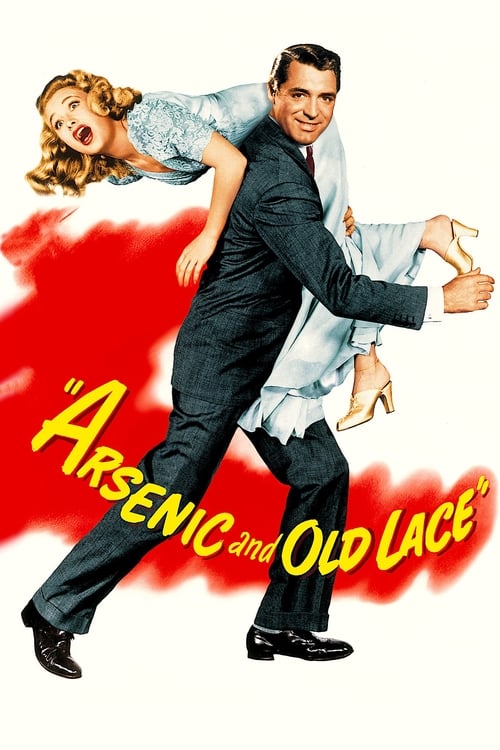
- Counter-Program: Arsenic and Old Lace (1944) tt0036613. Death farce played at full scream with every actor in the same cartoon, and it works, which is the point: pitch is not the problem, mixed pitch is. Capra commits to bedlam the way Ealing committed to restraint, and both commitments embarrass the half measure.
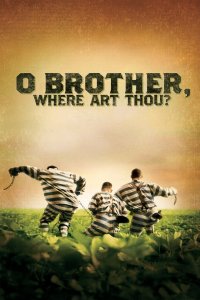
- Career Context: O Brother, Where Art Thou? (2000) tt0190590. The Coens’ other gospel-soaked South, where the music and the myth fuse into one tall tale. Four years later the same hymnal plays over a film that never joins the congregation, and the comparison locates exactly what went missing: belief.
LUNARA DEBRIEF
- Score:★★★
- Year:2004
- Where to Watch:
Pair It With
Three films in conversation with this one.
Theme Echo
The Ladykillers (1955)
The same skeleton run on opposite comic physics: menace suppressed against menace inflated. Alec Guinness's teeth do more damage than this film's dynamite, and watching the two versions back to back is a complete education in where comedy stores its power.
Counter-Program
Arsenic and Old Lace (1944)
Death farce played at full scream with every actor in the same cartoon, and it works, which is the point: pitch is not the problem, mixed pitch is. Capra commits to bedlam the way Ealing committed to restraint, and both commitments embarrass the half measure.
Career Context
O Brother, Where Art Thou? (2000)
The Coens' other gospel-soaked South, where the music and the myth fuse into one tall tale. Four years later the same hymnal plays over a film that never joins the congregation, and the comparison locates exactly what went missing: belief.
Further Reading
More Lunara Criticism
 ★★★★★
★★★★★
Lunara Review
Fargo — Two Uses for Nice
The accent everybody imitates is doing two different jobs: for Jerry it is camouflage, for Marge it is a method.
Updated July 25, 2026
 ★★★★★
★★★★★
Lunara Review
Burn After Reading — Nobody Learns Anything
The Coens' spy comedy has no spy and no secret; eighteen years on, that is the scariest thing in it.
Updated July 25, 2026
 ★★★★★
★★★★★
Lunara Review
Barton Fink — The Common Man Knocks
The Coens' Hollywood nightmare is not about writer's block; it is about a writer who never once listens.
Updated July 25, 2026
 ★★★★★
★★★★★
Lunara Review
No Country for Old Men — The Thriller That Stops Answering
The Coens' McCarthy adaptation keeps subtracting everything a chase picture owes you, and every subtraction is the meaning.
Updated July 25, 2026
 ★★★★★
★★★★★
Lunara Review
Miller’s Crossing — Love, Disguised as Treachery
The Coens' gangster picture is about a man who can only protect what he loves by betraying it, and a hat he will not chase.
Updated July 25, 2026