
La Chimera — The Past Is Contraband
Movie Review

La Chimera, 2023
A man digs for the woman he lost through everybody else’s dead, and the film has the nerve to call that love.
The first time we see Arthur, he is asleep on a train, folded into a second-class compartment in a white linen suit that quit being white sometime last decade, dreaming of a girl in sunlight with a red thread in her hand. He is riding home from prison. The young women across from him giggle; the ticket inspector wants his papers; and Josh O’Connor plays every second of it like a man coming up from deep water into air he is not sure he wants. Alice Rohrwacher never sits you down and tells you what Arthur lost while he was inside. She does not have to. O’Connor’s body carries the whole file: the loose, sleepwalking grace that grief sometimes hands out, shoulders that flinch a half-beat before his eyes catch up, a way of moving through rooms as if he owes the air an apology. He is an Englishman in 1980s Tuscany with exactly one skill anyone will pay for. Give him a forked twig and he can feel the dead under the ground. When he finds them he faints, and the frame turns upside down with him. Then his friends arrive with shovels.
Those friends are the tombaroli, the local grave robbers who tunnel into Etruscan tombs and sell off whatever the dead were buried holding, and here is the perception the whole film rests on: Arthur’s gift and Arthur’s mourning are the same organ. He lost a woman named Beniamina, and he is digging for her through everyone else’s dead. Theft as a way of grieving. Grieving as a way of theft. Love as a third shade of the same hunger, because all three mean breaking a seal on something that was supposed to stay closed. Rohrwacher stages the robberies as seances and the seances as capers, and she lets both registers stand. After a good haul the gang whoops it up like a village soccer team that just won on the road. A traveling balladeer sings their crimes straight into the camera, a running musical commentary that keeps score out loud. And if the gods are watching any of this, they are not angry. They are amused. That is worse, and the film knows it.
The moral weather around Arthur is made of women. Isabella Rossellini’s Flora, a matriarch voice-training a villa full of daughters who are politely waiting for her to die, is the movie’s conscience and its funniest person at once. She makes ruin look chic, even tender, and every scene she is in demonstrates something the film never says aloud: class is the trick that turns theft into taste. Her informal student Italia, played by Carol Duarte with a warmth that is political rather than merely pleasant, is the other road. She sings off-key, works unpaid, hides two children in the villa’s unused rooms, and she is the only person on screen who insists that the living deserve at least the reverence everyone keeps pouring on the dead. Even Spartaco, the gang’s ghostly fence, gets a philosophy instead of a sneer. Nobody in this movie is a cartoon. Everybody has a price and a private intelligence about what the price costs them, and that is how Rohrwacher gets to condemn the trade without once despising the traders. Poverty, longing, and a talent for wonder often sleep in the same bed. She is too honest to pretend they don’t.
She and Helene Louvart shot the film on three gauges, 35mm, 16mm, and Super 16, and the switching is not decoration; it is the movie thinking. The image keeps sliding between the solid and the half-remembered, the past flickering in, hardening into evidence, going soft again into fable, until history stops behaving like a museum and starts behaving like what the film insists it is: a black market. The cutting moves at the pace of a story told out loud, each edit landing like a turn in a tale, and the score works like a weather vane, because whenever the music goes jolly, somebody is about to get hurt. Through all of it runs an actual red thread, looped between rooms and lovers and centuries. Call it a symbol if you want. It works more like plumbing, routing feeling from one era into another.
The keystone sequence lowers the gang into an untouched sanctuary tomb on a headland where the ancient dead and a power station share one horizon, smokestacks standing over grave mounds, the film’s entire case compressed into a single frame. The past is not behind us. It is under our feet, and we are selling it by the handful. Inside the chamber waits a goddess, serene and sooted, surrounded by frescoes that kept their color for two thousand years for exactly as long as no living eye landed on them. The desecration registers in your chest before it registers in your head. They saw off her head to move her. Later, at the fence’s floating auction, she becomes inventory, an object with a reserve price, and the party buoyancy of the caper curdles right on schedule into grief: these vessels and faces were how the dead spoke to their gods, and now they are lots. What Arthur does at the rail, the head in his hands, saying she was not made for human eyes, is the cleanest moral motion in the picture, and Rohrwacher gives him no credit for it, because throwing a stolen thing into the sea returns it to nobody. You can sell the pot. You cannot sell the breath that once cooled inside it. Both halves of that sentence are true, and the second half pays no rent.
Where the spell thins is the last half hour. A picture that has spent ninety minutes braiding play with penalty lets go of its plot the way a hand lets go of a kite string: the gang, the auction world, Flora’s daughters, all released with a shrug so the film can chase the numinous straight down into the ground. If you meet that drift with faith, it plays as transcendence, and the final image, a collapsed tunnel, a red thread hanging in the dark, a hand reaching, closes the love story in the only place it ever could have closed. If you meet it without faith, it is a film reaching past its own wingspan, and story threads that earned real endings settle for evaporation instead. I split the difference, and I will tell you why honestly. Crimes against the past are never solved, so a story about them arrives with a built-in alibi for not resolving. But an alibi is not an answer, and the caper half of this movie was good enough to teach me to want one.
What stays with me, days later, is a taste that is equal parts indictment and consolation. Indictment, because the film demonstrates without one sermon that plundering the past is not a scandal inside capitalism but capitalism running exactly as designed, the sacred priced by the handful. Consolation, because Rohrwacher believes wonder is stubborn. She believes it survives its own fencing, that a man can spend a whole film selling the dead and still, at the bottom of a collapsed tomb, be found by them. The past here is not memory. It is contraband, and the film’s tenderest joke is that the one thing these smugglers can never move is the longing that made them pick up the shovel.
Lunara Film Debrief
- Score:★★★★½
- Year:2023
- Where to Watch:

Kogonada's film about a man haunted through buildings is this one's quiet cousin. Both believe objects hold the dead the way rooms hold voices, and both follow people gifted, or cursed, with the ability to hear it.

The heroic fantasy of archaeology, where grabbing the idol is the adventure and the museum is the moral. Rohrwacher's film is the invoice that fantasy never opened: every trophy in the case was somebody's prayer, dug out of their hands.
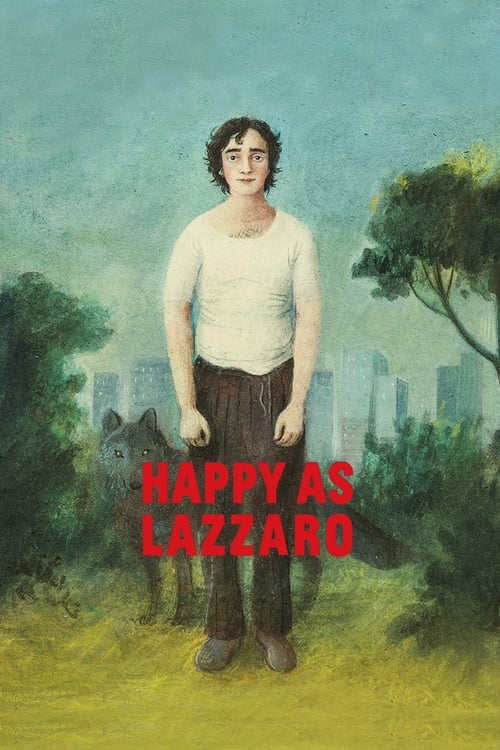
Rohrwacher's holy fool walked out of one century into another and exposed both; Arthur is the fallen version of the same figure, a saint's sensitivity wired to a thief's income. Together the two films map her real subject: innocence as a form of time travel.
More Lunara Film Criticism
Further Reading
 ★★★★½
Lunara Film Review
Guardians of the Galaxy Vol. 3 — The Wound Under the Fur
The last MCU film made by somebody who loved the characters more than the franchise, and it is about a raccoon, and it wrecked me.
Updated September 23, 2026
 ★★★★½
Lunara Film Review
Evil Does Not Exist — The Villain Is a Sentence
The scariest line of the year is "we can mitigate," said politely, by people who will be gone by February.
Updated September 23, 2026
 ★★★★½
Lunara Film Review
Do Not Expect Too Much From the End of the World — Harm, Rebranded as Story
Radu Jude staples two lying centuries together, points a camera at one workday, and calls it Monday.
Updated September 23, 2026
 ★★★★
Lunara Film Review
Beau Is Afraid — The Verdict Came First
Three hours inside a guilt that predates its owner; the trial was underway before the birth.
Updated September 23, 2026
 ★★★★½
Lunara Film Review
Barbie — The Product That Noticed
A corporation paid for a film about the impossibility of being a product, and Greta Gerwig almost got the whole confession on tape.
Updated September 23, 2026