
Lunara Review
Men — One Face, Every Man
One word on the poster, one face on every man, and a hundred minutes of images trying to close the gap.

One word on the poster, one face on every man, and a hundred minutes of images trying to close the gap.
Early in Men, Harper Marlowe finds the mouth of a disused railway tunnel on a country walk and does the thing the movie needs her to do: she sings into it. A note comes back. She stacks another on top of it, delighted, building a chord out of her own returned voice, a woman harmonizing with herself in the green dark. Then a silhouette detaches itself from the far end of the tunnel and starts to run at her. It is the best sequence Alex Garland has ever cut, and it is the entire film in one shape: a woman makes a sound for her own pleasure, and a man arrives to turn it into a pursuit. Her echo goes with her for the rest of the picture, distorted, repeated, used against her.
The film around that sequence states its case with a bluntness that is either provocation or confession, starting with the one-word title. Garland has made a folk horror about male violence so literal it flirts with tautology, men are the monster, the monster is men, and whether the execution complicates the premise or just repeats it louder is the fight audiences have been having since it premiered at Cannes and split the room. The imagery is committed enough, grotesque and poetic enough, that the film survives its own bluntness more often than it should. But the strain shows.
Harper has come to a grand rental house in the countryside to be alone on purpose. Her husband James is dead, a fall from the balcony of their building that was either suicide or something less decided, and the fall came minutes after the marriage’s ugliest scene: she asked for a divorce, and his answer was a threat dressed in the language of love, that leaving him would be killing him. The grief she carries is contaminated with a guilt she knows she does not owe and still cannot put down. The countryside offers apples, a village, a church, a pub, and a procession of local men, a vicar, a policeman, a schoolboy, a naked figure standing in the treeline, who all share one face.
The face belongs to Rory Kinnear, and the stunt casting turns out to be the film’s most defensible idea. Each iteration is differentiated with real precision, the landlord’s bumbling condescension, the vicar’s solicitude going rancid mid-sentence, the boy’s flat cruelty, the Green Man’s ancient blankness, while the underlying sameness never lifts, and the sameness is the point: all these men are one man, and that man is the problem. Opposite him, Jessie Buckley keeps the film on the ground. Her Harper is a specific person rather than a stand-in for womanhood, quick, funny, furious at her own fear, and Buckley’s most unusual choice is refusing panic as a default: in the film’s strangest passages Harper simply watches, with something close to curiosity, as the horror performs itself for her. The allegory would collapse without her. It half does anyway.
Rob Hardy shoots the countryside as a place that cannot decide whether it is Eden or a holding cell. The greens are saturated past comfort, a nature that swallows rather than shelters; the house’s interiors curdle from warm gold to a sickly chlorophyll as the siege tightens; and Ben Salisbury and Geoff Barrow set choral music rotting on the soundtrack, church harmony pulled slowly out of tune. The Green Man carvings that keep surfacing, in the church stonework, in the foliage, in a man’s split face, extend the accusation backward through time: the entitlement Harper keeps meeting is not an app-era invention but something primordial, seasonal, renewable. Not a broken modern man who might be fixed. A crop that comes back.
Everything converges on the birth. The climax, the sequence that got this film argued about in parking lots, is a chain of deliveries: each of the film’s men labors, splits, and births the next, fully grown, slick and wrong, iteration after iteration, until the last body sitting in the wrecked living room is James, asking one more time for the thing he demanded on the balcony. Your love. The body horror is extreme even by Garland’s standards, and its meaning is deliberately unstable: male violence reproducing itself down the generations, male need demanding maternal labor from a woman trying to leave, patriarchy staging its own origin myth on the carpet. Garland does not choose among the readings, and the ambiguity will land as profundity or evasion depending on who is watching. The image itself does not care. It lodges like a splinter either way.
Here is the case against the film, stated the way its detractors would state it: the symbolism is unsubtle to the point of self-parody; the folk-horror apparatus and the domestic-grief story never fuse, they take turns; and the third act detonates so much anatomy that whatever the film was saying gets buried in the debris. Most of that survives a rewatch intact. The counter-case is narrower but real: Buckley’s performance, Hardy’s images, and a nightmare logic in the final movement that reaches somewhere argument cannot, the sense of a truth felt before it can be phrased. What the film never solves is scale. A hundred minutes of every-man-is-one-man keeps insisting on universality the drama has not earned, and the insistence flattens the specific, believable horror of Harper’s marriage into set dressing for a much cruder claim.
The morning after, the film offers no rescue and knows better than to fake one. Harper’s friend arrives, pregnant, to find her sitting in the garden with a weak smile and an apple in reach; the men have passed through, and Harper has outlasted them, and nothing promises they will not return, in these faces or others, because the film’s bleak arithmetic says they always do. Endurance is the only ending on offer, and it is the only honest one available to the premise. Men does not want to be liked. It wants to be felt, argued about, and remembered. On those terms, and only those, it succeeds; the rest it leaves in the tunnel, echoing.
LUNARA DEBRIEF
- Score: 3 / 5
- Year: 2022
- Where to Watch: Streaming (Prime Video) | VOD (major platforms)
- Theme Echo: The Witch (2015) tt4263482. Folk horror aimed at the same target with the opposite method: Eggers pins patriarchal terror to one household, one decade, one theology, and the specificity is what makes it universal. Garland runs the experiment in reverse, and the comparison explains exactly why Men wobbles.
- Counter-Program: Midsommar (2019) tt8772262. Aster externalizes a woman’s grief into folk ritual and grants her the catharsis of the burning temple. Garland builds the same machine and cuts the catharsis off at the wrist; whether that withholding is more honest or just more punishing is the real quarrel between these two films.
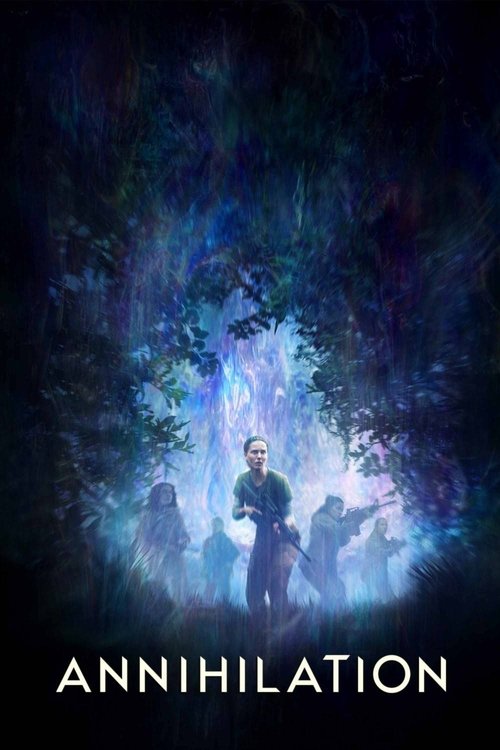
- Career Context: Annihilation (2018) tt2798920. Garland’s previous feature trusted its central metaphor to stay ambiguous all the way down, and grief bloomed into something genuinely unresolvable. Men is the same instinct with the safety off and the subtlety too; watch them in sequence and you can see exactly where the control slipped.
LUNARA DEBRIEF
- Score:★★★
- Year:2022
- Where to Watch:
Pair It With
Three films in conversation with this one.

Theme Echo
The Witch (2015)
Folk horror aimed at the same target with the opposite method: Eggers pins patriarchal terror to one household, one decade, one theology, and the specificity is what makes it universal. Garland runs the experiment in reverse, and the comparison explains exactly why Men wobbles.

Counter-Program
Midsommar (2019)
Aster externalizes a woman's grief into folk ritual and grants her the catharsis of the burning temple. Garland builds the same machine and cuts the catharsis off at the wrist; whether that withholding is more honest or just more punishing is the real quarrel between these two films.

Career Context
Annihilation (2018)
Garland's previous feature trusted its central metaphor to stay ambiguous all the way down, and grief bloomed into something genuinely unresolvable. Men is the same instinct with the safety off and the subtlety too; watch them in sequence and you can see exactly where the control slipped.
Further Reading
More Lunara Criticism
 ★★★★★
★★★★★
Lunara Review
Annihilation — What Walks Back Out
The scariest thing in Alex Garland's expedition film is not what waits inside the zone; it is what walks back out wearing your name.
Updated July 25, 2026
 ★★★★★
★★★★★
Lunara Review
Ex Machina — The Test Was for You
The test was never for the machine.
Updated July 25, 2026
 ★★★★★
★★★★★
Lunara Review
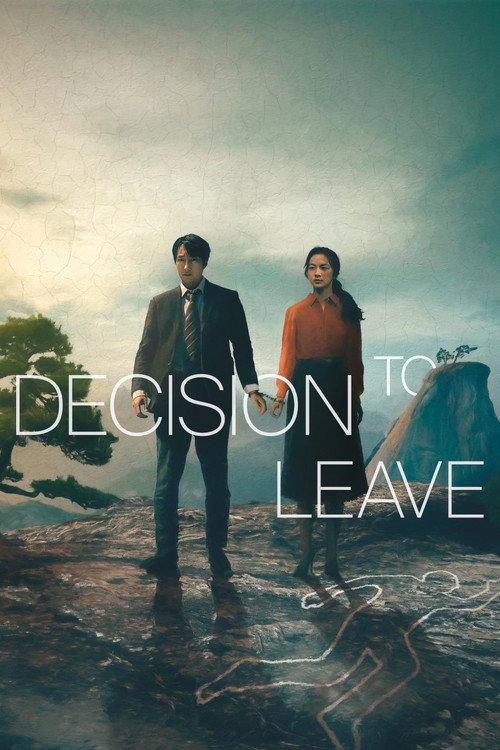
Decision to Leave — Surveillance Is the Love Language
Park Chan-wook's detective romance understands the terrible secret of both professions: to investigate someone and to love someone are the same activity.
Updated July 25, 2026
 ★★★½
★★★½
Lunara Review
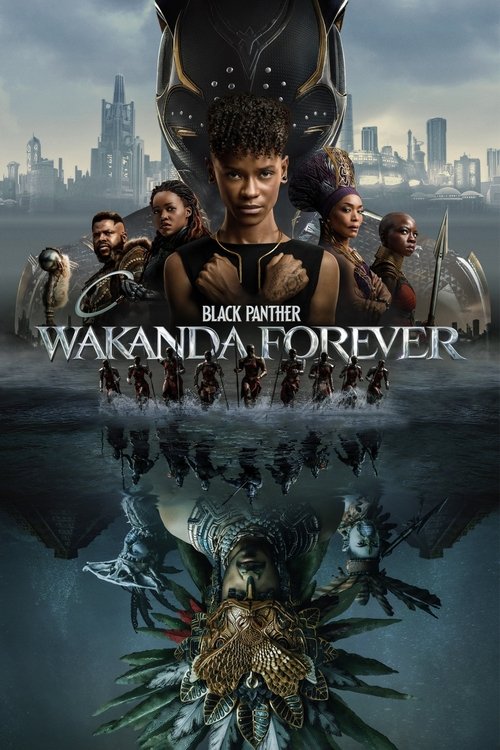
Black Panther: Wakanda Forever — Stronger as Eulogy Than Entertainment
The first franchise film that had to bury its star before it was allowed to tell a story.
Updated July 25, 2026
 ★★★★★
★★★★★
Lunara Review
Babylon — The Movies Were Never Respectable
Three hours of vomit, jazz, and dying stars, all of it in defense of one heretical idea: the sacred thing was built by the vulgar people.
Updated July 25, 2026