
Lunara Review
Nickel Boys — The Eyes Are Not Yours
You do not watch Elwood Curtis; you live just behind his eyes, and giving them back is the hard part.

You do not watch Elwood Curtis; you live just behind his eyes, and giving them back is the hard part.
A drop of condensation slides down the side of a beer can, and a boy watches it the whole way. Behind the can, out of focus, adults play gin rummy and a party winds down in a Tallahassee living room, but the camera, which is the boy, has no interest in the action. It is studying the physics of the droplet, the reflection of lamplight in aluminum, the way an ordinary object can hold a whole evening if you look at it correctly. Three minutes into Nickel Boys, that shot had me, because it settles the film’s terms before the story starts: this belongs entirely to Elwood’s eyes, and it is not going to tell you what happened to him so much as reconstruct the way memory clings to the light.
RaMell Ross, adapting Colson Whitehead’s novel with co-writer Joslyn Barnes, throws out the third-person camera and the comfortable distance that comes with it. Elwood Curtis, played by Ethan Herisse, is a young man of focused ambition and King-inspired idealism in 1960s Florida whose life is derailed by a single errant ride in the wrong car. He is sent to the Nickel Academy, a reform school modeled on the real Dozier School for Boys, a state institution that operated for over a century and left behind unmarked graves. Nickel functions as a factory for broken spirits, and inside it Elwood meets Turner, Brandon Wilson, a cynic whose survival depends on seeing the world as it is rather than as it should be. Their friendship is the film’s spine: hope and clear-sightedness colliding under the heavy, humid weight of Jim Crow, each boy trying to teach the other how to stay alive without giving up the part of himself that makes staying alive worth it.
The visual language, built with cinematographer Jomo Fray, commits to first person almost absolutely, and the commitment changes what watching means. You do not look at Elwood; you inhabit the space just behind his pupils. When the camera pans, it moves with the biological jerk of a neck; when it tilts, it is the slouch of exhaustion. The frame crowds with the edge of a doorway, the blur of a shoulder, the bottom rim of a hat, and the claustrophobia maps exactly onto the lack of agency that defines life at Nickel, where a boy’s sight-lines are policed as strictly as his hands. The film even holds Elwood’s own face in escrow. You catch him in reflections, in a shop window, in a photograph, and when you finally see him plainly, the sight arrives through Turner’s eyes, because the film has begun handing the camera back and forth between the two boys. It is the formal version of the friendship itself: the only relief from your own seeing is somebody else’s.
What the film will not show is where its power concentrates. The White House, the outbuilding where the beatings happen, never gets a wide shot that would let your mind rationalize its dimensions. It stays a collection of textures: wood grain, peeling paint, one specific shade of shadow, a wall Elwood studies while the sound tells you everything the frame declines to. Nicholas Monsour’s editing traps you in the duration of a look and withholds the mercy of the cut-away, and the result is a bodily understanding of how trauma fragments time, how an event too large to witness gets stored as splinters: a fan, a belt of light, a held breath. Between the splinters, Ross braids in archival material, civil-rights footage, the space race flickering on televisions, so that one boy’s memory keeps opening onto the country’s record, private sight and public history developing in the same darkroom.
Beneath the institutional horror, the film’s real subject is the cost of keeping a private interior life when the external world demands its demolition. It asks what happens to a person’s gaze when every sight-line is a threat, and its answer is the film’s reason for existing: survival is not just staying alive but preserving the ability to notice, the way light lands in a lemon tree amid the rot. The habit that made Elwood an observer of beauty gets weaponized at Nickel, where noticing becomes a way of tracking the indicators of coming violence, and the same attention that once held a water droplet now reads a dormitory for danger. That is the cruelest thing the film knows: the school does not only beat boys, it converts their gifts.
Be honest about what the form charges for all this. Two hours behind borrowed eyes is a discipline, and the film asks you to hold it without the release of a conventional reverse shot; people you come to love, above all Aunjanue Ellis-Taylor as Elwood’s grandmother Hattie, exist mostly as a voice near your ear and a pair of arms crossing the frame, and some viewers will experience that rationing as coldness. The complaint is understandable and it is holding the film’s achievement upside down. When Hattie finally embraces the camera, meaning embraces you, the shot lands with a force no over-the-shoulder coverage has ever managed, precisely because the film made you live inside the boy she is holding. The rationing is what makes the touch legible. Still, the demand is real, and the film’s difficulty is not incidental; it is the admission price, stated plainly at the door.
The sensation that lingers is damp earth and the ringing of a bell, a heavy, humid residue that does not wash off, and underneath it a stranger feeling: that returning to your own point of view afterward is an unearned luxury. Nickel Boys bridges the poetic and the political without letting either off the hook, and it sidesteps the trap of atrocity spectacle by insisting on the dignity and the idiosyncratic vision of its boys rather than the inventory of their suffering. It is a difficult, essential work, the kind of formal breakthrough that arrives once or twice a decade, and it demands total attention now and a proper physical edition eventually, because Fray’s lighting and that layered soundscape deserve study, not just streaming. A drop of water on a can of beer, watched all the way down. That is where it starts, and by the end the film has made the case that this, the act of really seeing, was the thing the state built a whole school to kill, and failed.
LUNARA DEBRIEF
- Score: 5 / 5
- Year: 2024
- Where to Watch: Streaming (Prime Video) | VOD (major platforms)
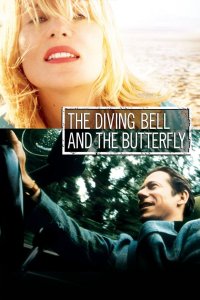
- Theme Echo: The Diving Bell and the Butterfly (2007) tt0401383. The other radical first-person film, and the other one about a consciousness keeping itself alive through what it can still notice. Schnabel’s eye is locked in by a body, Ross’s by a state; both films make seeing itself the act of resistance.
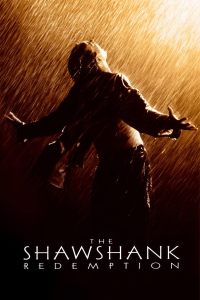
- Counter-Program: The Shawshank Redemption (1994) tt0111161. The beloved institutional narrative built for comfort: wide shots, wise narration, an escape the audience gets to enjoy. Watch it against Nickel and feel how much consolation the traditional grammar smuggles in, and what it costs to give that up.
- Career Context: Hale County This Morning, This Evening (2018) tt6634646. Ross’s documentary precursor, where he built what he calls the aesthetic of the Black everyday: minutes of ordinary life held until they turn sacred. Nickel Boys is that eye given a novel, a budget, and a target.
LUNARA DEBRIEF
- Score:★★★★★
- Oscar Ledger2 nominations • 0 wins
- Year:2024
- Where to Watch:
Pair It With
Three films in conversation with this one.
Theme Echo
The Diving Bell and the Butterfly (2007)
The other radical first-person film, and the other one about a consciousness keeping itself alive through what it can still notice. Schnabel's eye is locked in by a body, Ross's by a state; both films make seeing itself the act of resistance.
Counter-Program
The Shawshank Redemption (1994)
The beloved institutional narrative built for comfort: wide shots, wise narration, an escape the audience gets to enjoy. Watch it against Nickel and feel how much consolation the traditional grammar smuggles in, and what it costs to give that up.

Career Context
Hale County This Morning, This Evening (2018)
Ross's documentary precursor, where he built what he calls the aesthetic of the Black everyday: minutes of ordinary life held until they turn sacred. Nickel Boys is that eye given a novel, a budget, and a target.
Further Reading
More Lunara Criticism
 ★★★★½
★★★★½
Lunara Review
Inside Out 2 — Anxiety Is Middle Management
Pixar's sequel knows the scariest thing in a thirteen-year-old's head is the employee who never sleeps.
Updated July 25, 2026
 ★★★★
★★★★
Lunara Review
Furiosa — Revenge Keeps the Books
George Miller trades velocity for weight, and revenge becomes a calendar kept for fifteen years.
Updated July 25, 2026
 ★★★★★
★★★★★
Lunara Review
Flow — Survival Is a Team Sport
The world ends, the water rises, and a cat learns the only lesson that matters: share the boat.
Updated July 25, 2026
 ★★★
★★★
Lunara Review
Deadpool & Wolverine — A Eulogy in the Gift Shop
Two movie stars crack jokes at a funeral for twenty-five years of X-Men pictures, and the strange part is that the grief underneath is real.
Updated July 25, 2026
 ★½
★½
Lunara Review
Argylle — All Tuxedo, No Motion
It shows up in a tux and forgets to dance.
Updated July 25, 2026