
Lunara Review
Shang-Chi and the Legend of the Ten Rings — The Villain Problem Was Casting
Marvel finally solved its villain problem by hiring the greatest living romantic actor and letting him grieve.

Marvel finally solved its villain problem by hiring the greatest living romantic actor and letting him grieve.
A warlord walks into a hidden village to conquer it and meets a woman in a grove. They fight, and somewhere in the middle of the fight the fight stops being one. She redirects every strike into a spiral, he keeps advancing and keeps landing nowhere, and the choreography turns, before your eyes, from violence into flirtation into something like a vow. Watch what Tony Leung’s body does across the sequence: the aggression drains out of it, the shoulders soften, a man who has spent a thousand years taking things discovers the one thing that cannot be taken. It is the most beautiful sustained sequence Marvel has produced, and it belongs to the villain, which tells you almost everything about what makes Shang-Chi different.
Destin Daniel Cretton came to the franchise from small rooms, from a film about a foster-care facility where the drama lived in who trusted whom, and he built this one on the most elemental story there is: a son reckoning with a father whose love and violence are the same gesture. Simu Liu’s Shang-Chi hides in San Francisco as Shaun, parking cars by day and doing karaoke with his best friend by night, and the film’s smartest early move is that Liu plays the American life with real ease. This is not a fugitive gritting his teeth through a cover. This is a man who found a version of himself he prefers, and the story’s engine is the slow admission that preferring a self and being it are not the same thing. When the Ten Rings find him on a California bus and the fight tears the bus apart around him, what breaks is not his cover but his tense; the past stops being past.
Then he goes home, and the movie gets great, because home is Tony Leung. Xu Wenwu is the finest villain performance in this franchise’s history, and the claim needs no hedging. Leung plays a thousand years of conquest as weariness rather than appetite, all stillness and economy, a man with nothing left to prove moving with the precision of someone who has done everything ten thousand times. What he cannot survive is the one loss the rings could not prevent. His wife is dead, and Wenwu has come to believe she is not dead, that she is imprisoned behind a gate in her hidden village, calling to him. The scene where he presents this to his children, the voice, the certainty, a father asking his son to believe him, is devastating because Leung plays the delusion as faith, seamless and calm and utterly reasonable from inside. You know he is wrong. Knowing does not help. This is a man who would rather break the world than finish grieving, and Leung makes that the most comprehensible motive in the entire franchise, because it is not a villain’s motive at all. It is just love that has refused its own completion.
Liu rises to meet him, and measurably so; the performance deepens in direct proportion to its proximity to Leung. The looseness of the San Francisco scenes tightens, on the compound, into the specific rigidity of a son in front of a parent whose authority lives in his nervous system no matter how many time zones he has put between them. The film’s sharpest cut into character is a training flashback: the boy Shang-Chi completing his first kill, his face registering that his father’s love and his father’s violence were always one instruction. The adult remembering this goes physically still, and Liu lets you see that the trauma is not a wound on the identity but the frame under it, the thing the whole American self was built to face away from. Around him, Awkwafina keeps the picture honest as Katy, a best friend with no destiny and no lineage, just loyalty, and Michelle Yeoh gives the film its calmest authority; her training scene with Liu plays as transmission, a tradition handed from one body to the next, and it is the most formally accomplished action in the movie.
The honest limit arrives on schedule, and it is exactly the limit you fear at the hour mark. The finale descends into Ta Lo and dissolves into product: a CGI dragon, a soul-eating gargoyle from nowhere, a sky full of weightless wire-fu between creatures no one on screen has a relationship with. A film that spent two acts earning a father-son reckoning resolves it inside a kaiju battle, and the substitution of spectacle for psychology in the last half hour is the plainest evidence anywhere in Phase Four that the machine does not trust feeling to carry a climax. The reckoning still lands, barely, in the eye of the storm, because Leung plays Wenwu’s final choice, dying to hand his son the rings, as the only apology a man like this has left. But you can see the movie Cretton was making, and you can see the exact minute it gets traded in.
What Shang-Chi proves is that the famous Marvel villain problem was never structural. It was casting. Give the antagonist to an actor capable of making an audience love the man the hero has to defeat, and the whole apparatus around him gains a stake it never had. The dragons are already fading. Wenwu at the gate, listening to a dead woman’s voice, is not going anywhere.
LUNARA DEBRIEF
- Score: 3.5 / 5
- Year: 2021
- Where to Watch: Streaming (Disney+) | VOD (major platforms)
- Theme Echo: In the Mood for Love (2000) tt0118694. Leung’s defining performance, the century’s great study in unexpressed feeling. Watch it to see where Wenwu’s stillness was forged: the same actor, the same withheld ache, deployed there for longing and here for grief that will not close.
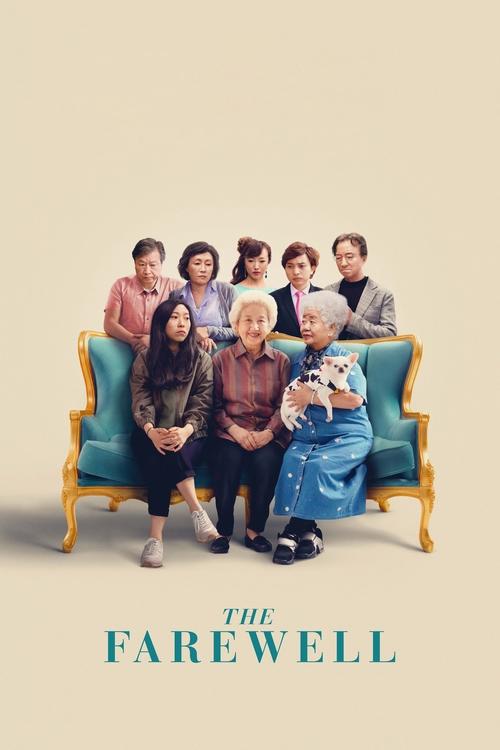
- Counter-Program: The Farewell (2019) tt8637428. The other side of the diaspora ledger: family obligation at kitchen-table scale, no rings, no dragons, and it trusts its emotional reckoning to carry the climax alone, which is precisely the trust Shang-Chi’s third act cannot extend.
- Career Context: Short Term 12 (2013) tt2370248. Cretton’s breakthrough, where damage is institutional and healing is interpersonal. It is the sensibility that built this film’s first two acts, and the measure of what the last act overrides.
LUNARA DEBRIEF
- Score:★★★½
- Oscar Ledger1 nominations • 0 wins
- Year:2021
- Where to Watch:
Pair It With
Three films in conversation with this one.

Theme Echo
In the Mood for Love (2000)
Leung's defining performance, the century's great study in unexpressed feeling. Watch it to see where Wenwu's stillness was forged: the same actor, the same withheld ache, deployed there for longing and here for grief that will not close.
Counter-Program
The Farewell (2019)
The other side of the diaspora ledger: family obligation at kitchen-table scale, no rings, no dragons, and it trusts its emotional reckoning to carry the climax alone, which is precisely the trust Shang-Chi's third act cannot extend.

Career Context
Short Term 12 (2013)
Cretton's breakthrough, where damage is institutional and healing is interpersonal. It is the sensibility that built this film's first two acts, and the measure of what the last act overrides.
Further Reading
More Lunara Criticism
 ★★★½
★★★½
Lunara Review
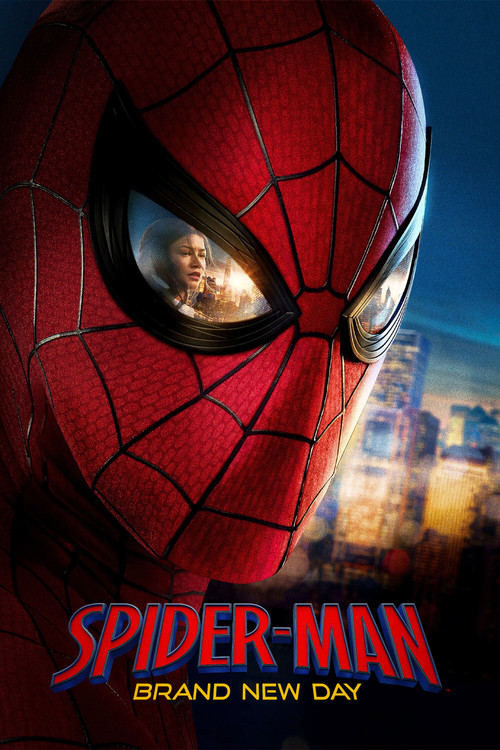
Spider-Man: Brand New Day — Never Allowed to Stay on the Block
Destin Daniel Cretton finds a real movie in Peter Parker's empty apartment, and then the franchise calendar arrives and fills every inch of it.
Updated September 10, 2026
 ★★★★
★★★★
Lunara Review
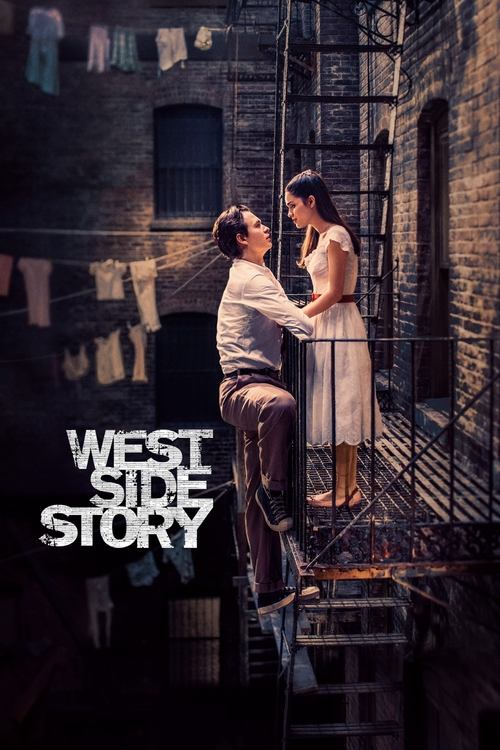
West Side Story — The Camera Finally Dances
Spielberg waited fifty years to move a camera through a song, and the hunger is visible in every frame.
Updated July 25, 2026
 ★★★★★
★★★★★
Lunara Review
Titane — Family Is a Choice Made in the Dark
Julia Ducournau's Palme d'Or winner is sold as the car movie; it is actually the decade's strangest film about adoption.
Updated July 25, 2026
 ★★★★½
★★★★½
Lunara Review
The Worst Person in the World — The Luxury of Not Deciding
Joachim Trier freezes all of Oslo so one woman can run through it, and then makes her pay for the privilege.
Updated July 25, 2026
 ★★★★★
★★★★★
Lunara Review
The Power of the Dog — The Quietest Person in the Room
A Western where nobody draws a gun, and the deadliest act in it looks exactly like kindness.
Updated July 25, 2026