
Lunara Review
Sing Sing — Redemption Is a Rehearsal Schedule
Colman Domingo leads a company of men who rebuild themselves the only way anything gets built: repetition.

Colman Domingo leads a company of men who rebuild themselves the only way anything gets built: repetition.
The room is cinder block and fluorescent light, and the chairs are the folding kind that stack. The men arrange them in a circle, close their eyes, and are asked to picture somewhere that is not this place: an ocean, a porch, a kitchen from before. Then they open their eyes and get to work. This is the Rehabilitation Through the Arts theater workshop at Sing Sing Correctional Facility, maximum security, and the first thing Sing Sing understands, the thing that separates it from every prison movie standing behind it, is that nothing miraculous is happening here except practice. Warm-ups. Improv games. Costume day. Greg Kwedar’s film takes the material other dramas use as garnish and declares it the whole meal, because it is: rehearsal, inside a building designed to fix men at their worst moment forever, is where they practice being the selves the institution keeps no file on. The men have a word they use for each other, in greeting, in argument, in grief. Beloved. The movie earns the word.
The film is built on the real program and, mostly, from its real people. Colman Domingo plays John “Divine G” Whitfield, a founder of the troupe, convicted of a murder he did not commit and two decades deep into fighting his own case; nearly everyone around him is an RTA alumnus playing a version of the man he used to be, on locations that include a decommissioned prison whose paint the state never bothered to change. Clarence “Divine Eye” Maclin plays Divine Eye, which is to say himself. The production paid every member of cast and crew the same rate and cut them into ownership of the film, which would be a footnote if the movie were about anything else; here it matters, because the film’s subject is a commons built on purpose inside an institution built on the opposite principle. Sing Sing never announces any of this. It simply behaves, top to bottom, like the thing it depicts.
Domingo plays Divine G as a conductor of fragile electricity, a man who converts attention into dignity one scene partner at a time. He is not sainted. He is a writer with a clemency file, a man who needs the program at least as much as it needs him and does not always know the difference, and the genius of the performance is where Domingo puts the acting: in reaction. Pride held back half a beat so another man can own his moment. A flinch converted, mid-breath, into encouragement. When the parole board reads his record back to him and the composure finally develops a hairline crack, the film has banked so much of his generosity that the crack lands like a wall coming down. The best actor in the room spends the entire movie giving the room away. That is the design, and it holds.
Maclin is the revelation, and his edges are serrated. Divine Eye arrives from the yard with a hustler’s read on every room and a guard permanently up, auditioning with the wariness of a man who suspects sincerity is a con he has not yet decoded. The troupe votes to stage a comedy, an original called Breakin’ the Mummy’s Code, a time-travel farce roomy enough for mummies, gladiators, Freddy Krueger, and Hamlet, and the film draws its purest scenes from the collision between that silliness and what it costs these men to be silly in a place where the lights never turn off. You watch the work, the failure, the try again, and then the oh: a line lands, the room laughs, and a man who has not been applauded in years learns what a clap weighs. When the soliloquy from Hamlet ends up in Divine Eye’s mouth, the question inside it stops being literature. To be, or not to be, asked aloud by a man the state has filed under his worst day, is not a breakthrough scene, and nobody on screen treats it as one. It is Tuesday’s rehearsal. The schedule is the healing.
Kwedar shoots faces like rooms and rooms like faces, group tableaux composed to demonstrate that community is a craft rather than a vibe, and the music arrives as grace, never garnish. Above all the film is careful with hope, in a way its ancestors never manage. Setbacks are not dramatized; they arrive the way they arrive inside, without foreshadowing: a friend is there, and then a cell is being packed out. A clemency hearing is a date on a calendar, and then it is a form letter. The movie knows that institutions digest success stories and print them in brochures, so it keeps its transformation stubbornly procedural. Theater does not cure prison, and the film never once claims it does. What the circle teaches is to be seen and to see, and the stillest images here, window light laddering across a cinder-block wall, insist the difference is not academic. It is oxygen.
If the film shaves anything, it is the state itself. The guards are weather, the walls stay soft-focus, the violence of the place is implied rather than staged, and one despair-and-return beat late in the picture runs on rails you can feel being laid, the single stretch where a film allergic to formula takes a small dose. I would defend the choice: the men, not the institution, are the subject, and grimness is its own worn-out cliche. But the warmth is bought partly by keeping the thing being defied offstage, and honesty about this movie, which is honest about everything else, requires saying so.
I have spent time in rehearsal rooms, the free-world kind, pretending bravery until it showed up for work, and this film reached me somewhere movies do not usually get to go. The final bow, the gate that eventually opens, the man waiting on the other side of it beside a car he is proud of: the sequence produced the cleanest cry a film has gotten out of me all year. Not pity. Not triumph. Recognition. Sing Sing is the most humane American film of its year, and the only prison movie in a generation to understand that redemption is not a twist. It is a rehearsal schedule, kept by men who call each other Beloved until the word stops being aspirational and becomes a plain description of the room.
LUNARA DEBRIEF
- Score: 5 / 5
- Year: 2023
- Where to Watch: Streaming (Max) | VOD (major platforms)
- Theme Echo: The Work (2017) tt5836866. The documentary proof of this film’s premise: four days of group therapy inside Folsom, no stage, no script, just men doing the practice with bare hands. Watch it to see how little of Sing Sing is invention.
- Counter-Program: The Shawshank Redemption (1994) tt0111161. The great escape myth: freedom as a hole in the wall and a beach at the end of it. Sing Sing swaps the tunnel for a rehearsal schedule and the beach for a parking lot, and that swap is the whole distance between fantasy and practice.
- Career Context: Sound of Metal (2019) tt5363618. Paul Raci is the bridge: the man who ran the deaf sober house there runs the drama circle here, the same portrait of patient, unsentimental service. Both films believe healing is a daily practice with no finale, and both cast Raci because his face already knows it.
LUNARA DEBRIEF
- Score:★★★★★
- Oscar Ledger3 nominations • 0 wins
- Year:2023
- Where to Watch:
Pair It With
Three films in conversation with this one.
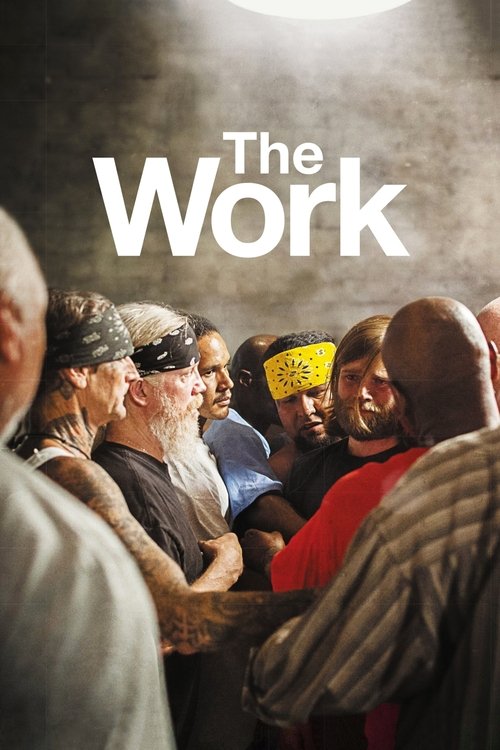
Theme Echo
The Work (2017)
The documentary proof of this film's premise: four days of group therapy inside Folsom, no stage, no script, just men doing the practice with bare hands. Watch it to see how little of Sing Sing is invention.

Counter-Program
The Shawshank Redemption (1994)
The great escape myth: freedom as a hole in the wall and a beach at the end of it. Sing Sing swaps the tunnel for a rehearsal schedule and the beach for a parking lot, and that swap is the whole distance between fantasy and practice.

Career Context
Sound of Metal (2019)
Paul Raci is the bridge: the man who ran the deaf sober house there runs the drama circle here, the same portrait of patient, unsentimental service. Both films believe healing is a daily practice with no finale, and both cast Raci because his face already knows it.
Further Reading
More Lunara Criticism
 ★★★★½
★★★★½
Lunara Review
Guardians of the Galaxy Vol. 3 — The Wound Under the Fur
The last MCU film made by somebody who loved the characters more than the franchise, and it is about a raccoon, and it wrecked me.
Updated July 26, 2026
 ★★★★½
★★★★½
Lunara Review
Evil Does Not Exist — The Villain Is a Sentence
The scariest line of the year is "we can mitigate," said politely, by people who will be gone by February.
Updated July 25, 2026
 ★★★★½
★★★★½
Lunara Review
Do Not Expect Too Much From the End of the World — Harm, Rebranded as Story
Radu Jude staples two lying centuries together, points a camera at one workday, and calls it Monday.
Updated July 25, 2026
 ★★★★
★★★★
Lunara Review
Beau Is Afraid — The Verdict Came First
Three hours inside a guilt that predates its owner; the trial was underway before the birth.
Updated July 25, 2026
 ★★★★½
★★★★½
Lunara Review
Barbie — The Product That Noticed
A corporation paid for a film about the impossibility of being a product, and Greta Gerwig almost got the whole confession on tape.
Updated July 25, 2026