
Lunara Review
Song Sung Blue — Lightning and Thunder Had Names
Craig Brewer's tenderest film since Hustle & Flow treats two Milwaukee Neil Diamond tribute performers like the real people they were -- Hugh Jackman's best work, no contest.

Craig Brewer has not made a film this tender since Hustle & Flow, and he has never made one this small-hearted in the best sense of the word. The biopic treats two Milwaukee tribute performers like the real people they were, and the movie is what that dignity looks like at 132 minutes.
Mike and Claire Sardina performed as Lightning and Thunder in Milwaukee from 1989 until Mike’s death in 2006 at fifty-five, and almost nobody outside Wisconsin knew who they were. That is the specific kind of obscurity the biopic usually flattens into a morality play — small-town dreamers, look what they tried, pity them or admire them but keep your distance. Craig Brewer’s Song Sung Blue refuses the distance. The film is a biopic about two Neil Diamond tribute performers who loved Neil Diamond and each other and the work, and its governing decision is to treat the smallness of their stage as the opposite of a limitation. The film says their lives are the whole point, photographed and scored and acted with the seriousness the subjects earned by living them. That is the movie’s entire ethical achievement, and the reason it works.
Brewer is adapting Greg Kohs’s 2008 documentary of the same title — the one critics embraced with uncomplicated love on release, the one Neil Diamond granted music rights to because he had actually met Claire Sardina and understood what she and Mike were doing. The 2025 film inherits that permission, legally and spiritually and structurally. Diamond’s catalogue is present the way oxygen is present. “Sweet Caroline” is not ironized. “Forever in Blue Jeans” is not camped. “Song Sung Blue” is the title of the movie because the song is the title of the life. Brewer plays it completely straight, and by playing it straight he recovers something the biopic has mostly forgotten how to do, which is let a small story be a story.
There was an open question about Brewer after Coming 2 America, the kind that accumulates around a filmmaker whose gift was always for finding dignity in specific American corners — Memphis pimps, Tennessee lightning preachers, Mississippi blues laborers — and who then spent a decade on work-for-hire that buried the gift under studio gloss. Song Sung Blue is the answer. Brewer has not lost the thing. He has just been waiting for a subject that deserved it. Amy Vincent, his cinematographer since Hustle & Flow, lights Milwaukee the way her Memphis looked in 2005 — warm practicals, saturated mid-tones, a refusal to make the working class of a second-tier American city look either quaint or tragic. Billy Fox cuts with the patience of a musician: scenes finish their own breaths, transitions land on Scott Bomar’s score rather than against it, and the performance sequences are edited for musical feel rather than music-biopic coverage. Bomar, who scored Hustle & Flow and Black Snake Moan, sets a quiet Wisconsin-lake ambient underneath Diamond’s catalogue, so that when Mike and Claire go on, the song arriving is also the relief of the song arriving. Michael Imperioli plays Mark Shurilla, the real Milwaukee music-scene fixture who championed Lightning and Thunder for decades, with the specific New-York-transplant-via-the-Midwest patois of a guy whose belief in other people was a form of public service, and the supporting ensemble fills out a lived-in scene that reads as a place, not a set.
Hugh Jackman has been a movie star for twenty-five years, and the trap of the career has always been that he is too large for most parts — his face is a spotlight, his body is a monument, his instinct is to give the audience the thing they paid for. Song Sung Blue is the first role where that size works as argument rather than decoration. Mike Sardina was a big man doing a big impression in a small room, and the only way to play him honestly is to let the performer’s own scale and the character’s own scale land on the same frequency. Jackman does it. The performance is not an impression of Neil Diamond. It is an impression of a man whose whole life was organized around an impression of Neil Diamond, and the distinction is the craft. Watch what he does offstage — the shoulders between numbers, the way his face relaxes from the Diamond snarl into something patient and surprisingly shy, the way he looks at Claire during a soundcheck and you see a man who has decided that the woman in the spangled dress is the real gig and the stage is just where they get to stand next to each other. He plays Mike as a recovering man, sobriety the quiet architecture beneath the public showmanship, and he plays it without sentimentality, without a single moment of pleading for approval. It is the best work of his career, and it is not close.
Kate Hudson has been positioned for awards consideration, and the positioning is correct, and the more interesting thing is that the performance does not feel like a position piece. Claire Sardina was a Milwaukee hairstylist who had already been performing as Patsy Cline when she met Mike, and Hudson plays her as a woman who has already survived the first version of her life and is building the second next to a man she has decided to trust. The decision is visible in every scene. She does not play Claire as anyone’s muse. She plays her as a working woman whose partner happens to be the love story. Her best scene is domestic: Mike does a home-workout routine with his earbuds in, mouthing the Diamond lyrics, sweating, committed, ridiculous, and Claire walks in, watches for a beat, and the look Hudson lands — affection, fatigue, amusement, a small steady grief about how much she already knows she is going to miss him — is the whole marriage inside four seconds, played without dialogue, without score, without underlining. When the story puts Claire through her own long convalescence, Hudson refuses the biopic-approved uplift arc — she plays the anger, the flat depression, the slow unheroic crawl back toward being a person who can get out of bed — and Brewer lets her play it. The film earns its later crowd-pleasing beats because it refuses to skip the unsexy middle.
The picture’s limits are the limits of the biopic form itself. Brewer softens some of the rougher edges of the real marriage — the squabbles about bookings, the money anxieties, the friction of two performers sharing a house and a stage — and the third act, knowing where it is going, leans on its own dramatic irony in a way a tighter edit would have trimmed by five minutes. The wanting is visible, and earned, and occasionally exposed. This is not a complaint. It is an acknowledgment that a crowd-pleaser about a real couple who really lived this life was never going to be The Wrestler, and the movie is better for refusing to pretend otherwise. What works, though, works completely. Eddie Vedder turns up to honor a tribute performer as a peer — because he is one, because both of them know what it costs to stand in front of a room and sing for people — and Neil Diamond’s presence in the film is almost spectral: his music, his permission, his blessing on a movie about two people who loved him enough to build their lives around his catalogue. That generosity reads on screen as a kind of grace.
I will not describe how the film closes, because Brewer earns it in real time and trusts the audience with the conclusion instead of underlining it, and that trust is the reason it lands. What can be said is that the film’s whole argument is in its faith in the record — that a small stage, held long enough, becomes a life, and a life, recorded, becomes a gift that keeps playing after the person is gone. I walked out of Song Sung Blue wanting to call the people I love. That is the whole review.
LUNARA DEBRIEF
- Score:★★★★
- Oscar Ledger1 nominations • 0 wins
- Year:2025
- Where to Watch:
Pair It With
Three films in conversation with this one.

Theme Echo
Hustle & Flow (2005)
Brewer's previous masterpiece about a man who has bet his entire life on a performance the world has not asked for, the twenty-year earlier companion to this picture and the film that proves Brewer's whole project has always been about dignity in small corners of American work; the pair together reveals that his career has been building toward exactly this kind of tender small-market American biopic, and that the interruption of the last decade was not a lost thread but a delay before the right subject arrived.
Counter-Program
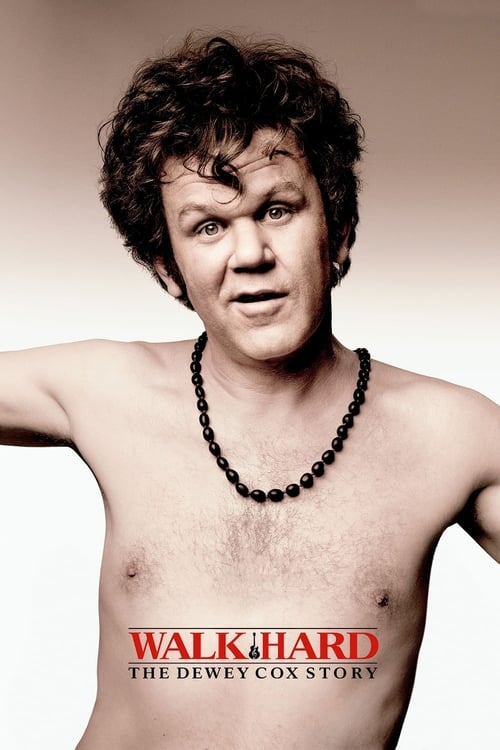
Walk Hard: The Dewey Cox Story (2007)
Jake Kasdan's biopic parody remains the tonal warning shot every serious music biopic gets measured against, a film so comprehensively aware of the genre's cliches that it made the formula nearly unusable for ten years; pair it with Song Sung Blue and the specific achievement of Brewer's picture comes into view -- he has made the rare music biopic that walks through every trap Walk Hard identified and comes out the other side with a real movie, because the subject is specific enough and the love is earned enough that the genre's defaults cannot swallow it.
Career Context
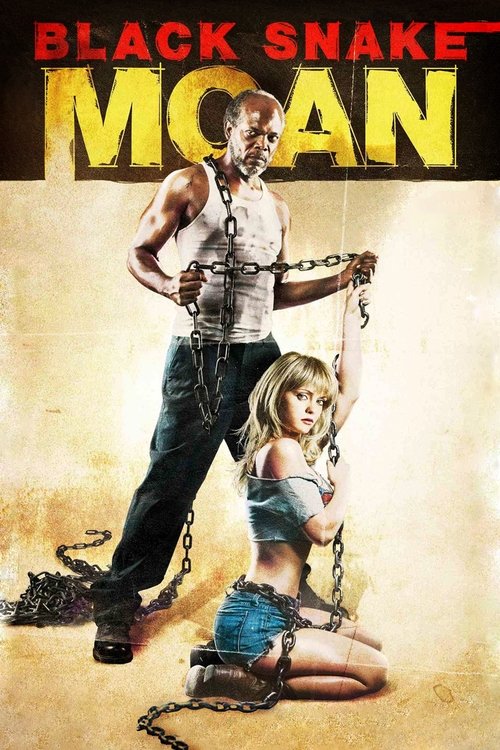
Black Snake Moan (2006)
Brewer's immediate post-Hustle follow-up, the film where he first proved that his interest in American music was inseparable from his interest in American damage, and the closest cousin in his filmography to what Song Sung Blue is doing -- both pictures treat a genre of popular music as a site of spiritual work rather than ironic detachment, and both refuse to be embarrassed by the sincerity of the people playing it; the through-line confirms that the filmmaker who made Coming 2 America and the filmmaker who made Song Sung Blue are the same person and the latter is the one who has been there the whole time.
Further Reading
More Lunara Criticism
 ★★★½
★★★½
Lunara Review
Den of Thieves 2: Pantera — Burn the Blueprints
The first one wanted to be Heat; this one would rather be drunk, and it turns out drunk is the more honest condition.
Updated July 25, 2026
 ★★½
★★½
Lunara Review
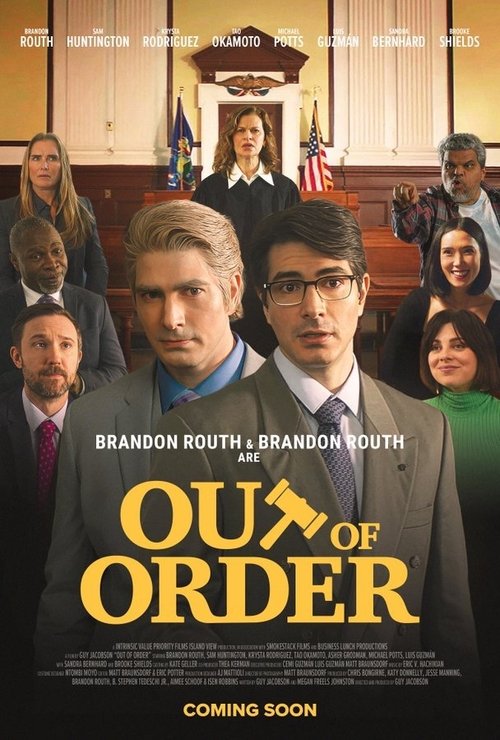
Out of Order! — The Reunion the Movie Doesn’t Know It Has
Superman and Jimmy Olsen share frames again after nineteen years, a Broadway scene-stealer plays the farce all by herself, and the screenplay never shows up to...
Updated July 25, 2026
 ★★½
★★½
Lunara Review
The Gorge — The Distance Was the Movie
Scott Derrickson's two-hander has one of the best premises of the year and the saddest relationship to it -- a film that treats the very...
Updated July 14, 2026
 ★★★
★★★
Lunara Review
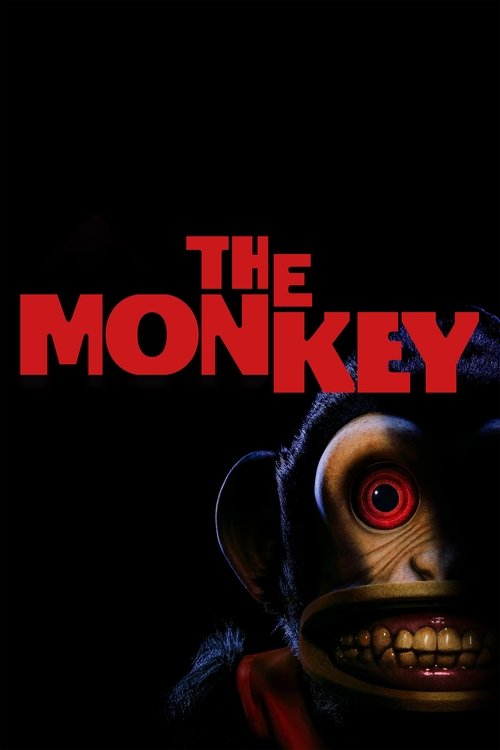
The Monkey — Laughing at the Funeral
Osgood Perkins follows the dread of Longlegs with something that looks like its opposite -- a gleeful splatter comedy about a cursed toy...
Updated August 12, 2026
 ★★★★
★★★★
Lunara Review
Eephus — The Pitch Is the Form
Carson Lund's debut spends one long afternoon watching a meaningless recreational baseball game on a field that is about to be demolished...
Updated July 14, 2026