
The Beast — The Catastrophe Is the Flinch
Movie Review

The Beast, 2023
Bertrand Bonello gives one woman’s fear of feeling three whole lifetimes to ruin her, and the century that scares me most is ours.
Paris, 1910. A fortune teller takes Gabrielle’s hand and does not tell her anything new. She simply names the thing that has been sitting in Gabrielle’s chest her whole life: a premonition of catastrophe. No name for it, no date, just total certainty that it is coming. And here is what breaks my heart about her before the first act is even over. She has built her entire existence around that certainty. The tepid marriage, the talent kept on a leash, and above all the visiting Englishman named Louis, the one person she actually wants, held at exactly the distance where nothing can catch fire. She is not cold. She is careful. She believes, the way frightened people always believe, that if you never feel it, it can never be taken from you.
Bertrand Bonello’s The Beast starts from Henry James’s The Beast in the Jungle and then does the thing James never could: it gives that flinch three lifetimes to play out. In 1910, in 2014, in 2044, Lea Seydoux’s Gabrielle keeps meeting George MacKay’s Louis, and every era hands her the same wager. Feel this fully and risk annihilation, or hold back and be annihilated slowly, on an installment plan. The film’s coldest discovery is that her premonition is accurate in every century. The catastrophe always arrives. It is just never the flood, or the earthquake, or the man with the gun. It is the flinch itself.
Each era gets its own cinema, and the 1910 stretch is the ravishing one. Ambered deep focus, salon talk, corsetry, and then a sequence I have not been able to shake: the Seine flooding Paris while Gabrielle and Louis shelter in her husband’s doll factory. Kiln fire on one side, rising water on the other, and porcelain faces bobbing in the flood between them while an entire era’s way of feeling goes under. It is gorgeous and it is exact, because the dolls are not decoration. Bonello keeps building versions of the human form with nothing inside, the porcelain heads of 1910, the mannequin stillness of the future, the empty marble house of 2014, and he keeps asking Gabrielle, gently, era after era, whether she would like to become one.
The 2044 frame turns that question into policy. Paris is now run by an AI that treats strong emotion as an inefficiency, and it offers citizens a procedure: purify your DNA, revisit the past lives where the feelings were laid down, come out clean, calm, and employable. Gabrielle takes the treatment in a black bath with a needle in her ear, which is how the film earns its time travel, memory as a medical procedure, and why all three centuries feel like rooms in one house. What unsettled me most is how reasonable it all sounds. This is science fiction where the dystopia is not surveillance and not scarcity. It is anesthesia, voluntarily administered, socially rewarded. Nobody forces anyone. You sign up.
Then there is 2014, and this is where the movie stops being an elegant idea and becomes genuinely frightening. Bonello leaves James behind entirely. Louis comes back not as a suitor but as an incel, prowling Los Angeles with a camcorder, delivering monologues of aggrieved entitlement drawn from the real videos of a real killer, while Gabrielle, now an aspiring actress house-sitting a glass mansion, drifts through empty rooms lit by the blue of her own laptop. MacKay is extraordinary here, and the achievement is specific: he is playing the same soul as the gentle Englishman of 1910 with one variable changed, a century that gave his longing no shape except grievance. The dread is built out of pure interface, security cameras, casting websites, a house that displays its occupant like a product on a shelf. The idea underneath is brutal and precise. Same two people, same pull toward each other, and the era decides whether it becomes a courtship or a stalking. Feeling denied does not disappear. It comes back wearing whatever mask the culture left lying around.
Seydoux holds all of it together, and she does it in degrees of suppression rather than displays. Her Gabrielle stays warm and sealed, a woman visibly containing the exact thing that would save her, and Bonello’s camera loves the long stretches where her face manufactures refusal and ships it out as composure. Watch her not react. It is some of the best acting of her career, and it is almost all subtraction.
I do have to be fair about the frame around that face. Next to the sensory density of 1910 and the engineered dread of 2014, the 2044 material is thin: a few corridors, a nightclub, a doll-faced android confidante, a world explained more than built. I understand the defense, and it is a real one. An anesthetized era should feel underfurnished; Bonello is starving the future on purpose. But a deliberate deprivation is still a deprivation, and across a hundred and forty-six minutes the film asks that spare 2044 scaffolding to carry structural weight it cannot quite hold. The middle drifts where it should tighten, and I felt it drift.
Then the ending closes the circuit and forgives everything. Purified at last, or failed by the purification, Gabrielle finally stands in front of Louis with every century’s accumulated longing in her body, and learns what he has already surrendered to the procedure. The scream Seydoux releases is the whole film in a single sound: the feeling arriving intact at the exact moment there is no one left to receive it. James wrote the cruelest sentence in American fiction about a man who realized too late that the catastrophe he awaited was that nothing would ever happen to him. Bonello has built that sentence a haunted house, three eras deep, and the last door opens onto exactly what the fortune teller promised. It was never the flood. It was the waiting.
Lunara Film Debrief
- Score:★★★★★
- Year:2023
- Where to Watch:
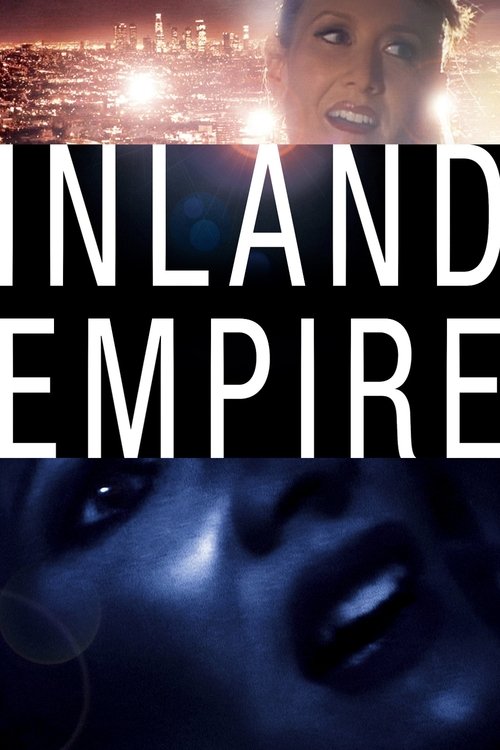
Lynch's version of a woman dissolved across roles and timelines, run on nightmare logic where Bonello runs on dread logic. Both films believe identity is a performance the century keeps recasting, and both trust an actress's face to be the only continuity that matters.

Counter Program
What is the strongest argument against it?
Eternal Sunshine of the Spotless Mind (2004)
The same procedure, erase the feeling to survive it, played as romantic comedy and resolved toward hope: they sign up to be hurt again. The Beast is what happens when the culture, not the couple, runs the eraser, and nobody gets to say okay.

The Seydoux baseline: the actress who once played desire as raw appetite now plays its lifelong starvation, and the distance between the two performances is the exact measurement of what The Beast is about. Watch them a decade apart and you can see the door closing.
More Lunara Film Criticism
Further Reading
 ★★★★½
Lunara Film Review
Guardians of the Galaxy Vol. 3 — The Wound Under the Fur
The last MCU film made by somebody who loved the characters more than the franchise, and it is about a raccoon, and it wrecked me.
Updated September 23, 2026
 ★★★★½
Lunara Film Review
Evil Does Not Exist — The Villain Is a Sentence
The scariest line of the year is "we can mitigate," said politely, by people who will be gone by February.
Updated September 23, 2026
 ★★★★½
Lunara Film Review
Do Not Expect Too Much From the End of the World — Harm, Rebranded as Story
Radu Jude staples two lying centuries together, points a camera at one workday, and calls it Monday.
Updated September 23, 2026
 ★★★★
Lunara Film Review
Beau Is Afraid — The Verdict Came First
Three hours inside a guilt that predates its owner; the trial was underway before the birth.
Updated September 23, 2026
 ★★★★½
Lunara Film Review
Barbie — The Product That Noticed
A corporation paid for a film about the impossibility of being a product, and Greta Gerwig almost got the whole confession on tape.
Updated September 23, 2026