
Lunara Review
The Brutalist — Surrender, Then Reckoning
Brady Corbet's three-and-a-half-hour immigrant epic asks for pilgrimage first and argument second -- the rare new American film you submit to before you analyze. Adrien Brody, at a career peak.
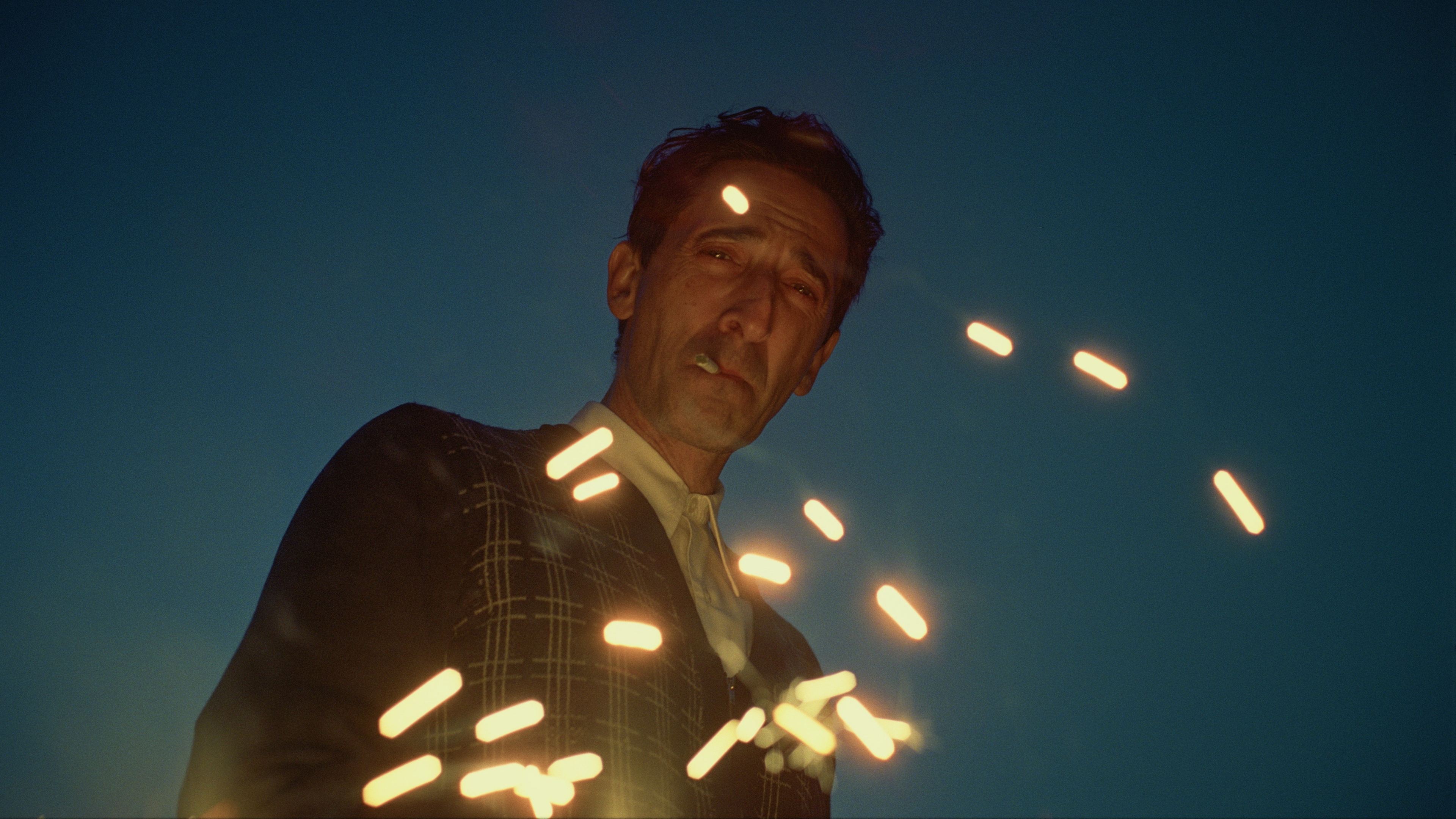
Brady Corbet’s three-and-a-half-hour immigrant epic is not a film you analyze before you have submitted to it. It is the rare new American picture that asks for pilgrimage first and argument second — and earns both.
Some films you watch. A few you are admitted to. The Brutalist arrives in wide release this month after a festival run that has already hardened into discourse — the runtime, the intermission, the format, the controversy over a few seconds of post-production — and the discourse is so loud that it threatens to do the one thing the film cannot survive, which is to be met as a position before it is met as an experience. So let me say the unfashionable thing first. I went in having read nothing, having heard nothing, having kept myself deliberately clear of the noise, and I sat in a large dark room while a six-story building assembled itself in front of me in a format wide enough to hold the whole of it, and I have not stopped thinking about the occasion since. The analysis can come. It will come. But the film insists on the order of operations, and the order is surrender, then reckoning.
Laszlo Toth (Adrien Brody) is a Hungarian-Jewish architect, a survivor of the camps, who arrives in postwar America with a cousin’s promise and a reputation that means nothing on this side of the ocean. He is a Bauhaus-trained visionary reduced to shoveling coal and sleeping in a shelter, and the film’s first movement is the specific humiliation of a man whose genius is a language no one around him speaks. Then he is discovered — the way the poor are always discovered, which is to say used — by Harrison Lee Van Buren (Guy Pearce), an industrialist who commissions Toth to build a monument and spends the next two hours teaching him the exact exchange rate between a wealthy man’s patronage and a poor man’s soul. “We tolerate you,” Van Buren says, and the line is the whole American transaction in three words: the favor that is also a leash, the welcome that is also a warning.
Brody gives the performance of a career that already contained an Oscar for playing a different survivor of the same catastrophe, and the difference between the two is the measure of what he has learned. There is no pleading in this one. Toth does not perform his suffering for the camera or for Van Buren or for us. Brody plays him as a man whose interior life has been driven so far underground by what he has lived through that it surfaces only in the work — in the obsessive correctness of a ceiling height, the refusal to compromise a material, the fury that arrives not when he is insulted but when his building is. Watch what his face does when a patron suggests a cheaper stone. It is the only time the war shows. The man can absorb any humiliation aimed at himself. The humiliation aimed at the design is the one that cannot be borne, and Brody locates the entire character in that asymmetry: a person who has relocated his capacity to be wounded out of his body and into his work, because the body learned, in a specific place, that being wounded there could kill you.
Guy Pearce is the film’s other engine, and the performance is a study in the grammar of American power — the way it flatters before it owns, the way its cruelty wears the costume of generosity. Van Buren is not a villain in the register the genre would assign. He genuinely admires Toth. He genuinely wants the building. He also cannot conceive of the artist as anything other than an instrument he has purchased, and Pearce plays the collision of those facts without ever letting the man become a cartoon of capital. Felicity Jones, as Toth’s wife Erzsebet, arrives in the second half carrying the film’s conscience and its damage in equal measure, and she does something quietly radical with a role that a lesser film would have made a saint: she lets Erzsebet see the transaction clearly, name it, and stay anyway, because staying is also survival. The marriage is where the film keeps its heart, and Jones guards it.
The form is the argument, and the form is monumental. Lol Crawley shot the film in VistaVision, a format wide and tall enough to hold the corner of a six-story structure top to bottom in a single frame, and Corbet has been explicit that this is not nostalgia but necessity — you cannot photograph architecture, he has said, you can only represent it, and the representation requires a frame built to the scale of the thing. The film is projected, where you are lucky enough to find it, in 70mm, and it contains a built fifteen-minute intermission written into the script, a countdown clock and a family photograph and a held breath. I will say plainly that the format is not separable from the experience. To meet this film on a laptop is to meet a photograph of a cathedral. The cathedral is the point. Daniel Blumberg’s score does the other half, a brass-and-dissonance architecture of its own that does not illustrate Toth’s ascent and ruin so much as build the weather they happen inside. The intermission is not an indulgence. It is the film insisting that you experience its duration as duration — that you sit inside the length of a life the way Toth sits inside the length of his.
The honest reckoning, the one the surrender eventually permits, is that the film’s second half is harder, colder, and more punishing than its first, and that this is by design and at a cost. The early movement has the propulsion of arrival, of a man clawing toward the thing he was made to do. The later movement is the slow education in what the doing will cost him, and Corbet does not flinch from the despair of it, which means there are stretches in the back half where the film becomes a document of attrition rather than ascent. Some viewers will feel the grip loosen there. I felt it loosen. And then the film arrives at a closing movement, years later, in a setting I will not describe, that reframes everything the preceding three hours have built — a final argument about what a building means, and who gets to say what it meant, delivered with a deliberate interpretive coldness that has divided every room it has played in. I will protect it. What I will say is that the coldness is the film declining to console you, and that the decision to end on interpretation rather than emotion is the riskiest thing Corbet does, and the thing the discourse will keep arguing about long after the runtime stops being a story.
There is a controversy attached to this film about the use of a voice tool in post-production, and because the lazy version of it is everywhere, the precise version is worth stating once: a piece of software was used to refine the Hungarian-vowel pronunciation in dialogue the actors had already performed, after conventional re-recording failed to match the energy of the original takes. No English was altered. No emotional performance was generated. Nothing of what Brody does in the frame was made by a machine. The real question the episode raised was about disclosure, not authorship, and a film this committed to the dignity of human craft deserves to have the distinction drawn rather than smeared. The building was built by hand. So was the performance.
It helps to know who built this, because the film is in some sense about the people who built it. Brady Corbet spent a first career as an actor, and not in comfortable rooms — he was one of the two smiling torturers in Michael Haneke’s American Funny Games, learning from the inside a modality I do not invoke lightly: the cold, unblinking gaze that declines to console you, that implicates you for watching, that treats an audience as a moral participant rather than a customer. Corbet directs the way Haneke directs, and he came by it honestly, on the other side of the lens. He wrote this film, as he has written all of them, with his wife and constant collaborator Mona Fastvold — herself a filmmaker, with her own forthcoming drama about the eighteenth-century Shaker visionary Ann Lee — and it is not difficult, once you know it, to see the outline of an artist couple inside Laszlo and Erzsebet, two people whose marriage is a shared defense of a vision the world keeps trying to buy cheap. The lightning rod for all of it, by Corbet’s own telling, was Vox Lux, the film before this one: a production whose financing collapsed the night before the cameras were meant to roll, whose backers informed him that a structure he believed in was simply not allowed, and from which he walked away having made, by his own account, nothing at all. The Brutalist is the film a person makes after that. It is the wound rebuilt as a cathedral. Laszlo’s humiliations are not invented. They are remembered, one career removed.
The Brutalist is the work of a thirty-six-year-old director making a beeline for the canon and possessing, almost unfairly, the command to reach it. And it is great in the specific way that lasts, which is that it refuses to resolve into a single reading. You can take it as an immigrant epic, a Jewish reckoning, a parable of American capital, a portrait of a marriage, or an argument about art itself, and the film will hold every one of those at once without ever letting you finish it — it keeps a room you have not entered no matter how many times you walk through. That irreducibility is not vagueness. It is the oldest mark of art built to be returned to. Its thesis, if it can be reduced to one, is that the artist’s struggle and the immigrant’s struggle are the same struggle — both a fight for the right to exist, to take up space, to insist that the vision in your head deserves to stand in the world even when the world has told you that you are tolerated, not wanted. Corbet lived the argument while making it, and the doubling is in every frame. I have seen it once. I went in clean and came out altered, and I knew before the lights came up that I would be telling people, years from now, that I saw this one in a theater, the way it was built to be seen. That is not a small thing for a movie to do anymore. It may be the largest thing. The monument stands. Go stand inside it.
LUNARA DEBRIEF
- Score:★★★★★
- Oscar Ledger10 nominations • 3 wins
- Year:2025
- Where to Watch:
Pair It With
Three films in conversation with this one.

Theme Echo
There Will Be Blood (2007)
Anderson's American-capital epic is the closest relative -- a visionary and the moneyed power that funds, shapes, and finally degrades him; Van Buren's 'we tolerate you' is the oilman's contempt rerouted through patronage instead of petroleum.

Counter-Program
Minari (2020)
The immigrant experience rendered small, tender, and domestic -- the exact inverse of Corbet's monument; pair them and you have the two scales at which America shapes the people who come to build in it.
Career Context
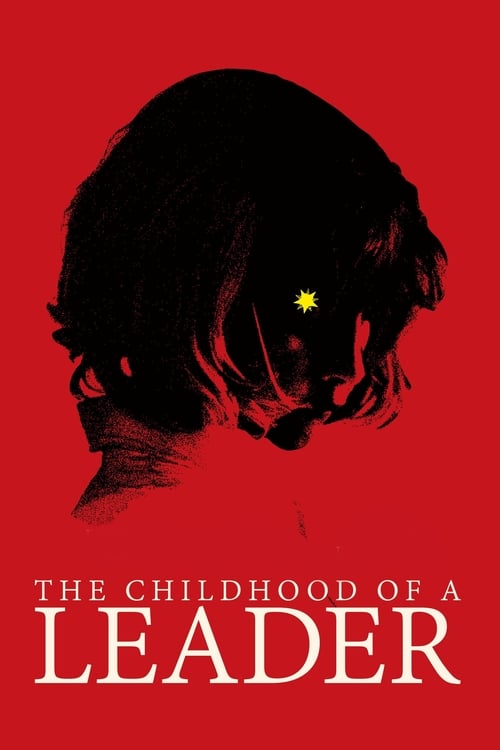
The Childhood of a Leader (2015)
Corbet's debut already announced the ambition -- a formally audacious period piece scored to dissonance about the making of a twentieth-century figure; The Brutalist is that same nerve extended to epic length.
Further Reading
More Lunara Criticism
 ★★★½
★★★½
Lunara Review
Den of Thieves 2: Pantera — Burn the Blueprints
The first one wanted to be Heat; this one would rather be drunk, and it turns out drunk is the more honest condition.
Updated July 25, 2026
 ★★½
★★½
Lunara Review
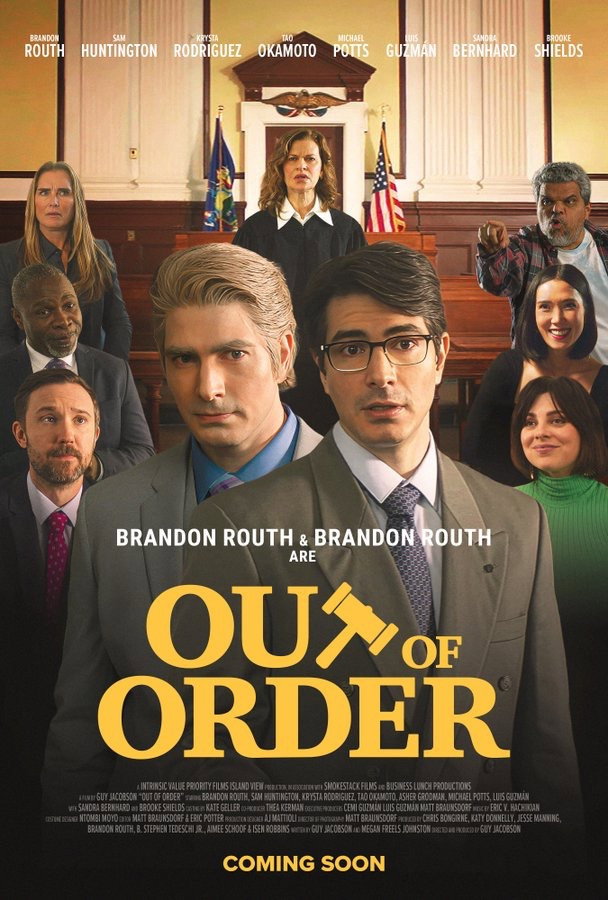
Out of Order! — The Reunion the Movie Doesn’t Know It Has
Superman and Jimmy Olsen share frames again after nineteen years, a Broadway scene-stealer plays the farce all by herself, and the screenplay never shows up to...
Updated July 25, 2026
 ★★½
★★½
Lunara Review
The Gorge — The Distance Was the Movie
Scott Derrickson's two-hander has one of the best premises of the year and the saddest relationship to it -- a film that treats the very...
Updated July 14, 2026
 ★★★
★★★
Lunara Review
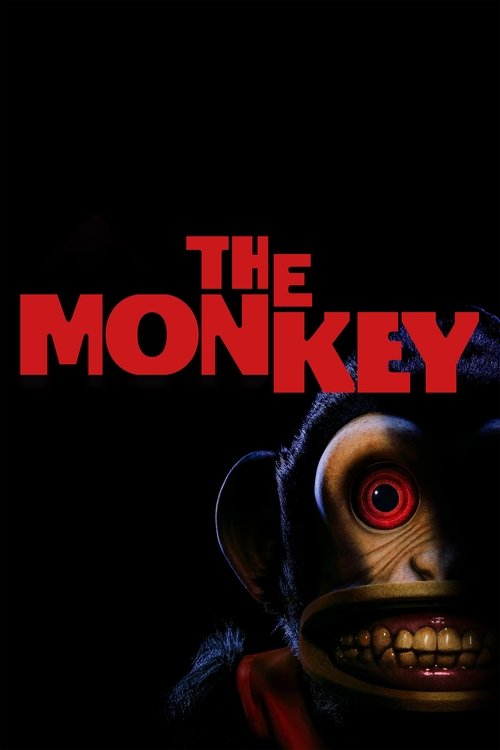
The Monkey — Laughing at the Funeral
Osgood Perkins follows the dread of Longlegs with something that looks like its opposite -- a gleeful splatter comedy about a cursed toy...
Updated August 12, 2026
 ★★★★
★★★★
Lunara Review
Eephus — The Pitch Is the Form
Carson Lund's debut spends one long afternoon watching a meaningless recreational baseball game on a field that is about to be demolished...
Updated July 14, 2026