
Lunara Review
The Holdovers — Nobody Comes for the Leftovers
Alexander Payne's Christmas picture is about the people the holiday forgets, and it earns every ounce of its warmth by being mean first.

Alexander Payne’s Christmas picture is about the people the holiday forgets, and it earns every ounce of its warmth by being mean first.
The film announces its whole strategy before a single scene plays: a vintage studio logo, a period ratings card, fake print damage, titles set in the typography of 1970. The Holdovers does not just take place in 1970; it applies for citizenship. Eigil Bryld shoots on digital and then degrades the image with grain and gate weave until it passes for the kind of shaggy, patient character picture Hollywood made when Hal Ashby was employable, and the pastiche is not a stunt. It is a contract with the audience. This movie will move at 1970 speed, hold shots for 1970 durations, and trust you the way those films trusted you, to sit with three unhappy people in an empty boarding school and believe that watching them thaw is event enough.
The three are chosen by subtraction. Barton Academy empties for Christmas break, and what remains is what nobody came for: Paul Hunham, the ancient-history teacher every student despises and every colleague avoids, assigned to babysit as punishment for failing a senator’s son on principle; Angus Tully, the smart, mouthy sophomore whose mother cancels his holiday at the last minute in favor of a honeymoon; and Mary Lamb, the cafeteria manager, cooking for two men she barely knows in the first Christmas after her son Curtis was killed in Vietnam. Payne’s cruelest and truest structural observation sits inside that roster: Curtis attended Barton on scholarship and died in a war the paying families’ sons bought their way around, and Mary keeps feeding those families’ children anyway. Da’Vine Joy Randolph plays her with no orchestration at all, grief managed like a shift, and the film has the discipline to let her sit in rooms without making her anyone’s teacher. Her breakdown at a Christmas party, quick, furious, immediately re-contained, is the realest ninety seconds in the picture.
Giamatti’s Hunham is the role his whole career was rehearsal for, a man who has fortified failure into philosophy. He quotes Cicero at teenagers as suppressing fire, marinates in cheap whiskey, and wields his wandering eye and unfortunate body chemistry as tests: flinch and confirm his contempt, or hold his gaze and be granted the beginnings of respect. The film’s comedy runs on his precision insults, but its intelligence runs on the slow disclosure of what the armor covers, a Harvard implosion, a sabotaged career, a man who stayed at his boyhood school because the world outside declined to have him and he pre-emptively declined it back. Opposite him, Dominic Sessa, a first-time actor found at one of the schools where the film shot, gives Angus the exact quality the part cannot work without: a boy whose obnoxiousness is transparently load-bearing, insolence stretched over the fear that his family has located a way to store him, like furniture, indefinitely. The trip to Boston that occupies the film’s second half, museum, bowling, a forbidden visit to the psychiatric facility where Angus’s father lives, converts their hostility into kinship by increments so small you cannot point to the scene where it happens, which is the highest compliment available to this kind of picture.
The honest limit is that the schedule shows. Anyone who has seen a curmudgeon-thaws movie can call every station from the opening titles: the detente, the shared secret, the setback, the sacrifice. Payne is not interested in surprising you with the route, only with the quality of the driving, and mostly the bet pays, but not always; the Miss Crane thread, the one colleague who shows Hunham genuine romantic warmth, gets raised, used to soften him, and then parked without payment, and a couple of the script’s mirrored confessions arrive with their symmetry showing. The film’s answer to this complaint is its ending, which quietly breaks the formula it rode in on. Hunham takes the fall for Angus’s Boston detour, tells the boy’s parents the lie that saves him from military school, and is fired for it, the one purely selfless act of his adult life, and the one the genre usually rewards. Payne pays him nothing. No reinstatement, no send-off from grateful students. Just the car, the open road away from the only institution he ever belonged to, and a mouthful of the headmaster’s expensive cognac, savored and then spat out the window. He has finally tasted what the ruling class keeps for itself, and he declines to swallow it. That spit is the film’s thesis, its politics, and its goodbye, all in one gesture, and it is perfect.
The Holdovers understands something most warm movies never learn: that warmth without cost is just temperature. Everyone in this film is somebody’s leftover, the unpicked, the unclaimed, the cooked-for and forgotten, and the fragile two-week family they assemble dissolves on schedule when the buses return. The film does not pretend otherwise. It only insists the two weeks counted, that a borrowed family is a family for exactly as long as it holds, and that for people nobody came for, that is not a consolation prize. It is the whole prize.
LUNARA DEBRIEF
- Score: 5 / 5
- Year: 2023
- Where to Watch: Streaming (Peacock) | VOD (major platforms) | 4K UHD
- Theme Echo: The Last Detail (1973) tt0070290. The film Payne is openly channeling: two men escorting a doomed kid through a gray East Coast winter, showing him a good time the institution will cancel. Same snow, same beer-colored light, same conviction that a brief kindness inside a merciless system is still kindness.
- Counter-Program: Dead Poets Society (1989) tt0097165. The boarding-school teacher movie as inspirational opera: desks stood on, lives transformed, a martyrdom to swell music. Hunham inspires no one, transforms one kid maybe ten percent, and gets fired without a single student standing on anything. One of these films is lying to you, and it is not the one with the spit take.
- Career Context: Sideways (2004) tt0375063. Payne and Giamatti’s first study of a bitter, over-educated failure who narrates his own defeat in complete sentences. Miles aged twenty years, traded wine for whiskey, and became Hunham, and the two performances together are the definitive portrait of American male disappointment with a syllabus.
LUNARA DEBRIEF
- Score:★★★★★
- Oscar Ledger5 nominations • 1 wins
- Year:2023
- Where to Watch:
Pair It With
Three films in conversation with this one.

Theme Echo
The Last Detail (1973)
The film Payne is openly channeling: two men escorting a doomed kid through a gray East Coast winter, showing him a good time the institution will cancel. Same snow, same beer-colored light, same conviction that a brief kindness inside a merciless system is still kindness.

Counter-Program
Dead Poets Society (1989)
The boarding-school teacher movie as inspirational opera: desks stood on, lives transformed, a martyrdom to swell music. Hunham inspires no one, transforms one kid maybe ten percent, and gets fired without a single student standing on anything. One of these films is lying to you, and it is not the one with the spit take.

Career Context
Sideways (2004)
Payne and Giamatti's first study of a bitter, over-educated failure who narrates his own defeat in complete sentences. Miles aged twenty years, traded wine for whiskey, and became Hunham, and the two performances together are the definitive portrait of American male disappointment with a syllabus.
Further Reading
More Lunara Criticism
 ★★★★½
★★★★½
Lunara Review
Guardians of the Galaxy Vol. 3 — The Wound Under the Fur
The last MCU film made by somebody who loved the characters more than the franchise, and it is about a raccoon, and it wrecked me.
Updated July 26, 2026
 ★★★★½
★★★★½
Lunara Review
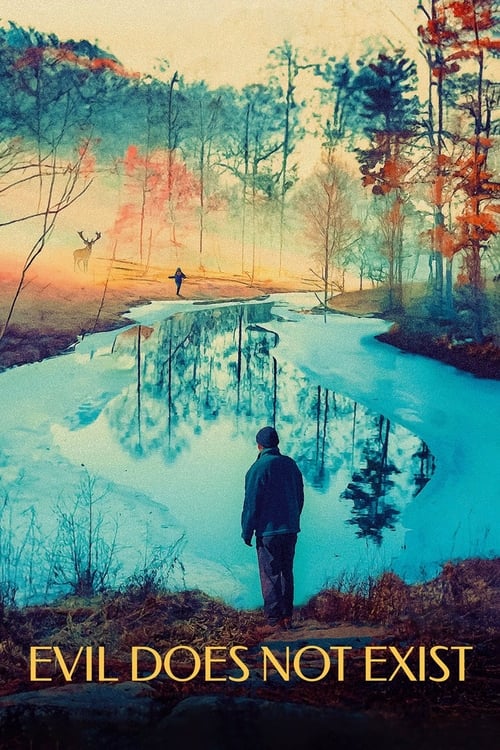
Evil Does Not Exist — The Villain Is a Sentence
The scariest line of the year is "we can mitigate," said politely, by people who will be gone by February.
Updated July 25, 2026
 ★★★★½
★★★★½
Lunara Review
Do Not Expect Too Much From the End of the World — Harm, Rebranded as Story
Radu Jude staples two lying centuries together, points a camera at one workday, and calls it Monday.
Updated July 25, 2026
 ★★★★
★★★★
Lunara Review
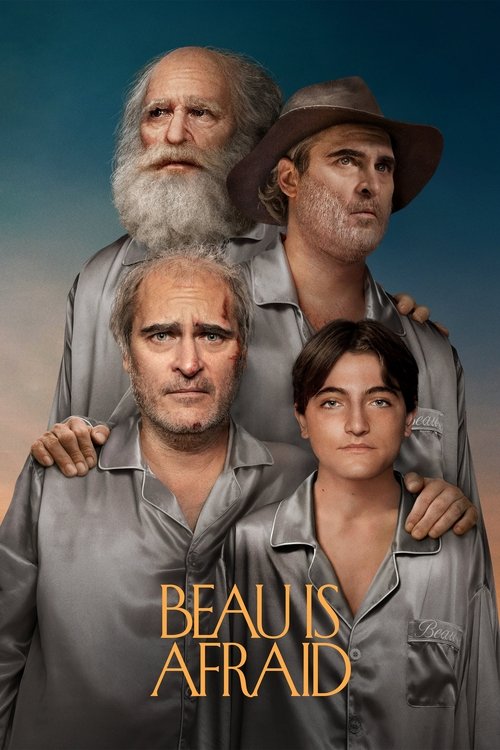
Beau Is Afraid — The Verdict Came First
Three hours inside a guilt that predates its owner; the trial was underway before the birth.
Updated July 25, 2026
 ★★★★½
★★★★½
Lunara Review
Barbie — The Product That Noticed
A corporation paid for a film about the impossibility of being a product, and Greta Gerwig almost got the whole confession on tape.
Updated July 25, 2026