
Lunara Review
Train Dreams — The Ordinary Life Is Not a Lesser Subject
Endurance is the drama; the catastrophe is only where the subject begins.

Endurance is the drama; the catastrophe is only where the subject begins.
Train Dreams insists that an ordinary life, a man who builds things, loses things, and endures, is not a lesser subject than wars, revolutions, and historical figures but a harder one to earn. Clint Bentley’s adaptation of Denis Johnson’s novella follows Robert Grainier across a life spent in the forests and railroad camps of the early twentieth-century Pacific Northwest, and it achieves something almost no contemporary American film attempts: it treats endurance as the drama, aftermath as the story, and the decades Robert spends alone in his cabin after losing everything as worthy of the same formal attention as the decades that preceded his loss. The choice to position catastrophe in the first act and then spend the remaining two-thirds of the film in the aftermath is the most radical structural gesture American independent cinema has made in years. It says: the survival is the subject. The crisis is just where the subject begins.
The Malick comparison will be made, and is correct, and risks being the least interesting thing about the film. Bentley earns it not through imitation of visual grammar but through shared conviction: that ordinary human experience, filmed with sufficient attention and patience, achieves the gravity of myth. The luminous natural light confirms the lineage. What animates it is Bentley and co-writer Greg Kwedar’s own. No war defines Robert Grainier. No political office raises him into history. No grand destiny arrives to dignify his suffering. He works, loves, loses, keeps going, and in the process becomes the center of one of the most quietly radical American films in recent memory.
Joel Edgerton delivers what is almost certainly the finest performance of his career, and he does it with less dialogue than most actors receive in a single scene. His Robert is a man who watches more than he speaks, who processes the world through observation and physical labor rather than articulation, and Edgerton commits to this interiority with a discipline that converts silence into its own form of language. The performance operates almost entirely through body and face. The way Edgerton holds an axe communicates Robert’s relationship to work; the way he stands in a doorway communicates his relationship to domesticity; the way his eyes track the treeline communicates a spiritual awareness he could never put into words and would never try. Edgerton ages across decades, and the aging is not a prosthetic achievement but a postural one. His body accumulates time the way a structure accumulates weather: not through dramatic collapse but through incremental settling, the slight forward yield of the shoulders, the hands moving with less surplus energy as the decades pass.
In the scenes with Felicity Jones as Gladys, his wife, Edgerton finds a tenderness that is all the more devastating for how unperformed it is. These are two people who love each other the way working people love: without grand declarations, through the daily fact of proximity and shared labor, through the particular domestic shorthand of people who have been doing the same things together for so long that the doing has become the declaration. When loss arrives, and it arrives with the sudden, arbitrary violence that Johnson’s prose has always understood better than almost any American writer’s, Edgerton absorbs it the way Robert absorbs everything: silently, completely, with a grief that has no outlet and therefore no resolution. He does not perform devastation. He performs the state after devastation, when life continues and the grief has nowhere to go except deeper into the body.
Bentley directs Train Dreams with a formal patience that mirrors the rhythms of the work it depicts: long takes that let the viewer inhabit the physical reality of felling timber, building rail, clearing land. The camera positions itself at the level of the work, often at hip height or ground level, and the effect is not documentary distance but participatory intimacy. The audience is placed inside the labor, feeling the resistance of wood and earth, the weight of tools, the specific quality of effort so thoroughly physical that it crowds thought out. Tools are not props here; they are extensions of perception. Labor is not backdrop; it is the film’s first language. The world is experienced primarily through the body, and the body’s experience of the world is the most honest record of what a life was.
The Pacific Northwest cinematography locates the sacred inside the natural without tipping into postcardism. The forests are not scenery. They are environment: simultaneously beautiful, dangerous, and indifferent to the humans who move through them. The trees do not care about Robert Grainier. The railroad does not care about Robert Grainier. The twentieth century, roaring through the landscape like a machine Robert helps build but cannot ride, does not care about Robert Grainier. And Bentley’s camera, which cares about Robert Grainier with the patient, forensic attention of someone who has decided that this particular life is worth the sustained act of witness, is the film’s argument against that indifference.
Kwedar’s contribution as co-writer is felt most strongly in the film’s structural decisions. Johnson’s novella moves through decades with the compression of poetry, and Bentley and Kwedar honor that compression without overdramatizing transitions. Years pass in a cut. Seasons accumulate rather than announce themselves. A marriage that occupies ten pages in the novella occupies twenty minutes of screen time. The catastrophic loss, fire, the deaths of Robert’s wife and daughter, would be the climax of a conventional film. Here it is positioned in the first act. The structural choice is the film’s most explicit claim: the aftermath is the story. The decades Robert spends alone in his cabin, the slow accretion of isolation and weather and the particular dreams that give the film its title, constitute a life as worthy of attention as the decades that preceded the loss. Most American films would either end at the catastrophe or position the subsequent decades as the story of Robert’s healing, his recovery, his eventual return to community. Train Dreams does neither. Robert does not heal. He continues. The distinction is everything.
There is a scene late in the film where Robert, now very old, walks to the edge of the tree line at dusk. He stands there. The camera holds him from behind, the forest in front of him, the last light moving through the branches in a way that is both beautiful and absolute, the kind of light that arrives at the end of things. He does not move toward the trees. He does not move away from them. He stands at the threshold for a long moment, and then he turns and walks back toward his cabin. Bentley holds the shot through the full duration of Robert’s stillness, longer than any conventional editing rhythm would permit, and what the duration produces is not patience but pressure: the sense of something unresolved pressing against the frame. Robert is not deciding whether to walk into the woods. He is living in the space between the life he has and the life that ended decades ago, in a gesture that will never be completed. He turns back. The cabin light is on. Bentley cuts. The scene contains nothing dramatic. It contains everything.
Robert Grainier haunts you because nothing did, and the film insists on treating that nothing as everything. He is not a great man. He does not change the world. He clears trees and lays rail and buries the people he loves and sits alone in a cabin listening to the radio as the twentieth century roars past him. And Train Dreams argues, through the accumulated weight of its formal patience and Edgerton’s extraordinary embodiment, that this is enough. That this is, in fact, everything. What the film finally claims is almost scandalously unfashionable: that a life can matter without visibility, in a culture that increasingly understands value only through scale, exception, or spectacle.
The feeling it leaves is not a scene or a line or a performance but a sensation: the feeling of having been inside a life, of having felt time pass the way it actually passes, as accumulation, as weather, as the incremental settling of a body that keeps working because the work is still there. What lingers is not grief. It is the specific, quiet weight of having witnessed something that will not appear in any record of the century it belonged to, and having been asked to decide whether that absence is a tragedy or simply what ordinary life looks like from the outside.
The limit: the film’s pacing will lose viewers who arrive expecting narrative incident. It asks for presence the way manual labor asks for presence; the reward is proportional to the attention given, and there is no shortcut. But the claim the film makes about what endurance looks like, and what it deserves from cinema, is the most quietly radical argument in American film this year.
LUNARA DEBRIEF
- Score: 4 / 5
- Year: 2025
- Where to Watch: Theatrical | Streaming (Netflix) | 35mm screenings at select venues
- Theme Echo: The Thin Red Line (1998) tt0120863. Malick’s war film shares Train Dreams’ conviction that the natural world contains a spiritual dimension that dwarfs and illuminates human suffering; both films insist on the landscape as a moral force rather than a backdrop.
- Counter-Program: There Will Be Blood (2007) tt0469494. Anderson’s epic treats the same landscape and era as a site of monstrous acquisition; everything Train Dreams declines by centering a man who takes nothing, builds things other people use, and disappears without monument.
- Career Context: Jockey (2021) tt13559026. Bentley’s first feature, written with Kwedar: another life measured in the body’s wear. Jockey watches a man’s work leave his bones; Train Dreams watches the same arithmetic fill a century.
LUNARA DEBRIEF
- Score:★★★★
- Oscar Ledger4 nominations • 0 wins
- Year:2025
- Where to Watch:
Pair It With
Three films in conversation with this one.

Theme Echo
The Thin Red Line (1998)
Malick's war film shares Train Dreams' conviction that the natural world contains a spiritual dimension that dwarfs and illuminates human suffering; both films insist on the landscape as a moral force rather than a backdrop.

Counter-Program
There Will Be Blood (2007)
Anderson's epic treats the same landscape and era as a site of monstrous acquisition; everything Train Dreams declines by centering a man who takes nothing, builds things other people use, and disappears without monument.
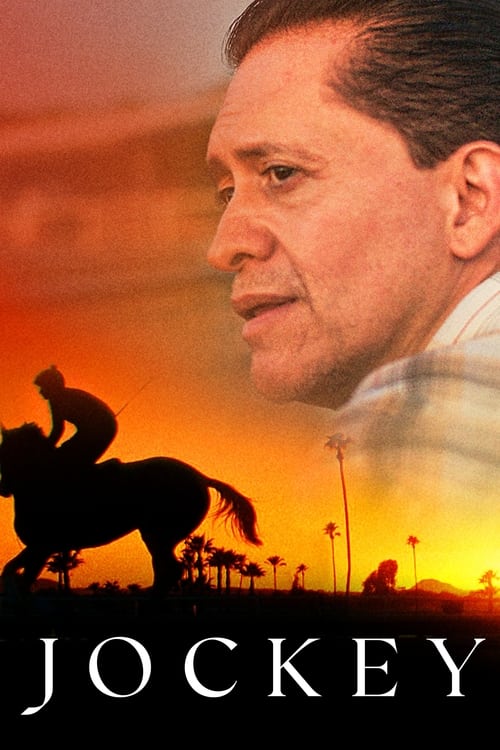
Career Context
Jockey (2021)
Bentley's first feature, written with Kwedar: another life measured in the body's wear. Jockey watches a man's work leave his bones; Train Dreams watches the same arithmetic fill a century.
Further Reading
More Lunara Criticism
 ★★★½
★★★½
Lunara Review
Den of Thieves 2: Pantera — Burn the Blueprints
The first one wanted to be Heat; this one would rather be drunk, and it turns out drunk is the more honest condition.
Updated July 25, 2026
 ★★½
★★½
Lunara Review
Out of Order! — The Reunion the Movie Doesn’t Know It Has
Superman and Jimmy Olsen share frames again after nineteen years, a Broadway scene-stealer plays the farce all by herself, and the screenplay never shows up to...
Updated July 25, 2026
 ★★½
★★½
Lunara Review
The Gorge — The Distance Was the Movie
Scott Derrickson's two-hander has one of the best premises of the year and the saddest relationship to it -- a film that treats the very...
Updated July 14, 2026
 ★★★
★★★
Lunara Review
The Monkey — Laughing at the Funeral
Osgood Perkins follows the dread of Longlegs with something that looks like its opposite -- a gleeful splatter comedy about a cursed toy...
Updated August 12, 2026
 ★★★★
★★★★
Lunara Review
Eephus — The Pitch Is the Form
Carson Lund's debut spends one long afternoon watching a meaningless recreational baseball game on a field that is about to be demolished...
Updated July 14, 2026