
Trap — The Serial Killer Remembered Snacks
Movie Review

Trap, 2024
Shyamalan builds a cage out of a pop concert, then asks why you keep rooting for the animal inside it.
A father drapes a coat over his daughter’s shoulders. He is patient at the merch table, strategic about the bathroom lines, the kind of dad who remembered snacks and knows exactly which song his girl has been waiting all night to hear. He is also, we learn before the first act is out, a serial killer, and the arena around him is a sting built to catch him: twenty thousand screaming fans, one predator, every exit a checkpoint. M. Night Shyamalan hands you all of this up front. No twist withheld, nothing saved for the last reel. The suspense he wants is not who. It is how. And, more uncomfortably, it is whose side you notice yourself on while the how plays out.
Trap split audiences the way Shyamalan’s best gambles always do, and I absolutely dug it. Part of that is the sheer shamelessness of the contraption, a bar bet of a premise that should not work and mostly does. Part of it is that the film completes the most satisfying career resurrection in recent memory. Call it the Josh Hartnett Renaissance, paid off in full. Hartnett was a leading man who walked away, and his return, the quiet gravity he brought to Ernest Lawrence in Oppenheimer, reminded everyone what got lost when he did. Trap hands him the check to cash. He cashes it.
What he does with Cooper is delicious because of what he will not do. There is no snake under the saint, no mask yanked off at the hour mark. Hartnett declines the obvious switch and lets both men occupy the same face at the same time: the one settling that coat on a girl’s shoulders and the one cataloging exits with a hunger he has learned to wear like cologne. His menace is clerical. Lists, routines, a gift for being unremarkable. When he smiles at a security guard, the smile is a skeleton key, and the scariest thing in the movie is how well it works. Niceness, deployed with precision, is a technology. Cooper is its master craftsman. Shyamalan knows the culture rewards the optics of caretaking, the visible competence of a good father in public, and the film keeps pressing on one question: what else can live inside those optics, undetected, for years.
The filmmaking plays the same double game the performance does. Sayombhu Mukdeeprom shoots the arena as a system for moving bodies at speed, all concourses and choke points and service corridors, and once the sting reverses the current, the same geography becomes the cage. Hallways arrive slightly canted, as if the building itself were recalculating Cooper’s odds. Security monitors hang over scenes like a Greek chorus with lanyards. And the concert inside the cage is its own layer of satire. Lady Raven, played by the director’s daughter Saleka Shyamalan, who wrote and performs the songs herself, is a persona the size of a city, her choreography an instruction manual for belief. The film is specific enough about pop spectacle to be funny and broad enough to land the real point: a stadium show and a manhunt are both crowd-control exercises wearing different lighting rigs.
Ariel Donoghue’s Riley, the daughter, could have been a prop and never is. She is the film’s conscience, and its sharpest cuts are its smallest: a reassuring hand squeeze that is actually a time check, a casual “we’re okay” delivered like a password between conspirators, only one of whom knows there is a conspiracy. Those moments hurt more than any of the thriller mechanics, because they show you a real love being used as cover, and the love is not fake. That is the film’s cruelest honesty.
Underneath the pulp sits a moral problem Shyamalan wants left unresolved, and I respect him for leaving it that way. Pause on the sting for even a second and it is monstrous: a trap baited with tens of thousands of bystanders, teenagers as chum. Is that reckless, or is it just candid about a society that trades safety for entertainment every time it packs into a building? The film keeps feeding the part of you that loves a show, then insists the love be counted. You want Cooper to slip the net. You want it because the movie built him as the protagonist and competence is charismatic, and then you have to sit with what that rooting interest says about the design of every thriller you have ever enjoyed. The arena and the killer share one assumption, that the crowd will do what crowds do. So will the audience. That is not a gotcha. It is the whole picture.
Where it falls short of what it reached for is the third act, and the wobble is real. Once the film leaves the building, the thing that made it special, one space, one current, one impossible math problem, dissipates into a more conventional cat-and-mouse coda, and the need to finish the thriller elbows aside the subtler film about complicity the arena contained. Shyamalan’s earned patience and Hartnett’s magnetism hold it together, but the last stretch spends tension the first two acts minted. It does not sink the picture. It does mark the line between a great contained thriller and the merely very good movie that walks out the loading dock with it.
He is not the twist guy here. He is the pressure guy. And for two acts, the pressure is as good as this genre gets.
Lunara Film Debrief
- Score:★★★★
- Year:2024
- Where to Watch:

De Palma's arena-bound conspiracy runs the same experiment: one enclosed venue, one compromised man, a camera that treats the building as a co-conspirator. Both films understand that a stadium is a machine that only pretends to be a room.

Shyamalan's open-air nightmare: infinite beach, no walls, the same suffocation. Watch them together and the truth comes clear. The trap was never the venue. In his cinema the cage is the premise itself, and space is just the decor it comes in.

Demme's close-ups force intimacy with a monster who is smarter than the room, and Hartnett's clerical evil descends directly from that blueprint: the horror of a predator whose best weapon is how pleasant the eye contact is.
More Lunara Film Criticism
Further Reading
 ★★★★½
Lunara Film Review
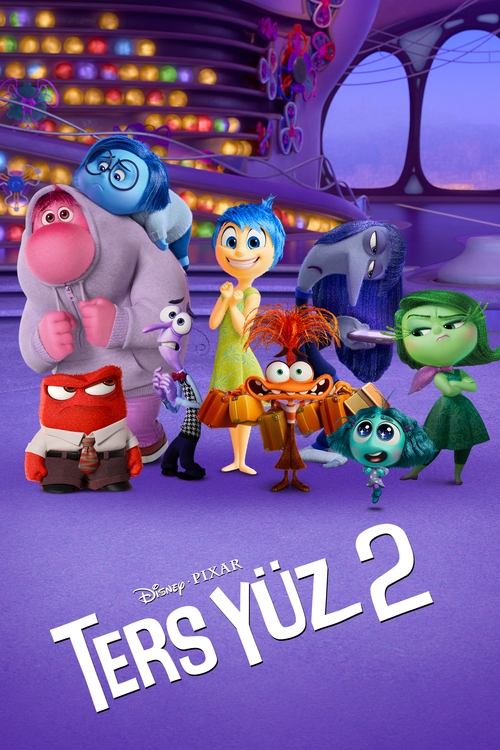
Inside Out 2 — Anxiety Is Middle Management
Pixar's sequel knows the scariest thing in a thirteen-year-old's head is the employee who never sleeps.
Updated September 23, 2026
 ★★★★
Lunara Film Review
Furiosa — Revenge Keeps the Books
George Miller trades velocity for weight, and revenge becomes a calendar kept for fifteen years.
Updated September 23, 2026
 ★★★★★
Lunara Film Review
Flow — Survival Is a Team Sport
The world ends, the water rises, and a cat learns the only lesson that matters: share the boat.
Updated September 23, 2026
 ★★★
Lunara Film Review
Deadpool & Wolverine — A Eulogy in the Gift Shop
Two movie stars crack jokes at a funeral for twenty-five years of X-Men pictures, and the strange part is that the grief underneath is real.
Updated September 23, 2026
 ★½
Lunara Film Review
Argylle — All Tuxedo, No Motion
It shows up in a tux and forgets to dance.
Updated September 23, 2026