
Lunara Review
A History of Violence — The Mask Grows In
Cronenberg's American postcard, with the blood already in the frame.

Cronenberg’s American postcard, with the blood already in the frame.
A History of Violence opens on a motel forecourt in morning light, the camera drifting sideways at the pace of a man with nowhere in particular to be. Two men bicker about checkout times and water for the road. The younger one ambles inside, past the front desk, and the room gives up its secret one wall at a time: blood where the staff should be, and one small witness the film does not spare. David Cronenberg holds all of it in the same unhurried glide, evil rendered as errand, and then cuts hard to a little girl screaming awake in a happy farmhouse hundreds of miles away. That splice is the whole movie. The nightmare and the postcard were always on the same reel.
The postcard is Millbrook, Indiana. Tom Stall runs the diner and greets his regulars by name; his wife Edie practices law; their teenage son absorbs a bully’s taunts and calls himself a pacifist; their little girl has nightmares that her family can still soothe. It looks like a Norman Rockwell print someone bled on, and the longer you stare the more obvious it becomes that the blood was always part of the frame. Adapted from the John Wagner and Vince Locke graphic novel and released in 2005, just as the multiplex was committing itself to men in masks for the next two decades, this is Cronenberg’s cleanest parable: classical on the surface, diseased at the joints. Its subject is the country’s favorite lie about itself, the one that says violence is an interruption. Here it is infrastructure. It runs under the streets, under the marriage bed, under the dinner table where the last scene will be served.
The hinge comes when the two drifters from the motel walk into Tom’s diner at closing time. The scene starts as pure menace, a gun flaunted, a waitress grabbed, and then the soft-spoken man behind the counter throws a pot of scalding coffee, comes over the counter, and kills them both in seconds, moving faster than thought, faster than the film has moved to this point. Overnight he is a local legend. The bell above the diner door starts sounding like an alarm.
Then the past arrives with a ruined eye and perfect diction. Ed Harris’s Carl Fogarty steps out of a black sedan like a debt collector for a life the town never knew about, orders coffee, and calls Tom “Joey.” The name sits on the family table like a loaded gun. What follows is not a thriller about whether the mobsters are right; the film settles that with unusual speed. What it watches instead is a family’s nervous system rerouting. Maria Bello gives the picture its human tremor: you can see Edie’s belief revising its own history in real time, a mind redrawing ten years of marriage while the body tries to stay married. The son, humiliated once too often, finds the breaker flipping and beats the school bully halfway to the hospital, fluent in a language he swore he would never speak. Fury gets inherited like property in this movie, passed down with the house keys. And the marriage slips its mask most nakedly on the staircase, where tenderness curdles into something feral and the film makes plain that love can be a raid. Cronenberg’s talent has never been shock. It is aftermath. He shows you the bruise and then follows it into the bloodstream.
Viggo Mortensen is devastating precisely because he barely appears to act. Tom Stall is an honest man with a perfect cover story because the cover has grown into cartilage; watch the micro-flinch when Fogarty says “Joey,” the way the smile drains from the eyes first, like a tide going out. Peter Suschitzky shoots the Millbrook daylight as a narcotic, a town that glows like a promise unable to read its own fine print, and Ronald Sanders cuts the violence against every action-movie instinct: it arrives bluntly, without buildup, and then sits there, daring you to look away while the moral math runs. The camera keeps an ethical distance, close enough to be human, far enough to see. Faces are wrong after death in this film. Wounds look like work. A dozen bodies fall in ninety-six minutes and not one of them is exciting.
The honest flaw lives in Philadelphia. William Hurt’s Richie Cusack, waiting at the end of a long hallway of denial, plays the final reckoning as fratricidal black comedy, and the choice is defensible: Cronenberg wants the mythic past to turn out small, petty, almost silly, a kingdom the size of a den. But for roughly ten minutes the comedy lets air out of the dread, handing the audience the laugh the rest of the film has spent an hour denying them, and the confrontation weighs less than the movie needs it to. The dinner table gets the weight back.
That last scene has no dialogue and needs none. Tom comes home from the thing he did; the daughter quietly sets him a place; the son, after a long moment, passes the food; Edie finally raises her eyes, and the film ends before they can decide what to say. The scrape of a fork on porcelain says it instead: we will try to live with it, because that is what this country does. The twist of A History of Violence was never that a man is who he was. The revelation is that the mask does not come off. It grows in. Twenty years later, with the righteous-gun fantasy mass-produced on every screen, this remains the great American movie a Canadian had to make, because he was the one director who did not believe our favorite lie.
LUNARA DEBRIEF
- Score: 5 / 5
- Year: 2005
- Where to Watch: VOD [major platforms] | Warner disc
- Theme Echo: Unforgiven (1992) tt0105695. The American myth audited from inside the western: a “reformed” killer learns that history is not past, it is principal plus interest. Eastwood’s Munny and Cronenberg’s Tom are the same man at different latitudes.
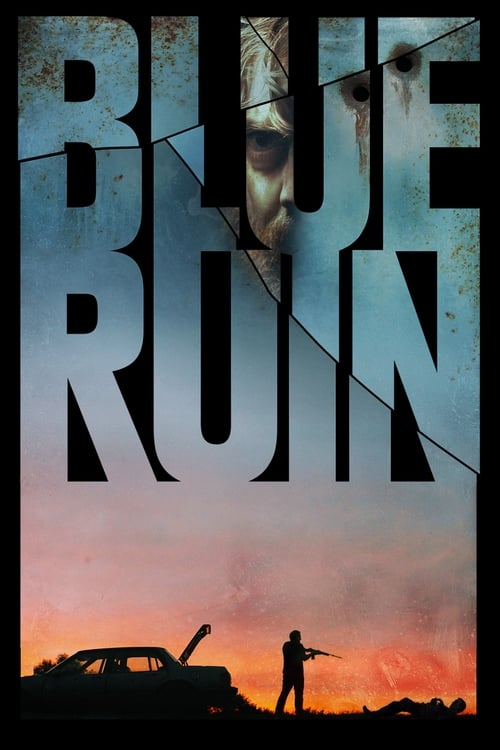
- Counter-Program: Blue Ruin (2013) tt2359024. Revenge with the competence removed: the aftermath is the whole plot and the bruise is the narrative. Where Tom is terrifying because he is good at this, Dwight is terrifying because he is not, and both films arrive at the same bill.
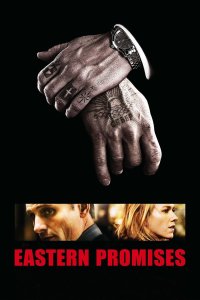
- Career Context: Eastern Promises (2007) tt0765443. Cronenberg’s sibling text, made two years later with the same star: bodies as contracts, violence as paperwork, identity inked directly into scar tissue.
LUNARA DEBRIEF
- Score:★★★★★
- Oscar Ledger2 nominations • 0 wins
- Year:2005
- Where to Watch:DigitalFind Digital OptionsAvailabilityWarner disc
Pair It With
Three films in conversation with this one.

Theme Echo
Unforgiven (1992)
The American myth audited from inside the western: a "reformed" killer learns that history is not past, it is principal plus interest. Eastwood's Munny and Cronenberg's Tom are the same man at different latitudes.
Counter-Program
Blue Ruin (2013)
Revenge with the competence removed: the aftermath is the whole plot and the bruise is the narrative. Where Tom is terrifying because he is good at this, Dwight is terrifying because he is not, and both films arrive at the same bill.
Career Context
Eastern Promises (2007)
Cronenberg's sibling text, made two years later with the same star: bodies as contracts, violence as paperwork, identity inked directly into scar tissue.
Further Reading
More Lunara Criticism
 ★★★★
★★★★
Lunara Review
The Shrouds — The Coldness Is the Argument
David Cronenberg invented a machine that lets you watch your dead spouse decompose, then built a film around it as cold and unresolved as...
Updated July 14, 2026
 ★★★★★
★★★★★
Lunara Review
Cache — Guilt Has a Fixed Address
The question was never who sent the tapes; it is why one man needed them to stay a mystery.
Updated July 25, 2026
 ★★★★★
★★★★★
Lunara Review
Capote — The Ending Needed Them Dead
A film about a masterpiece whose bill was paid mostly by other people.
Updated July 25, 2026
 ★★★★½
★★★★½
Lunara Review
Batman Begins — My Batman
Everyone has their Batman. Mine showed up on opening night in 2005, sitting between my grandparents, when a filmmaker finally took a man...
Updated July 20, 2026
 ★★★★
★★★★
Lunara Review
War of the Worlds — His Most Pitiless Film
Steven Spielberg likes to say he never made a horror movie. He is wrong, and this is it. War of the Worlds arrived in the summer of 2005...
Updated July 25, 2026