
Lunara Review
Army of Darkness — Three Words He Couldn’t Learn
Ash finally gets a destiny, a prophecy, and a kingdom to save, and dooms it because he couldn't be bothered to memorize three syllables.

Ash finally gets a destiny, a prophecy, and a kingdom to save, and dooms it because he couldn’t be bothered to memorize three syllables.
The whole third film pivots on a memory test. To take the Necronomicon safely, Ash must speak three words: klaatu, barada, nikto. He rehearses them on the walk to the graveyard the way a student crams in an elevator, gets two out cleanly, blanks on the third, and covers the gap with a cough and a confident nod, because admitting he forgot would be embarrassing. The dead notice. The whole army of them. Everything that goes wrong for the rest of the movie, every skeleton that claws out of the soil, every catapulted fireball, every threatened villager, traces back to one man’s decision that looking sure of himself mattered more than being right. It is the funniest inciting incident of the decade and the meanest, because the film has finally located the true villain of the trilogy, and he is wearing the hero’s chin.
Army of Darkness completes a clean three-act study in what Sam Raimi thinks a protagonist is for. The first film made Ash a victim, the second a punching bag, and the third, flung back to 1300 AD with a chainsaw, a shotgun, and an Oldsmobile, makes him something richer: an idiot abroad. Bruce Campbell plays Ash as the ugly American in chain mail, condescending to a medieval world he considers beneath him while failing at nearly everything it asks of him. He calls the locals primitives, mangles their customs, and struts through their castle dispensing catchphrases like a man signing autographs at a store opening. The film hands him the full hero kit, the prophecy, the boomstick, the destiny, and then spends ninety minutes demonstrating that equipment is not character. He has the twentieth century’s tools and none of its supposed enlightenment, and the movie’s running joke is that a Sears sporting-goods department cannot compensate for a hollow man.
Raimi’s cruelty operates by multiplication now. The windmill sequence splits Ash into a horde of tiny tormentors, mini-Ashes who swarm him with forks and trip wires in a stretch of pure live-action Looney Tunes, and then goes further: one of them grows into Bad Ash, a full evil double who is not an invading spirit but a distillation, everything smug and lazy and self-serving in the man given its own body and better posture. Good, bad, I’m the guy with the gun is a tremendous line, and the film means it as an indictment. The gun is the entire moral distinction on offer. The craft holding all this together is a love letter written in old money: the skeleton army is staged as an open homage to Ray Harryhausen’s Jason and the Argonauts, stop-motion warriors clattering in ranks, deliberately handmade in 1992, when the industry was sprinting toward digital. Raimi builds his climax from the toybox of his childhood and stages it with the timing of a musical.
Then there is the ending, or rather the two of them. In the version Raimi shot, Ash is given a potion and precise instructions to sleep to his own century, miscounts the drops, and wakes into a ruined future, having overslept the apocalypse. It is the trilogy’s perfect punctuation: after everything, the man’s carelessness cancels his survival, the last exam failed like all the others. The studio balked, and the theatrical cut ends at the S-Mart housewares counter instead, with Ash blasting a Deadite and getting the girl, failure repackaged as a victory lap. The film is diminished but not betrayed by the swap, because even the sunny ending is a joke about him: back home, in the only kingdom he ever wanted, shelving product and narrating his own legend to bored coworkers.
The honest limit is real and worth naming plainly. Army of Darkness is the slightest of the three films. Chasing a broader audience, it drains the horror out entirely and thins its blood to a PG-13 temperature the earlier films would have spat out; the middle stretch between the pit and the graveyard sags with plot management; and Sheila is less a character than a prize with dialogue, a step backward even from Linda’s slim part. The trilogy’s stakes were always personal, and here they go abstract, an army against a castle, and abstraction is the one thing Raimi’s intimate cruelty was never built for.
What survives the thinning is the idea, and the idea is durable: a fantasy epic whose thesis is that the chosen one is the problem. Every franchise hero since who fails upward with a smirk owes something to this movie’s math, and almost none of them are honest about the arithmetic. Raimi is. He gives his fool the win, the girl, and the catchphrase, and lets the seams show on every one of them, so that the triumph plays like a man taking credit for surviving a fire he started. Hail to the king. Count the drops yourself.
LUNARA DEBRIEF
- Score: 4 / 5
- Year: 1992
- Where to Watch: VOD [major platforms] | Director’s Cut disc [essential for the original ending]
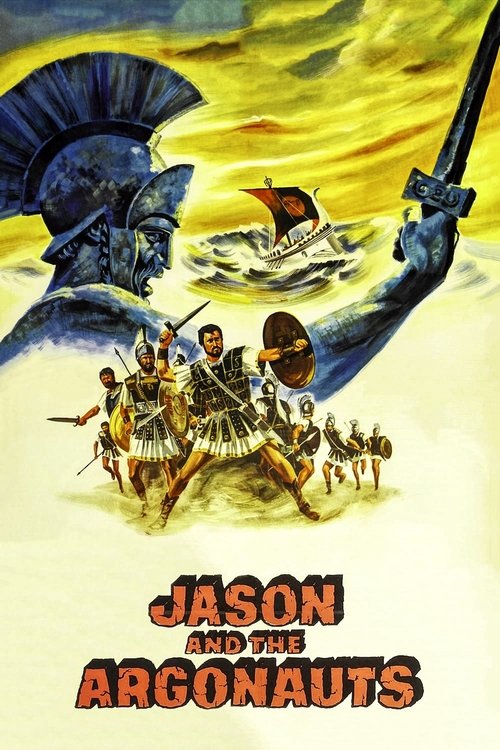
- Theme Echo: Jason and the Argonauts (1963) tt0057197. The Harryhausen skeleton fight this film’s climax openly reveres, and the source of its deepest conviction: that monsters built by hand carry a weight no simulation matches.
- Counter-Program: The Princess Bride (1987) tt0093779. The other great comic fantasy of its era, powered by sincerity where Raimi runs on mockery. Reiner believes in his storybook; Raimi keeps flicking his hero’s ear. The two together map the genre’s entire emotional range.
- Career Context: Evil Dead II (1987) tt0092991. The direct predecessor, where the punishment was still claustrophobic and personal. Watching the two back to back shows exactly what the trilogy gained in scale and spent in dread when it left the cabin.
LUNARA DEBRIEF
- Score:★★★★
- Year:1992
- Where to Watch:DigitalFind Digital OptionsAvailabilityDirector's Cut disc [essential for the original ending]
Pair It With
Three films in conversation with this one.
Theme Echo
Jason and the Argonauts (1963)
The Harryhausen skeleton fight this film's climax openly reveres, and the source of its deepest conviction: that monsters built by hand carry a weight no simulation matches.

Counter-Program
The Princess Bride (1987)
The other great comic fantasy of its era, powered by sincerity where Raimi runs on mockery. Reiner believes in his storybook; Raimi keeps flicking his hero's ear. The two together map the genre's entire emotional range.

Career Context
Evil Dead II (1987)
The direct predecessor, where the punishment was still claustrophobic and personal. Watching the two back to back shows exactly what the trilogy gained in scale and spent in dread when it left the cabin.
Further Reading
More Lunara Criticism
 ★★★
★★★
Lunara Review
Doctor Strange in the Multiverse of Madness — The Horror Director Won
Marvel hired a horror director for a corporate slot, and for about forty glorious minutes the horror director won.
Updated July 25, 2026
 ★★★★
★★★★
Lunara Review
Drag Me to Hell — Damnation for a Desk Decision
Sam Raimi's meanest joke is the exchange rate: one workaday compromise, priced at eternity.
Updated July 25, 2026
 ★★
★★
Lunara Review
Spider-Man 3 — The Sequel That Ate Itself
Forced to include a villain he never wanted, Raimi delivered the most expensive shrug in studio history.
Updated July 25, 2026
 ★★★★★
★★★★★
Lunara Review
Spider-Man 2 — The Hero Who Tried to Quit
The best superhero film ever made is about a man whose own body files a resignation letter.
Updated July 25, 2026
 ★★★★
★★★★
Lunara Review
Darkman — A Ghost in Borrowed Faces
Sam Raimi's first studio picture admits what every origin story hides: the mask does not conceal the man, it replaces him.
Updated July 25, 2026