
Lunara Review
Doctor Strange in the Multiverse of Madness — The Horror Director Won
Marvel hired a horror director for a corporate slot, and for about forty glorious minutes the horror director won.

Marvel hired a horror director for a corporate slot, and for about forty glorious minutes the horror director won.
Reed Richards, the smartest man in any universe, unravels like a ball of yarn. Black Bolt opens his mouth to whisper and discovers his mouth is gone; the scream has nowhere to go, so it goes inward, and his own skull pays the bill. Captain Carter is cut in half by her own shield. This is the Illuminati massacre, the centerpiece of Doctor Strange in the Multiverse of Madness, and it is the moment you understand that Sam Raimi did not sneak into the MCU wearing a company badge. He walked in the front door, they handed him a superhero team assembled purely to flatter the fanbase, and he spent five minutes killing it with the happy inventiveness of a man who has waited decades for permission.
Raimi came back to superhero movies sixteen years after Spider-Man 3, and the question hanging over the picture was whether anything of him would survive the process. Marvel had spent a decade and a half proving it could hire interesting directors and return interchangeable movies. What actually happens is stranger and more fun: the process holds the script, and Raimi takes everything else. The crash zooms are his. The canted angles are his. The corpse humor is his. A whole finale in which Strange reanimates his own dead body and flies it into battle wearing a cloak of the damned is nobody else’s. The macabre keeps surfacing through the corporate polish like blood through a bandage, and watching it surface is the movie’s real suspense. Danny Elfman scores it all in swooping gothic carnival brass, and no, it is not subtle, and no, it is not meant to be. Subtlety was never what anyone should have hired these two men for.
The film’s boldest decision has nothing to do with camera angles. It takes Wanda Maximoff, the closest thing Phase Four had to a figure of pure sympathy, and makes her the monster. Elizabeth Olsen plays the turn not as corruption but as continuation: the same grief from WandaVision, allowed to finish its sentence. Her Wanda is a mother whose love has no limiting principle, and Olsen keeps both truths in frame at once, often in the same shot. Watch her eyes in the orchard scene, or in the moment she tells Strange that this is what fairness looks like. The woman reaching for her children and the witch flattening everything between herself and them are not two characters trading places. They are one person performing one action, and the horror is how little distance there turns out to be between devotion and destruction. It is the best acting anyone does in a Doctor Strange movie, and it belongs to the villain.
Benedict Cumberbatch, to his credit, notices the movie he is in. His Strange is more weathered than the man from 2016, the arrogance still there but paying interest now, and the multiverse hands him a bleak little mirror: every variant of himself he meets has made the same mistake, choosing capability over connection, every time, in every world. Cumberbatch carries that discovery in his shoulders more than his lines. It is quiet work in a loud film, and it gives the picture its one thread of genuine self-examination.
Now the fair accounting, because the movie around all this is a mess and pretending otherwise would insult it. The multiverse itself, the concept on the poster, is the least interesting thing on screen: a stack of universes flipped past like paint samples, none held long enough to matter, spectacle standing in for a reason to care. The script bends motivation to reach its set pieces rather than the other way around. And America Chavez, the teenager whose power drives the whole chase, is written as a battery with a backstory. Xochitl Gomez plays her with the wary toughness of a kid who has survived by running, and the film gives that performance maybe two scenes of actual character before reassigning her to plot duty. So when the ending arrives, with America showing Wanda her own children flinching from her, the idea is right and the movie has not built the road to it. The emotional logic is sound. The delivery is on credit.
Here is the thing, though. The MCU has released a long shelf of movies more coherent than this one, and I would rewatch almost none of them before it. Fifteen years of franchise filmmaking have proven the studio can manufacture competence at scale. What it cannot manufacture is perversity, the specific pleasure of a director who finds beauty in the grotesque and comedy in the horrifying and cannot suppress either instinct even with a nine-figure budget riding on his manners. Multiverse of Madness is not a great film. It is a compromised script wearing an uncompromised sensibility, and the sensibility wins enough rounds to make the fight worth watching. In a franchise that spent Phase Four proving most of its movies could have been made by anyone, here is the one that could only have been made by Sam Raimi. That is not everything. It is also not nothing, and lately, around here, it is rare.
LUNARA DEBRIEF
- Score: 3 / 5
- Year: 2022
- Where to Watch: Streaming (Disney+) | VOD (major platforms)
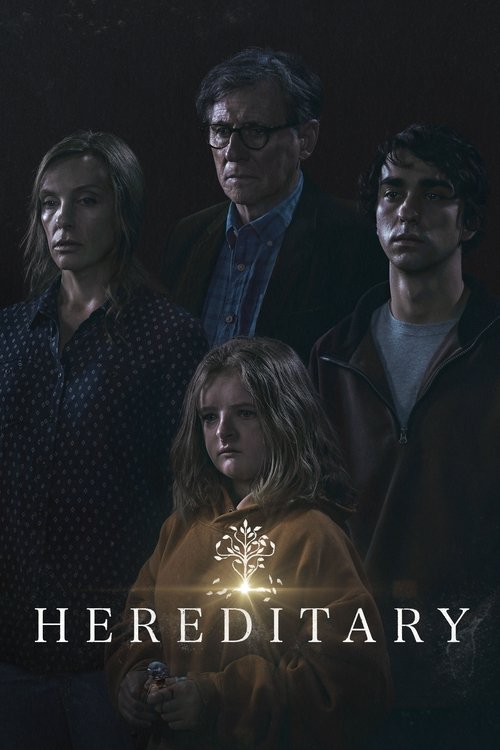
- Theme Echo: Hereditary (2018) tt7784604. The other great film about a mother’s grief becoming a force that reorganizes reality around it. Ari Aster plays the possession straight where Raimi plays it gleeful, and each film exposes what the other’s tone conceals: Hereditary the terror, this one the sorrow.
- Counter-Program: Everything Everywhere All at Once (2022) tt6710474. The same year, the same infinite universes, built from feeling outward instead of inventory downward. The Daniels prove the multiverse can be a metaphor for a family; Raimi’s film treats it as a hallway. Watching them back to back is a complete education in concept versus content.
- Career Context: Spider-Man 2 (2004) tt0316654. Raimi with both the freedom and the screenplay. The train sequence and the surgery-room Doc Ock scene are this film’s instincts wired into a story that deserves them, and the gap between the two pictures measures exactly what Multiverse of Madness is missing.
LUNARA DEBRIEF
- Score:★★★
- Year:2022
- Where to Watch:
Pair It With
Three films in conversation with this one.
Theme Echo
Hereditary (2018)
The other great film about a mother's grief becoming a force that reorganizes reality around it. Ari Aster plays the possession straight where Raimi plays it gleeful, and each film exposes what the other's tone conceals: Hereditary the terror, this one the sorrow.

Counter-Program
Everything Everywhere All at Once (2022)
The same year, the same infinite universes, built from feeling outward instead of inventory downward. The Daniels prove the multiverse can be a metaphor for a family; Raimi's film treats it as a hallway. Watching them back to back is a complete education in concept versus content.

Career Context
Spider-Man 2 (2004)
Raimi with both the freedom and the screenplay. The train sequence and the surgery-room Doc Ock scene are this film's instincts wired into a story that deserves them, and the gap between the two pictures measures exactly what Multiverse of Madness is missing.
Further Reading
More Lunara Criticism
 ★★★★
★★★★
Lunara Review
Drag Me to Hell — Damnation for a Desk Decision
Sam Raimi's meanest joke is the exchange rate: one workaday compromise, priced at eternity.
Updated July 25, 2026
 ★★★★
★★★★
Lunara Review
Army of Darkness — Three Words He Couldn’t Learn
Ash finally gets a destiny, a prophecy, and a kingdom to save, and dooms it because he couldn't be bothered to memorize three syllables.
Updated July 25, 2026
 ★★
★★
Lunara Review
Spider-Man 3 — The Sequel That Ate Itself
Forced to include a villain he never wanted, Raimi delivered the most expensive shrug in studio history.
Updated July 25, 2026
 ★★★★★
★★★★★
Lunara Review
Spider-Man 2 — The Hero Who Tried to Quit
The best superhero film ever made is about a man whose own body files a resignation letter.
Updated July 25, 2026
 ★★★★
★★★★
Lunara Review
Darkman — A Ghost in Borrowed Faces
Sam Raimi's first studio picture admits what every origin story hides: the mask does not conceal the man, it replaces him.
Updated July 25, 2026