
Lunara Review
Darkman — A Ghost in Borrowed Faces
Sam Raimi's first studio picture admits what every origin story hides: the mask does not conceal the man, it replaces him.

Sam Raimi’s first studio picture admits what every origin story hides: the mask does not conceal the man, it replaces him.
The origin of Darkman the character is a laboratory explosion; the origin of Darkman the movie is a licensing failure, and the second one is the better story. Coming off Evil Dead II, Sam Raimi wanted Batman and could not get him, chased The Shadow and could not get him either, so he did the thing no studio filmmaker does anymore: he invented his own pulp hero from spare parts and sold Universal on a property that did not exist. The result is the purest expression on record of what the superhero picture looks like when one director owns the whole myth, and what Raimi built with that freedom is telling. Given a blank cape, he made a horror film. His hero does not rise from tragedy. He is incinerated by it, and everything that walks out of the fire wearing his memories is something else.
Peyton Westlake is a scientist perfecting synthetic skin that dissolves in light after ninety-nine minutes, in love with attorney Julie Hastings, and Liam Neeson, three years before the world decided he was a dramatic monument, plays the early scenes with a warm, slightly doughy sweetness the rest of the film will spend punishing. Julie’s discovery of a crooked developer’s paper trail brings the gangster Robert Durant to the lab, and Larry Drake plays Durant as one of the great undersung heavies of the era: a bureaucrat of cruelty with a cigar cutter he uses on fingers, collected afterward the way other men keep receipts. The lab goes up. Westlake, burned past recognition and abandoned as a John Doe, is subjected to a treatment that severs his sense of touch and, as a side effect, uncorks his adrenal system, leaving him with augmented strength and unmanageable rage. The medical exposition is comic-book hokum and the film knows it; what matters is the design. Raimi strips his hero of the one sense that proves other people are real, then hands him a technology for wearing other people’s faces. Numbness plus disguise: that is not a superpower loadout, it is a diagnosis.
The middle of the picture is Raimi at his most gleefully unhinged, and also his most exact. Westlake, holed up in a condemned factory, uses the ninety-nine-minute skins to impersonate Durant’s own men and dismantle the gang from inside, and the film notices what the character cannot: how good he is at their cruelty, how naturally the borrowed faces fit. The technique matches the theme at every step, whip pans, screaming POV runs, the camera treated as an assault instrument, and in the film’s wildest sequence, a trip to a carnival with Julie, a funhouse-mirror freak-out renders Westlake’s disintegrating composure as pure Looney Tunes expressionism over a rigged midway game and a pink elephant. It is ridiculous and it is precise: a man with no skin in every sense, discovering that ordinary indignity, a carny’s smirk, a rigged ring toss, now routes straight to homicidal static. Danny Elfman pours a full gothic opera score over all of it, and Frances McDormand does more than the script deserves with Julie, the one person trying to love a man who can touch her and feel nothing, which the film understands as the cruelest line item in the whole ledger.
The honest limit is the plot that all this delirium hangs on. The Strack real-estate conspiracy is cardboard, the incriminating memo is a MacGuffin nobody on screen believes in, and Colin Friels’s silver-haired developer belongs to a duller movie; whenever the film is obliged to advance its crime story rather than its breakdown, it goes slack for minutes at a time. Raimi’s attention is so visibly with the wound and not the case that the case barely gets directed. The climax rescues it, a delirious fight across the skeleton of an unfinished skyscraper, girders swinging, a city with no finished rooms for a man with no finished face, and then the ending declines every available comfort. Julie reaches for him; he leaves. Wearing a stranger’s features, he tells her that he is everyone and no one, and walks into a crowd, and the final borrowed face that turns to the camera belongs, in a perfect piece of casting mischief, to Bruce Campbell. The joke has teeth: the film’s last image says the man you followed for two hours is now literally interchangeable, a rotation of masks with a grudge inside.
Every studio superhero movie since has told this same story and flinched from its conclusion, grief becomes power, power becomes identity, identity becomes costume. Darkman, made before the genre had rules to break, follows the logic all the way down: the costume wins. Peyton Westlake ends the film the way the explosion left him, unclaimed, and the horror underneath the splatstick is that his revenge changed nothing about that. He avenged a man who no longer exists, on behalf of a life no one can give back. Raimi would later make the most beloved superhero films of their era, but he never again said the quiet part this loudly. You do not wear the mask to save the city. You wear it because the fire kept the man and released something else, and the something else needs a face to walk around in.
LUNARA DEBRIEF
- Score: 4 / 5
- Year: 1990
- Where to Watch: VOD (major platforms) | Scream Factory collector’s disc
- Theme Echo: The Phantom of the Opera (1925) tt0016220. The Chaney original is Darkman’s true ancestor: the disfigured genius in the building nobody finished, extending love and receiving horror. Raimi swaps the opera house for an industrial ruin and keeps the unmasking, and both films know the face under the mask is the least of what got destroyed.
- Counter-Program: The Rocketeer (1991) tt0102803. Released months later, the sunlit version of the same pulp revival: a hero whose mask costs him nothing and comes off for the kiss. Run them together and you can watch one year’s Hollywood offer both answers to the same question, and only one of them is telling the truth.
- Career Context: Evil Dead II (1987) tt0092991. The grammar Darkman industrializes: the shrieking camera, the slapstick dismemberment, the hero losing pieces of himself to the property. Ash lost a hand and gained a chainsaw; Westlake lost a face and gained a franchise-that-wasn’t. Same director, same lesson, bigger fire.
LUNARA DEBRIEF
- Score:★★★★
- Year:1990
- Where to Watch:DigitalFind Digital OptionsAvailabilityScream Factory collector's disc
Pair It With
Three films in conversation with this one.
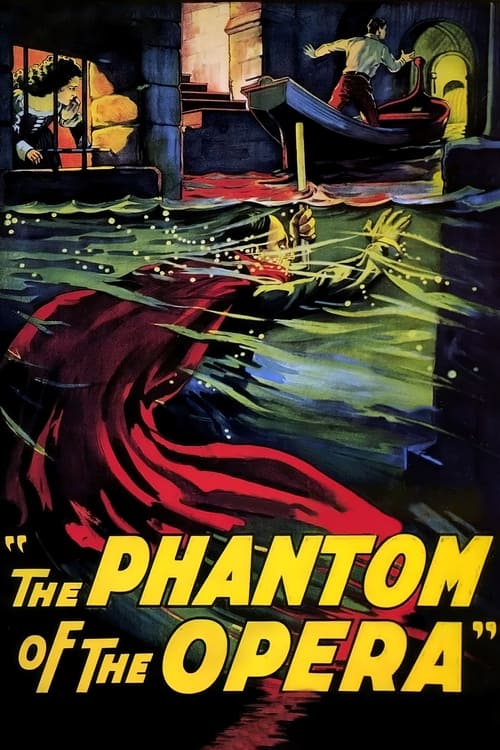
Theme Echo
The Phantom of the Opera (1925)
The Chaney original is Darkman's true ancestor: the disfigured genius in the building nobody finished, extending love and receiving horror. Raimi swaps the opera house for an industrial ruin and keeps the unmasking, and both films know the face under the mask is the least of what got destroyed.
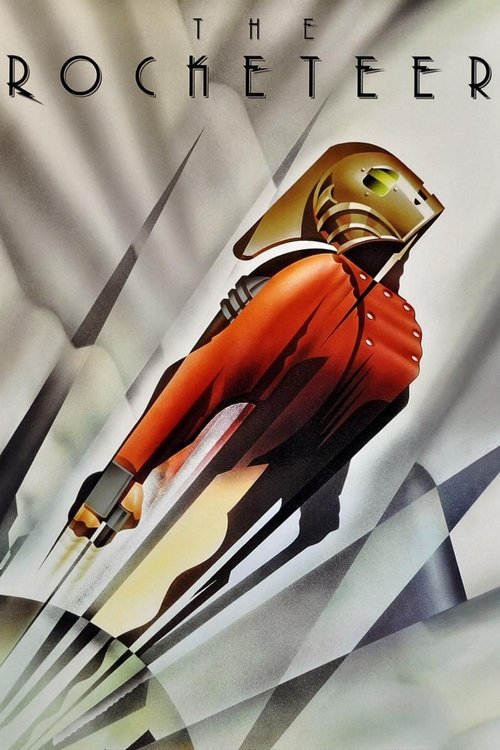
Counter-Program
The Rocketeer (1991)
Released months later, the sunlit version of the same pulp revival: a hero whose mask costs him nothing and comes off for the kiss. Run them together and you can watch one year's Hollywood offer both answers to the same question, and only one of them is telling the truth.

Career Context
Evil Dead II (1987)
The grammar Darkman industrializes: the shrieking camera, the slapstick dismemberment, the hero losing pieces of himself to the property. Ash lost a hand and gained a chainsaw; Westlake lost a face and gained a franchise-that-wasn't. Same director, same lesson, bigger fire.
Further Reading
More Lunara Criticism
 ★★★
★★★
Lunara Review
Doctor Strange in the Multiverse of Madness — The Horror Director Won
Marvel hired a horror director for a corporate slot, and for about forty glorious minutes the horror director won.
Updated July 25, 2026
 ★★★★
★★★★
Lunara Review
Drag Me to Hell — Damnation for a Desk Decision
Sam Raimi's meanest joke is the exchange rate: one workaday compromise, priced at eternity.
Updated July 25, 2026
 ★★★★
★★★★
Lunara Review
Army of Darkness — Three Words He Couldn’t Learn
Ash finally gets a destiny, a prophecy, and a kingdom to save, and dooms it because he couldn't be bothered to memorize three syllables.
Updated July 25, 2026
 ★★
★★
Lunara Review
Spider-Man 3 — The Sequel That Ate Itself
Forced to include a villain he never wanted, Raimi delivered the most expensive shrug in studio history.
Updated July 25, 2026
 ★★★★★
★★★★★
Lunara Review
Spider-Man 2 — The Hero Who Tried to Quit
The best superhero film ever made is about a man whose own body files a resignation letter.
Updated July 25, 2026