
Blue Moon — A Wake for a Man Still Breathing
Movie Review

Blue Moon, 2025. Sony Pictures Classics
On the night the American musical chose sincerity over wit, Richard Linklater stays in the bar with the man it chose against.
March 31, 1943. Across the street from Sardi’s, at the St. James, the curtain is coming down on the premiere of Oklahoma!, the show that will turn the Broadway musical toward earnestness for good and run for years doing it. In the bar, a small man is buying rounds. Lorenz Hart spent twenty-five years building the form that show has just made obsolete, and now he is waiting, drink in hand, to congratulate the partner who built the replacement. Richard Linklater’s Blue Moon stays in that room, on that night, almost without exception, and what happens there is the darkest thing this director has ever put on screen. It is not a biopic. It is a wake held for a man who is still breathing, hosted by the man himself, and he is also the evening’s entertainment, because entertaining people is the one thing he has left.
Ethan Hawke plays Hart, and the performance is the film. Hawke shrinks himself into Hart’s small, unchosen body through posture, framing, and what looks like pure will, then caroms around the restaurant like a pinball that knows exactly what happens when it stops moving. The silence gets in. The script calls him a man giving a performance of a performance, and Hawke builds it in exactly those layers: the wit on top, the terror under the wit, and beneath the terror a bottomless, unfakeable love for the precise thing that is killing him. The perfectly turned phrase. The rhyme nobody asked for. The joke that costs its teller everything. He is cruel in flashes and dazzling in torrents, and the worst of it is watching him clock, in real time, that the room’s laughter has curdled into charity. When he holds forth on why the new show’s earnest young lovers disgust him, you hear more than jealousy. This is the man who wrote bewitched, bothered and bewildered. He cannot sing about a surrey with the fringe on top. It is not in him. And the culture, as of tonight, has voted for the surrey.
Then the antagonist walks in wearing congratulations, and he is one of the quietest villains of the year precisely because he is not one. Andrew Scott plays Richard Rodgers as smooth, patient, genuinely fond of the wreck in front of him, and finished with him, and Scott renders that finality as a kind of corporate weather, no more arguable than rain. The math is simple and Scott never has to say it out loud. Hart was brilliant and unreliable. Hammerstein is merely good and always sober. The arithmetic did itself. When Rodgers says, without a gram of malice, that it is a business, the line comes down like a gavel, and here is the film’s sharpest cruelty: it lets you see that Rodgers is right. This is not a story about genius betrayed by commerce. It is a story about genius priced by commerce, priced accurately, which is so much worse. The night carries a real philosophical war, the urban wisecrack against the cornfield hymn, irony against sincerity, and the film knows the war was over before Hart ordered his first drink.
Around that central duel, Linklater hangs mirrors. Margaret Qualley plays Elizabeth, the young woman Hart parades through the room as proof of a vitality nobody in the place believes, and she gives the film its saddest note. She knows exactly what she has been brought there to prove, and she plays along out of something between pity and real tenderness, and Qualley lets you see the specific moments the girl chooses kindness over honesty. Bobby Cannavale’s bartender feeds and waters the legend with the calm of a man who has watched a thousand last acts from behind the taps. And then the climax, if a film this becalmed can be said to have one: Hart’s final pitch to Rodgers, a musical about Marco Polo, complete with singing cannibals, delivered with the manic brilliance of a drowning man describing the water. Linklater holds the shot. He makes you watch a great artist dance for a partner who has already left the floor, and the scene says the film’s whole terrible case in one sustained breath. Talent is not enough. You have to be tuned to the world’s frequency, and Hart is broadcasting, gorgeously, on a dead station.
The cost of the conceit is built into the conceit. A one-room film about a monologuist means everyone else on screen exists mostly to receive him, and a few of Hart’s arias circle back over ground he has already scorched. The repetition is clearly diagnosis, a needle stuck because the man is stuck, but it thins the air of the middle stretch all the same. Call it a small tax on a large achievement, and pay it. Hart would be dead by November, eight months after this night, and the film never says so, because it does not have to. Every frame is lit by our knowing. What Linklater has made is a film about the particular sadness of a party’s end, when the lights come up and the evening’s magic stands revealed as smoke hanging in a dirty room, and about the harder truth underneath it. Time does not merely age an artist. It replaces him. Blue Moon lets the replaced man sing one last time, badly, beautifully, to a room that has already gone home.
Lunara Film Debrief
- Score:★★★★★
- Oscar Ledger2 nominations • 0 wins
- Year:2025
- Where to Watch:

All That Jazz (1979) tt0078754. Fosse threw himself the same wake at maximum volume, full production numbers staged on the deathbed, where Linklater makes do with one man and a bar tab. Both films understand the same thing about showmen: they die performing, because stopping was never in the choreography.

Oklahoma! (1955) tt0048445. The weapon itself. Watch the beautiful corn-fed thing that ended Lorenz Hart and sit with the full strangeness of the verdict. It is wonderful, and it is everything he despised, and both of those facts survive contact with each other.

Before Sunset (2004) tt0381681. Linklater and Hawke's other real-time chamber piece about talk as destiny. There the conversation opens a future. Here it closes one. Same instrument, twenty years on, played in a minor key with the windows shut.
More Lunara Film Criticism
Further Reading
 ★★★½
Lunara Film Review
Den of Thieves 2: Pantera — Burn the Blueprints
The first one wanted to be Heat; this one would rather be drunk, and it turns out drunk is the more honest condition.
Updated September 23, 2026
 ★★½
Lunara Film Review
Out of Order! — The Reunion the Movie Doesn’t Know It Has
Superman and Jimmy Olsen share frames again after nineteen years, a Broadway scene-stealer plays the farce all by herself, and the screenplay never shows up to...
Updated September 23, 2026
 ★★½
Lunara Film Review
The Gorge — The Distance Was the Movie
Scott Derrickson's two-hander has one of the best premises of the year and the saddest relationship to it -- a film that treats the very...
Updated September 23, 2026
 ★★★
Lunara Film Review
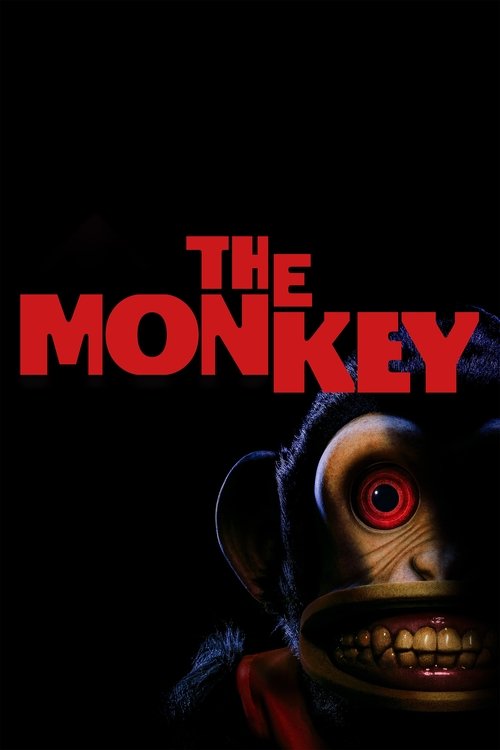
The Monkey — Laughing at the Funeral
Osgood Perkins follows the dread of Longlegs with something that looks like its opposite -- a gleeful splatter comedy about a cursed toy...
Updated September 23, 2026
 ★★★★
Lunara Film Review
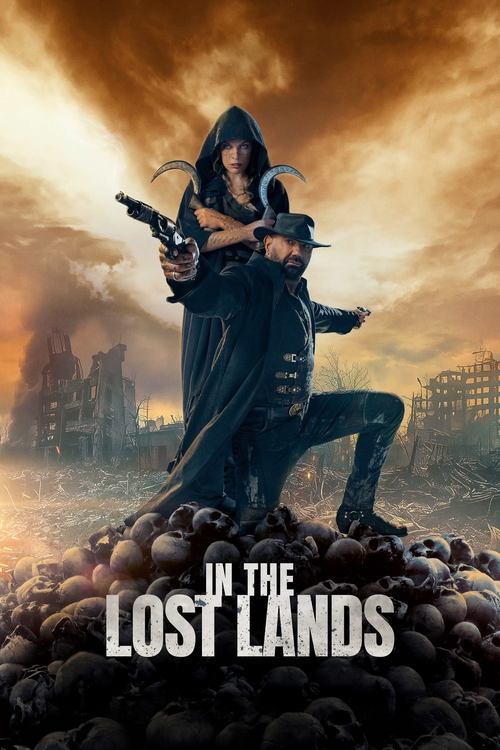
In the Lost Lands — Nobody Is Doing It Like This
Paul W.S. Anderson's dark-fantasy Western is being dismissed this week as cheap-looking digital slop. It is not slop. It is a deliberately...
Updated September 23, 2026