
Lunara Review
Spider-Man — The Origin Story Is a Funeral
Sam Raimi launched the superhero century with a film whose hero wins nothing but the right to suffer professionally.
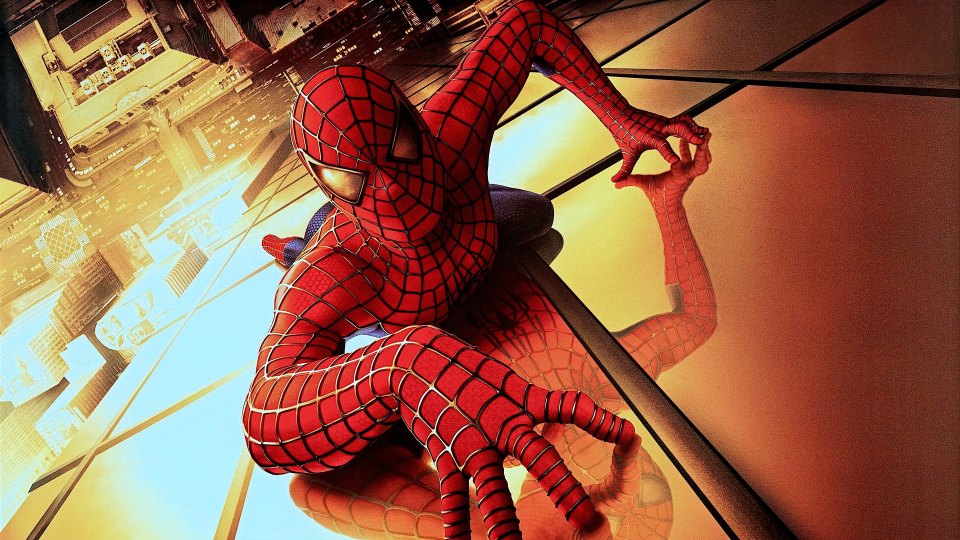
Sam Raimi launched the superhero century with a film whose hero wins nothing but the right to suffer professionally.
The most important scene in the film that built the superhero century is a man letting a thief run past him. Peter Parker, fresh from being stiffed out of prize money by a wrestling promoter, stands aside as a robber sprints by with the promoter’s cash, and delivers the pettiest line of his life: I missed the part where that’s my problem. Minutes later the same thief shoots his uncle dead on a curb. Every subsequent hour of Spider-Man cinema, twenty-some films and counting, descends from that one karmic transaction, and it is worth remembering how mean it is. Peter is not punished for evil; he is punished for one spasm of ordinary, understandable spite, and the punishment is total and permanent. Sam Raimi’s 2002 original gets credited with inventing the modern comic-book blockbuster, which is true and slightly beside the point. What he actually built was a tragedy wearing primary colors: a film in which power arrives in the same envelope as loss, and heroism is not a calling but a sentence being served.
Tobey Maguire was a genuinely odd choice, an indie-film watcher’s face on a franchise poster, and the oddness is the performance’s value. His Peter is soft-spoken, hunched, visibly uncomfortable in his own body even after the body becomes miraculous, and Raimi shoots his transformation with the gleeful physical comedy of a man who spent his youth throwing Bruce Campbell into furniture: webs misfiring, walls climbed badly, the cafeteria tray catch. The joy is real, and the film is honest that it is temporary. Whatever the powers give, the plot’s ledger takes: the moment Peter gains the ability to change his life, Ben dies; the moment he wins the city’s love, the Goblin turns it into a targeting system; the moment Mary Jane finally chooses him, in the last scene, over a grave, he lies to her face and walks away alone, because the karmic contract has taught him what proximity to him costs. The famous upside-down kiss survives as an icon of romantic cinema. In context it is a stolen luxury the film spends its remaining hour repossessing.
Willem Dafoe understood the assignment better than anyone in the production. His Norman Osborn is the film’s second single father, the accomplished one, warm to Peter in exactly the register Peter’s own dead father figure can no longer be, and the Goblin plot runs on that awful triangle: the villain courting the hero as a son while hunting him as an enemy, Thanksgiving dinner as reconnaissance. The mirror scenes, Dafoe interrogating his own reflection, both halves of the performance escalating against each other, are community-theater Jekyll and Hyde elevated by an actor with zero vanity, and the bridge finale distills the character to one gesture: MJ in one hand, a tram car of children in the other, choose. That the choice is a cheat, Peter saves both, matters less than what it reveals about the film’s moral engine. The Goblin’s whole strategy is the weaponization of responsibility, hurting Peter exclusively through the people he loves, and it works so well that Peter’s final decision, the graveside renunciation of MJ, is effectively the Goblin winning posthumously.
The honest limits are the ones time has made unmissable. The Goblin’s armor, a static green action figure encasing the most expressive face in the cast, remains the franchise’s great costuming blunder, muffling Dafoe’s menace exactly when the film needs it unfiltered; the early CGI has aged into rubber physics; and Kirsten Dunst’s MJ, though played with real warmth, is written as a destination, the prize at the end of the boy’s arc, her abusive home and acting dreams sketched then shelved whenever the plot needs her airborne. The film’s emotional intelligence about its hero never quite extends to her.
But the ending has lost nothing. A funeral, autumn leaves, and Peter turning down the only reward the movie ever offered him, with the voiceover accepting the terms: this is my gift, my curse. No previous superhero film ended with its hero poorer than he began; no subsequent one has had the nerve to do it so plainly. With great power comes great responsibility gets quoted as inspiration, but Raimi films it as a bill, presented at the exact moment of triumph, payable forever. That is why the film still stands under the tonnage of everything it spawned. The genre it invented spent two decades converting the sentence into wish fulfillment. The original knew it was a life sentence, and said so at a grave.
LUNARA DEBRIEF
- Score: 4 / 5
- Year: 2002
- Where to Watch: Streaming (Disney+) | VOD | 4K UHD disc
- Theme Echo: Unbreakable (2000) tt0217869. Shyamalan’s whispered origin story, released two years earlier: the same discovery of power framed as burden, grief, and marital wreckage. The two films are the genre’s road not taken and taken, standing side by side.
- Counter-Program: Superman (1978) tt0078346. Donner’s hero is loved by his world, at ease in his skin, rewarded for his goodness. Raimi’s is bullied, broke, and bereaved. The gap between them is the entire argument about what American audiences needed heroes to be in each era.
- Career Context: Darkman (1990) tt0099365. Raimi’s first superhero picture, made when no studio would sell him a license: a disfigured scientist whose powers are pain and rage. Spider-Man is Darkman with a conscience and a budget, and the shared DNA, hero as sufferer, is visible in every frame.
LUNARA DEBRIEF
- Score:★★★★
- Oscar Ledger2 nominations • 0 wins
- Year:2002
- Where to Watch:
Pair It With
Three films in conversation with this one.
Theme Echo
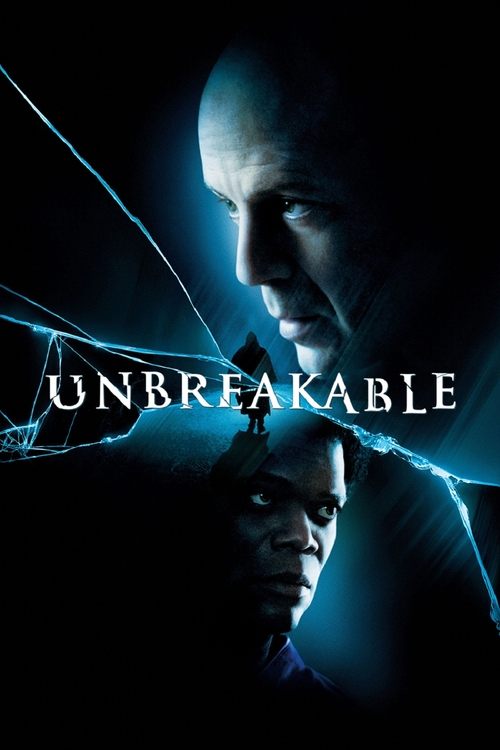
Unbreakable (2000)
Shyamalan's whispered origin story, released two years earlier: the same discovery of power framed as burden, grief, and marital wreckage. The two films are the genre's road not taken and taken, standing side by side.
Counter-Program
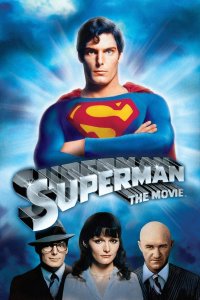
Superman (1978)
Donner's hero is loved by his world, at ease in his skin, rewarded for his goodness. Raimi's is bullied, broke, and bereaved. The gap between them is the entire argument about what American audiences needed heroes to be in each era.

Career Context
Darkman (1990)
Raimi's first superhero picture, made when no studio would sell him a license: a disfigured scientist whose powers are pain and rage. Spider-Man is Darkman with a conscience and a budget, and the shared DNA, hero as sufferer, is visible in every frame.
Further Reading
More Lunara Criticism
 ★★★
★★★
Lunara Review
Doctor Strange in the Multiverse of Madness — The Horror Director Won
Marvel hired a horror director for a corporate slot, and for about forty glorious minutes the horror director won.
Updated July 25, 2026
 ★★★★
★★★★
Lunara Review
Drag Me to Hell — Damnation for a Desk Decision
Sam Raimi's meanest joke is the exchange rate: one workaday compromise, priced at eternity.
Updated July 25, 2026
 ★★★★
★★★★
Lunara Review
Army of Darkness — Three Words He Couldn’t Learn
Ash finally gets a destiny, a prophecy, and a kingdom to save, and dooms it because he couldn't be bothered to memorize three syllables.
Updated July 25, 2026
 ★★
★★
Lunara Review
Spider-Man 3 — The Sequel That Ate Itself
Forced to include a villain he never wanted, Raimi delivered the most expensive shrug in studio history.
Updated July 25, 2026
 ★★★★★
★★★★★
Lunara Review
Spider-Man 2 — The Hero Who Tried to Quit
The best superhero film ever made is about a man whose own body files a resignation letter.
Updated July 25, 2026