
Lunara Review
A Simple Plan — The Word That Ruins Them Is “But”
Three men find $4.4 million in the snow and agree to do the right thing; the movie is about the sentence that starts with "but."

Three men find $4.4 million in the snow and agree to do the right thing; the movie is about the sentence that starts with “but.”
The plane is already half-buried when they find it, a dead pilot frosted to the controls and a duffel bag holding $4.4 million in used bills. Hank Mitchell, the educated one, the one with the job and the pregnant wife and the standing in town, says the correct thing immediately: they should turn it in. He says it like a man reciting a rule he has never had to test. Then his brother Jacob and his friend Lou start talking, and somewhere in that cold fuselage Hank produces the quietest, most expensive word in nineties cinema. But. Nobody would know. But it is probably drug money, so who is harmed. But they could hold it until spring, just to be safe, and burn it at the first sign of trouble. The plan is simple. The film then spends two hours itemizing what simple costs.
A Simple Plan is Sam Raimi’s stillest movie, and the stillness is the point of it. The director whose camera once hunted teenagers through Tennessee woods locks the frame down and denies himself every flourish: no crash zooms, no canted angles, no rushing force. The camera plants itself and watches, because the horror this time is procedural, not demonic, and it needs room to happen at conversation pitch. Alar Kivilo shoots the Minnesota-cold landscape in a flat, shadowless white that offers nowhere to hide and nothing to look forward to, and the snow works on the story like a clock: it is the only thing keeping the evidence covered, and everyone on screen knows spring is coming. Danny Elfman, Raimi’s other reformed maximalist, delivers a score of detuned, wintry unease that sounds like a music box left in the woods. Crows keep watch on the branches. The whole apparatus of style says the same thing: this was always going to happen, and weather was the only thing postponing it.
Bill Paxton is the engine, and his performance runs on normalcy. Hank never becomes a monster; that is the film’s most frightening decision. He remains reasonable, apologetic, and articulate through every escalation, a man using his intelligence not to see clearly but to build sentences in which what he just did was necessary. Billy Bob Thornton’s Jacob, in the performance that earned him an Oscar nomination, is the film’s broken conscience, a slow, gentle, unemployable man who understands the moral situation better than anyone precisely because he has nothing to protect. His question lands in the middle of the film like a stone through ice: he asks his brother whether he ever feels evil. Hank says no. Jacob is the only person in the movie honest enough to have needed to ask.
And then there is Sarah. Bridget Fonda’s work here was undervalued on release and looks colder and better every year: the pregnant librarian who receives the news of the money at the kitchen table, pauses one beat, and starts issuing quality control. Put some of it back, she says, so the count looks untouched. Her escalations all arrive in the language of household prudence, each murder downstream of her framed as insurance, a woman applying coupon logic to damnation. She never raises her voice and never touches a weapon, and she is the film’s deepest chill, because she demonstrates that the appetite was not out in the snow at all. It was already in the house.
The honest limit is a mechanical one. The final act depends on a stranger arriving with exactly the right lie at exactly the right time, and the reveal that closes the trap clicks into place with a neatness the film’s loose, wintry realism has spent ninety minutes teaching you not to expect. Sarah’s turn, too, comes a half-step faster than the movie’s patience elsewhere; one more scene of her hesitating would have made her arithmetic land even harder. These are seams, not cracks. The picture is too honestly built for them to spread.
Because the ending is as unsparing as anything American film produced that decade. The money, it turns out, is marked, every serial number recorded, unspendable from the moment they found it. Everything, the friend, the neighbor, the brother, was traded for paper with a value of exactly nothing, and the film closes on Hank feeding the bills into a fire, the one part of the plan he finally executes on schedule. Raimi, working in borrowed Coen country, out-freezes Fargo by removing its warmth: there is no decent cop here to shake her head at the sadness of it, only a man who will spend the rest of his life being spoken to kindly by a wife who counts what it cost. A Simple Plan is the great American film about the distance between being good and being untested, and its verdict has not thawed in a quarter century. Nobody in it thinks of himself as the villain. That was the plan’s one true simplicity.
LUNARA DEBRIEF
- Score: 5 / 5
- Year: 1998
- Where to Watch: VOD [major platforms] | Blu-ray
- Theme Echo: Fargo (1996) tt0116282. The same snow, the same escalating cover-up, one crucial difference: the Coens keep Marge Gunderson as a moral thermostat. Raimi removes the thermostat and lets the cold in, and the two films argue about whether decency survives the weather.
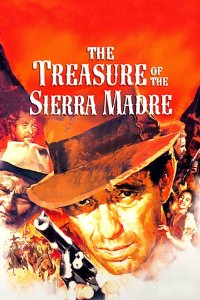
- Counter-Program: The Treasure of the Sierra Madre (1948) tt0040897. The ancestor text, gold fever played at operatic scale under desert sun. Huston’s prospectors crack loudly; Raimi’s neighbors crack politely, and the politeness is the update.
- Career Context: Evil Dead II (1987) tt0092991. The same director with every flourish switched on. Watch it beside A Simple Plan and the restraint here stops looking like maturity and starts looking like what it is: a stylist proving the stillness was always a choice, and choosing it because this story’s demon does not need a camera to chase anyone.
LUNARA DEBRIEF
- Score:★★★★★
- Oscar Ledger2 nominations • 0 wins
- Year:1998
- Where to Watch:DigitalFind Digital OptionsAvailabilityBlu-ray
Pair It With
Three films in conversation with this one.

Theme Echo
Fargo (1996)
The same snow, the same escalating cover-up, one crucial difference: the Coens keep Marge Gunderson as a moral thermostat. Raimi removes the thermostat and lets the cold in, and the two films argue about whether decency survives the weather.
Counter-Program
The Treasure of the Sierra Madre (1948)
The ancestor text, gold fever played at operatic scale under desert sun. Huston's prospectors crack loudly; Raimi's neighbors crack politely, and the politeness is the update.

Career Context
Evil Dead II (1987)
The same director with every flourish switched on. Watch it beside A Simple Plan and the restraint here stops looking like maturity and starts looking like what it is: a stylist proving the stillness was always a choice, and choosing it because this story's demon does not need a camera to chase anyone.
Further Reading
More Lunara Criticism
 ★★★
★★★
Lunara Review
Doctor Strange in the Multiverse of Madness — The Horror Director Won
Marvel hired a horror director for a corporate slot, and for about forty glorious minutes the horror director won.
Updated July 25, 2026
 ★★★★
★★★★
Lunara Review
Drag Me to Hell — Damnation for a Desk Decision
Sam Raimi's meanest joke is the exchange rate: one workaday compromise, priced at eternity.
Updated July 25, 2026
 ★★★★
★★★★
Lunara Review
Army of Darkness — Three Words He Couldn’t Learn
Ash finally gets a destiny, a prophecy, and a kingdom to save, and dooms it because he couldn't be bothered to memorize three syllables.
Updated July 25, 2026
 ★★
★★
Lunara Review
Spider-Man 3 — The Sequel That Ate Itself
Forced to include a villain he never wanted, Raimi delivered the most expensive shrug in studio history.
Updated July 25, 2026
 ★★★★★
★★★★★
Lunara Review
Spider-Man 2 — The Hero Who Tried to Quit
The best superhero film ever made is about a man whose own body files a resignation letter.
Updated July 25, 2026