
Raising Arizona — Wanting at Full Gallop
Movie Review

Raising Arizona, 1987
The Coens’ fastest, silliest picture is secretly about the slowest hunger there is, and it never once treats the hunger as the joke.
The movie is eleven minutes old before the title card shows up, and by then it has already told you a whole love story in mugshots. H.I. McDunnough robs convenience stores, badly, over and over, and every time he gets caught the same police photographer takes his picture. Nicolas Cage plays each booking like a gentleman caller working up his nerve: the hangdog squaring of the shoulders, the small pleasantries offered while the height chart looms behind his head, the crimes eventually timed to her shifts. Turn to the right. Her name is Ed, short for Edwina, and you watch her soften across the repeat business. He proposes on the day they let him out. The narration, a folksy drawl that believes every word it says, calls what follows the salad days. No American comedy has ever gotten out of the gate cleaner, and the opening does more than delight. It tells you what the whole picture is really about: a man who can only reach the things he loves through the procedures built to punish him.
What H.I. and Ed want is the plainest want in the world. A kid. A little house. Somebody at the table. And the film is exact about why they cannot have it. Biology shuts the front door: her insides were a rocky place where my seed could find no purchase, the drawl reports, and I would put that sentence up against anything the Coens have ever written for a character to say out loud. The state shuts the back door, because adoption agencies do not smile on a groom whose entire resume is armed robbery. Then the television announces that Nathan Arizona, unpainted-furniture king of Tempe, has quintuplets, more than they can handle, and the logic that takes over is not criminal logic at all. It is shopping. Surplus over there. Shortage over here. A ladder against the nursery window.
The kidnapping itself is staged as pure flailing farce, five babies loose on the floor like spilled produce while H.I. hisses apologies at them, and the scene is so funny you could miss what it never hides: the ache. These two are stealing a child because every legitimate road to a family has a means test on it, and they have no means. It is the one Coen comedy where the scheme is innocent at the root. The film knows it, loves them for it, and drops the sky on their heads anyway.
The sky arrives in installments. First the Snoats brothers, Gale and Evelle, erupting out of the prison mud in a rainstorm, howling, delivered by the earth itself because no woman would claim the job. John Goodman plays Gale at foghorn volume with the straight-faced sincerity of a self-help cassette, a man who felt the institution no longer had anything to offer him. Then comes Glen, the swinging supervisor with the wife-swap proposition, living proof that the neighbors’ respectable version of family is its own little crime. And last comes Leonard Smalls, the lone biker of the apocalypse, riding out of H.I.’s nightmare with a shotgun, grenades, and about as much mercy as a repossession notice. The film makes exactly one openly mythic move, and it is a beauty: Smalls wears the same Woody Woodpecker tattoo on his arm that H.I. does, and neither man ever says a word about it. The bounty hunter is not a villain who tracked them down. He is the outlaw self H.I. keeps swearing off, come to collect a life that was signed over years ago. When H.I. finally beats him, he does it by pulling the pin on the man’s own grenade. The old self goes up on its own equipment. That is not a stunt. That is the whole moral case in one explosion.
Nobody had photographed comedy this way before. Barry Sonnenfeld’s camera does not watch the chases; it signs up for them, sprinting at bumper height, launching up a ladder and straight into a screaming mouth, riding the hood while the Huggies run turns a diaper errand into the funniest action sequence of its decade. Pantyhose on the head. A dog pack in pursuit. A clerk emptying a shotgun over the pyramids of canned goods. And in the middle of the bedlam, Cage doing silent-comedy bodywork, a man treating total catastrophe as a series of appointments he intends to keep. Carter Burwell scores it all with banjo and yodel, and folds Beethoven’s Ode to Joy into the twang until the loftiest melody in the European canon comes out sounding like something hollered across a trailer park. That is the film’s whole trick performed in music. Grand feeling in busted circumstances, and not one drop of condescension anywhere in the mix.
The picture’s one real shortage is Ed herself. Holly Hunter plays her as a lit fuse in a police uniform, fierce enough to turn a whole houseful of outlaw men into the night, cracked wide open by the sight of a crib, and whenever she is on screen the comedy has a heartbeat under it. But the middle act belongs to the boys, the bank job, the dye pack, the buddy scheming, and the film benches its own melody to make room for their noise. You can feel the heart step off camera for minutes at a stretch. It is a trade the movie makes on purpose, cartoon momentum bought with feeling, and the momentum is glorious. The cost is still real. A film this much about wanting a family spends a piece of its second act having forgotten to want one.
Then it remembers, and the remembering is why the thing lasts. The baby goes back through the nursery window. Nathan Arizona, holding every reason to send two burglars to prison, looks at them instead and tells them to sleep on it before they decide anything final about each other. And H.I. dreams. The brothers back inside where they asked to be. The boy growing up large and fine. And at the end of the dream, an old couple at a long table crowded with children and grandchildren, somewhere all parents are strong and wise and all children are happy and beloved. I dunno, the drawl admits. Maybe it was Utah. The movie has spent ninety minutes pricing that table out of their reach, and then it hands it to them the only way the world ever would: on credit, in sleep. That is the tenderness under all the yodeling. The Coens made a rocket-sled cartoon about the most ordinary longing a person can carry, and they kept the longing sacred the whole way down.
Lunara Film Debrief
- Score:★★★★★
- Year:1987
- Where to Watch:

The other great American comedy where a family gets assembled by larceny: a con man and a child who may or may not be his, bound together by the daily work of grifting. Both films know the same secret, that belonging is proved in practice rather than on paper, and both let the proof arrive by highway.

The premise flipped into apocalypse: one fertile woman in a world gone barren, one reluctant man ferrying the only baby there is. What Raising Arizona plays as farce, Cuaron plays as scripture, and setting them side by side shows the same conviction under both: a child is the one cargo that reorganizes every adult around it.

The debut, three years earlier: same directors, same low prowling camera, same Texas-desert fatalism, run as tragedy instead of farce. The crawling dread shots of the first film become the rocket-sled joy rides of this one, and seeing them together shows the Coens discovering that their machine had a second gear called delight.
More Lunara Film Criticism
Further Reading
 ★★★★★
Lunara Film Review
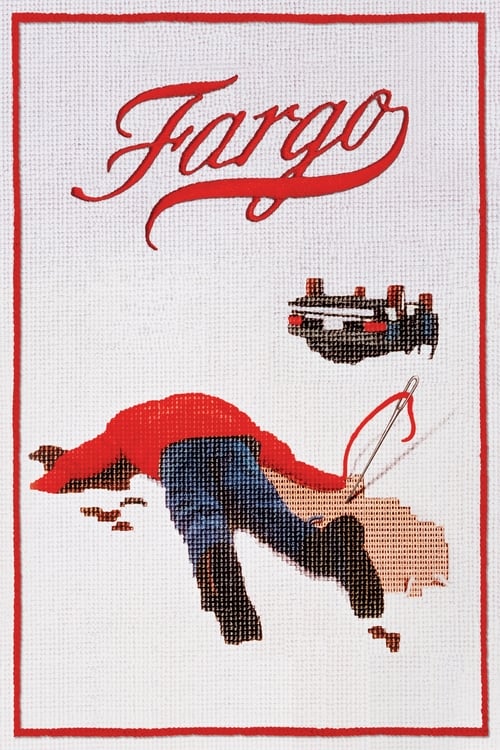
Fargo — Two Uses for Nice
The accent everybody imitates is doing two different jobs: for Jerry it is camouflage, for Marge it is a method.
Updated September 23, 2026
 ★★★★★
Lunara Film Review
Burn After Reading — Nobody Learns Anything
The Coens' spy comedy has no spy and no secret; eighteen years on, that is the scariest thing in it.
Updated September 23, 2026
 ★★★
Lunara Film Review
The Ladykillers — The Soundtrack Believes, the Movie Grins
The Coens' Southern remake has a churchful of soul on the soundtrack and a cartoon where its menace should be.
Updated September 23, 2026
 ★★★★★
Lunara Film Review
Barton Fink — The Common Man Knocks
The Coens' Hollywood nightmare is not about writer's block; it is about a writer who never once listens.
Updated September 23, 2026
 ★★★★★
Lunara Film Review
No Country for Old Men — The Thriller That Stops Answering
The Coens' McCarthy adaptation keeps subtracting everything a chase picture owes you, and every subtraction is the meaning.
Updated September 23, 2026